Maternal Health Campaigns: Reaching Expecting and New Parents Where They Are
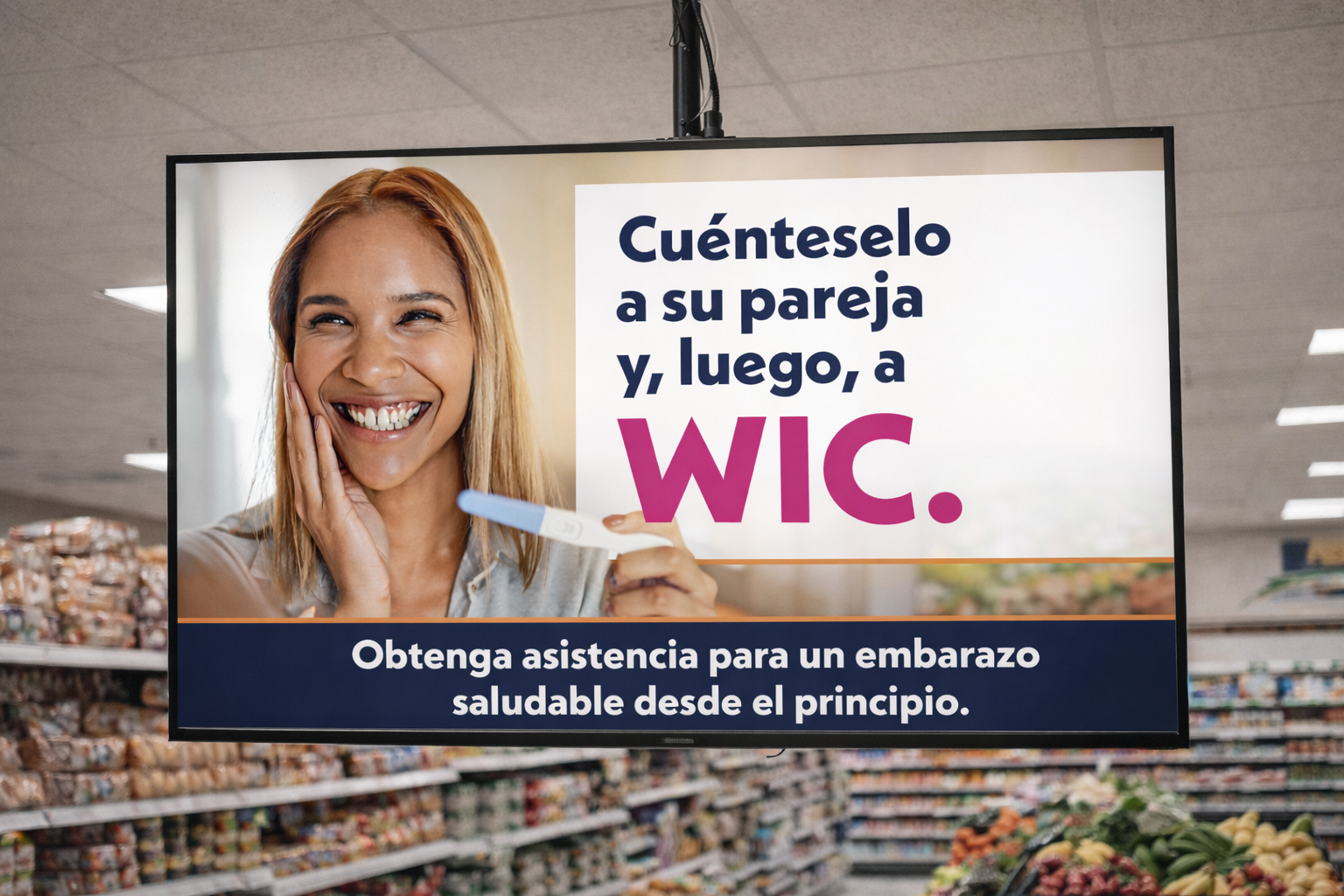
A maternal health campaign is a public health communication effort that helps people get the care, coverage, and support they need during pregnancy, birth, and the year after. Typical messages cover urgent warning signs, postpartum check-ups, mental health, nutrition programs like WIC, and Medicaid coverage. The campaigns that reach the right people put those messages where expecting and new parents already spend time: the OB-GYN waiting room, the pharmacy, the grocery store, and the community venues they trust.
This guide explains what the data says about maternal deaths in the U.S., why equity has to be built into the plan from the start, which venues and messages to prioritize, how to write creative with care, and how to measure results.
What the Data Says
According to the CDC's National Center for Health Statistics (NCHS):
669 women died of maternal causes in the U.S. in 2023.
The maternal mortality rate was 18.6 deaths per 100,000 live births, down from 22.3 in 2022.
The rate for Black women was 50.3, significantly higher than the rates for White (14.5), Hispanic (12.4), and Asian (10.7) women.
CDC's analysis of data from Maternal Mortality Review Committees (MMRCs) in 38 states (2020 deaths) adds two findings that matter for a communications plan:
Pregnancy-related deaths happened during pregnancy, at delivery, and up to one year postpartum.
84% of pregnancy-related deaths were determined to be preventable.
The same reviews found that discrimination contributed to 30% of pregnancy-related deaths, a mental health condition to 26%, and substance use disorder to 25%.
Those findings set the job. Most of these deaths were preventable, many happen after the hospital stay ends, and the risk isn't shared equally. Communication can't fix all of that. It can help people recognize warning signs, use the care and coverage they're eligible for, and feel heard when they speak up.
Why Equity Has to Be in the Plan From Day One
A campaign that reaches "women 18–44" statewide will spend most of its budget on people who aren't at highest risk. An equity-focused plan starts somewhere else:
Start with your data. Use your state's MMRC findings and vital statistics to find the communities, counties, and ZIP codes with the greatest burden.
Go where care happens, and where it doesn't. Reach people in clinics, and also in grocery stores and community venues for those who aren't connected to regular care.
Use trusted messengers and real representation. Show families who look like the community, in settings they recognize.
Speak their language. In-language, culturally adapted creative at equal prominence.
Reach the whole support system. Partners, grandparents, and friends often notice warning signs first.
The Messages That Matter
Pick one primary action per placement. The most common maternal health priorities:
Urgent warning signs. Help pregnant and postpartum people, and the people around them, know which symptoms mean get care now.
Postpartum care for the full year. Since deaths occur up to a year after pregnancy, keep the message running well past delivery.
Perinatal mental health. Normalize asking for help with depression and anxiety, and point to a clear resource. Person-first, stigma-free language matters here.
Coverage and benefits. Medicaid coverage, WIC enrollment, and how to find a provider.
Substance use support. Non-judgmental messaging about treatment and support during and after pregnancy.
Venue Strategy
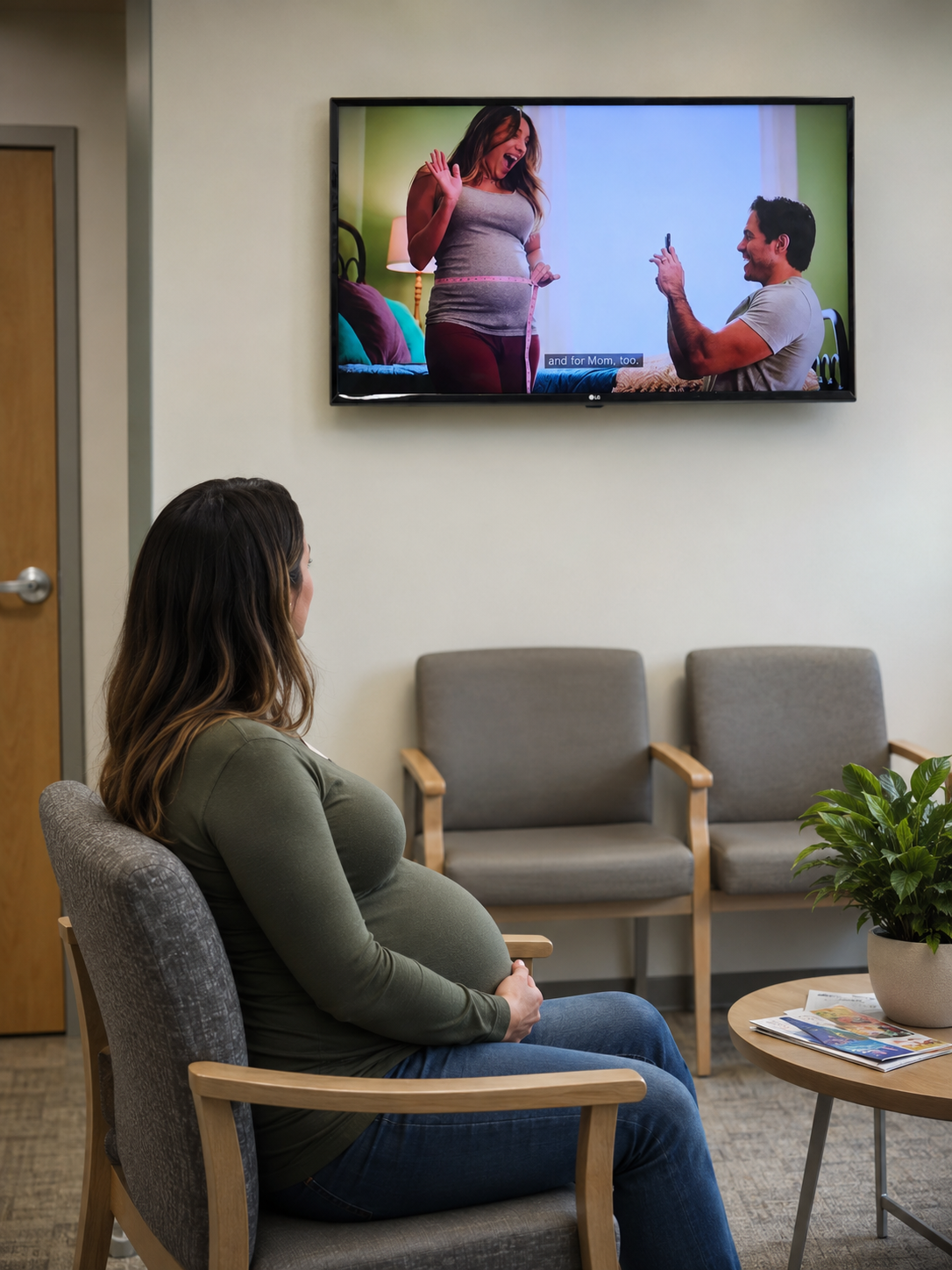
OB-GYN and midwifery offices: The moment: Prenatal and postpartum visits; Why it works: Trusted setting, high dwell time, provider nearby
Pediatric offices: The moment: Newborn and infant visits; Why it works: Reaches parents in the postpartum year
Family practice and community clinics: The moment: Primary care visits; Why it works: Reaches people without a dedicated OB
Pharmacies: The moment: Prescriptions, prenatal vitamins, baby supplies; Why it works: Frequent, routine visits
Grocery stores: The moment: Weekly shopping; Why it works: Reaches families in priority ZIPs, including WIC households
Daycares and community centers: The moment: Drop-off, programs, events; Why it works: Trusted neighborhood settings
Point of Care: OB-GYN and Pediatric Offices
Point-of-care advertising reaches expecting parents in waiting rooms and exam areas, where they're already focused on their health and their provider is nearby. Pediatric offices are often overlooked for maternal health, but they're where new parents show up most in the first year. That's exactly when postpartum warning signs and mental health messaging need to be visible.
Pharmacies
Prenatal vitamins, prescriptions, diapers, formula: new and expecting parents visit pharmacies often. Pharmacy advertising keeps practical, actionable messages in front of them between appointments.
Grocery Stores and WIC-Adjacent Venues
Grocery stores reach families who may not be connected to regular care, and they're part of the weekly routine for families using WIC benefits. Our guide to WIC enrollment campaigns covers how to pair grocery, OB-GYN, and daycare placements to reach eligible families. Maternal health messaging fits the same plan. See grocery store advertising.
Daycares and Community Centers
Parents of older kids are often expecting again, and grandparents and other caregivers pass through these venues every day. They're also the support network that notices when something is wrong.
Creative That Treats Parents With Care
Lead with empathy, not alarm. "You know your body. If something feels wrong, speak up" respects the reader and still drives action.
Make the action specific. Call your provider. Go to the emergency room. Tell them you're pregnant or recently gave birth. Scan to see the warning signs.
Talk to the support system, too. "If she says something's wrong, believe her."
Show real families. Different family structures and real settings, without clichés.
Avoid blame and stigma. Especially on mental health and substance use, use person-first language that invites help-seeking.
Keep it short. Seven words or fewer for the hero line, with details on the take-one or landing page.
Transcreate. Adapt messages for each community, and make sure the resource you point to is available in that language.
Timing
Maternal health doesn't have a season, so an always-on presence in OB-GYN and pediatric offices is the core of most plans. Layer flights around Medicaid and WIC enrollment pushes, around Maternal Mental Health Awareness efforts, and around any program launch, such as a new postpartum home-visiting service or a new hotline.
Measurement and Accountability
Maternal health campaigns are often funded through state and federal programs that require documentation. Build measurement in from the start:
Proof of posting: time-stamped, geo-tagged photos at every venue.
Delivery reporting: placements and impressions by ZIP or county, venue type, and language, so you can show that budget reached the priority communities.
Attribution: unique QR codes and vanity URLs by venue and language for warning-sign pages, WIC or Medicaid enrollment, and hotlines.
Outcome indicators: enrollment volume, call volume to resources you promote, and postpartum visit trends in campaign areas compared with control areas.
Independent verification: PlaceBased's Physician Office Patient Education Program has passed two consecutive Alliance for Audited Media (AAM) audits, delivering 113.3% and 111% of guaranteed distribution.
Privacy
Point-of-care media targets by physical location, medical specialty, and geography, never by individual patient health data. That matters for any audience, and it matters even more for people who are pregnant or postpartum.
How PlaceBased Supports Maternal Health Campaigns
We plan and run maternal health campaigns as a fully managed service: venue selection across clinics, pharmacies, grocery stores, and community venues; in-language creative in English, Spanish, and 15+ additional languages; production; installation; compliance monitoring; and proof-of-performance. Our healthcare network spans 20,000+ healthcare facilities across 300+ U.S. markets. For audience planning, see our parents and families page and our guides to African American health campaigns and Medicaid promotions.
Frequently Asked Questions
Where is the best place to reach expecting parents? OB-GYN and midwifery waiting rooms are the core, because parents are already focused on their health and a provider is nearby. Add pharmacies, grocery stores, and community venues to reach people who aren't connected to regular prenatal care.
Why should maternal health campaigns run after delivery? CDC's review of pregnancy-related deaths found they occur during pregnancy, at delivery, and up to one year postpartum. Messages about warning signs and mental health need to stay visible through the postpartum year, which is why pediatric offices matter.
How can a maternal health campaign address racial disparities? Start with your state's data to focus budget on the communities with the greatest burden, use trusted venues and real representation, provide in-language creative, and include messages that help people speak up and be heard.
Does point-of-care advertising use patient data? No. It targets by location, specialty, and geography, never by individual patient health data.
Let's Talk
Most pregnancy-related deaths are preventable. We'll help you put the right message in front of the parents who need it most, in the places they already trust, and we'll show you exactly where it ran.
Sources
CDC/NCHS Health E-Stat, "Maternal Mortality Rates in the United States, 2023" (Hoyert, Feb. 2025): 669 deaths; 18.6 per 100,000 live births (22.3 in 2022); Black 50.3, White 14.5, Hispanic 12.4, Asian 10.7. https://www.cdc.gov/nchs/data/hestat/maternal-mortality/2023/maternal-mortality-rates-2023.htm
CDC, "Pregnancy-Related Deaths: Data From Maternal Mortality Review Committees in 38 U.S. States, 2020" (May 28, 2024): deaths occur during pregnancy, delivery, and up to 1 year postpartum; 84% preventable (430 of 515). https://archive.cdc.gov/www_cdc_gov/maternal-mortality/php/data-research/index.html
CDC, "Circumstances Contributing to Pregnancy-Related Deaths… 2020": discrimination 30%, mental health condition 26%, substance use disorder 25%. https://archive.cdc.gov/www_cdc_gov/maternal-mortality/php/report/index.html
PlaceBased facts (15+ languages; privacy-safe POC): https://placebased.media/point-of-care-advertising ; (20,000+ facilities, AAM figures): https://placebased.media/blog/the-accountability-gap-in-place-based-advertising