
Pharmacy advertising: reach patients and caregivers at a critical health decision pointRight at the counter.
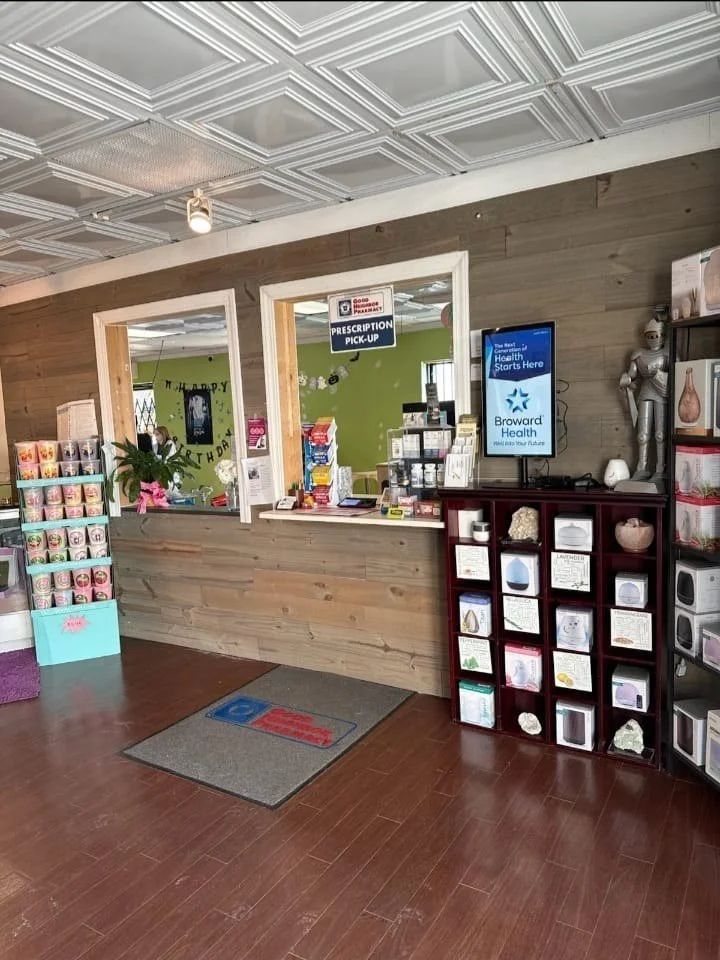
Pharmacy advertising places screens, posters, counter displays, and take-ones in community pharmacies, where patients and caregivers pick up prescriptions, talk with pharmacists, and get vaccinated. Pharma brands, health plans, and public health agencies use it to support medication awareness, adherence, and preventive care. PlaceBased Media plans and runs pharmacy campaigns as a fully managed service.
- 500,000+ locations
- AAM-audited delivery
- English, Spanish + 15 more languages
- Fully managed
Closer to the prescription than any other media.
Pharmacy advertising puts health education, brand messages, and community resources inside pharmacies and pharmacy-adjacent retail. It reaches people while they fill prescriptions, talk with a pharmacist, get vaccinated, buy health products, or manage care for someone else.
It is closely related to point-of-care advertising, with a different job: clinics reach people at diagnosis and treatment conversations, and pharmacies reach them closer to medication access, adherence, and ongoing care. Run it alone or alongside clinics, physician offices, and grocery stores.
Close to home, and part of the routine.
Nearly half of Americans (48%) live within 1 mile of a pharmacy, and 89% live within 5 miles.
Source: Berenbrok LA, et al. (Journal of the American Pharmacists Association), “Access to community pharmacies: A nationwide geographic information systems cross-sectional analysis,” 2022.There are more than 61,000 community pharmacies in the U.S.
Source: Berenbrok LA, et al. (Journal of the American Pharmacists Association), “Access to community pharmacies: A nationwide geographic information systems cross-sectional analysis,” 2022.Half of Americans (49.9%) took at least one prescription drug in the past 30 days.
Source: CDC National Center for Health Statistics, “FastStats: Therapeutic Drug Use,” 2025 (NHANES 2017–Mar 2020).1 in 4 Americans (24.7%) take three or more prescription drugs.
Source: CDC National Center for Health Statistics, “FastStats: Therapeutic Drug Use,” 2025 (NHANES 2017–Mar 2020).Health is the reason they came in.
- Reach patients at pickupMessages run near prescription fulfillment and medication pickup.
- Educate in a health settingPeople expect health information here, and they take it seriously.
- Reach caregiversMany people pick up medications for parents, kids, and partners.
- Promote preventive careScreenings, vaccinations, and available services, close to where they happen.
- Support adherenceMedication awareness and refill reminders for chronic conditions.
- Point to the next stepSend people to local, digital, or phone-based health resources.
- Extend beyond the doctor's officeKeep the message going after the patient leaves the clinic.
Counter, shelf, screen.
Formats vary by pharmacy network, market, and location. We choose the mix from your audience, geography, message, budget, and goals.
Digital pharmacy screens
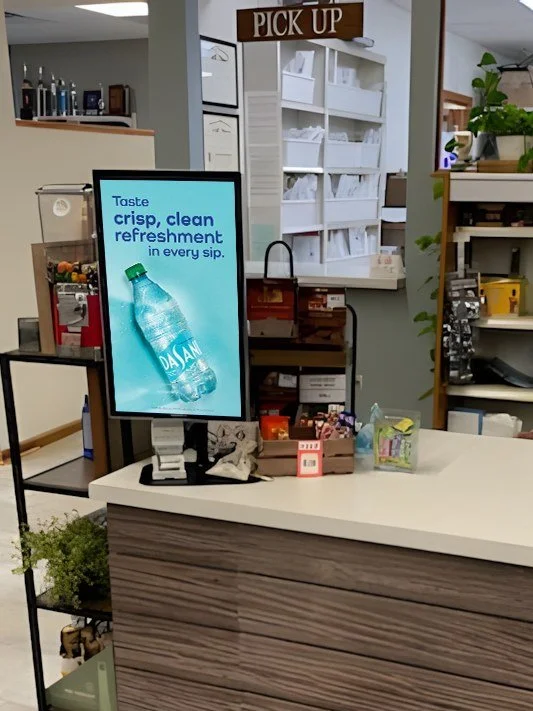
Static ads, motion graphics, or short video near waiting areas, counters, checkout, and entrances. Change creative by market or language without reprinting.
DOOH advertising →Posters & wall displays
Steady visibility near counters, waiting and consultation areas, and entrances. Built for clear messages and memorable calls to action.
Counter displays & clings
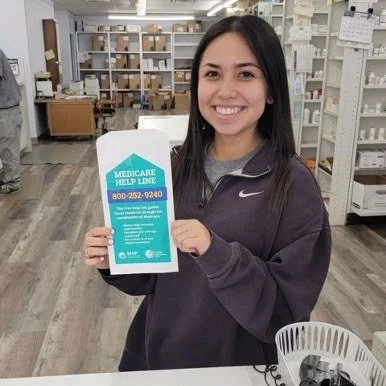
Counter cards, countertop displays, and window clings near pickup, checkout, and service areas.
Brochures & take-ones
Rack cards and take-ones people bring home, with room for symptoms, treatments, benefits, and next steps.
Plan around people, not shelf space.
Pharmacies serve broad communities, but campaigns can be planned around specific populations, health needs, and places. For culturally specific audiences, pharmacy media can be coordinated with our multicultural advertising network.
- 01Patients managing conditionsAcute and chronic, new and continuing prescriptions
- 02Older adultsIncluding Medicare-eligible populations
- 03Medicaid membersAnd lower-income communities
- 04Parents & caregiversManaging medications for family
- 05People seeking preventionVaccinations and screenings
- 06Rural communitiesWhere healthcare access is limited
- 07Multilingual audiencesCreative by language and market
- 08OTC shoppersHealth and wellness purchases
One message, two jobs.
Pharma brands use pharmacies for disease education, treatment information, and adherence. Public health programs use them because they are familiar, accessible places where people seek both medical guidance and everyday health products.
Pharmaceutical brands
- Disease-state awareness
- Branded and unbranded medication education
- New treatment awareness
- Savings and patient-support programs
- Adherence and refill education
- Vaccination awareness
- Clinical-trial recruitment
- OTC promotion and caregiver education
Public health
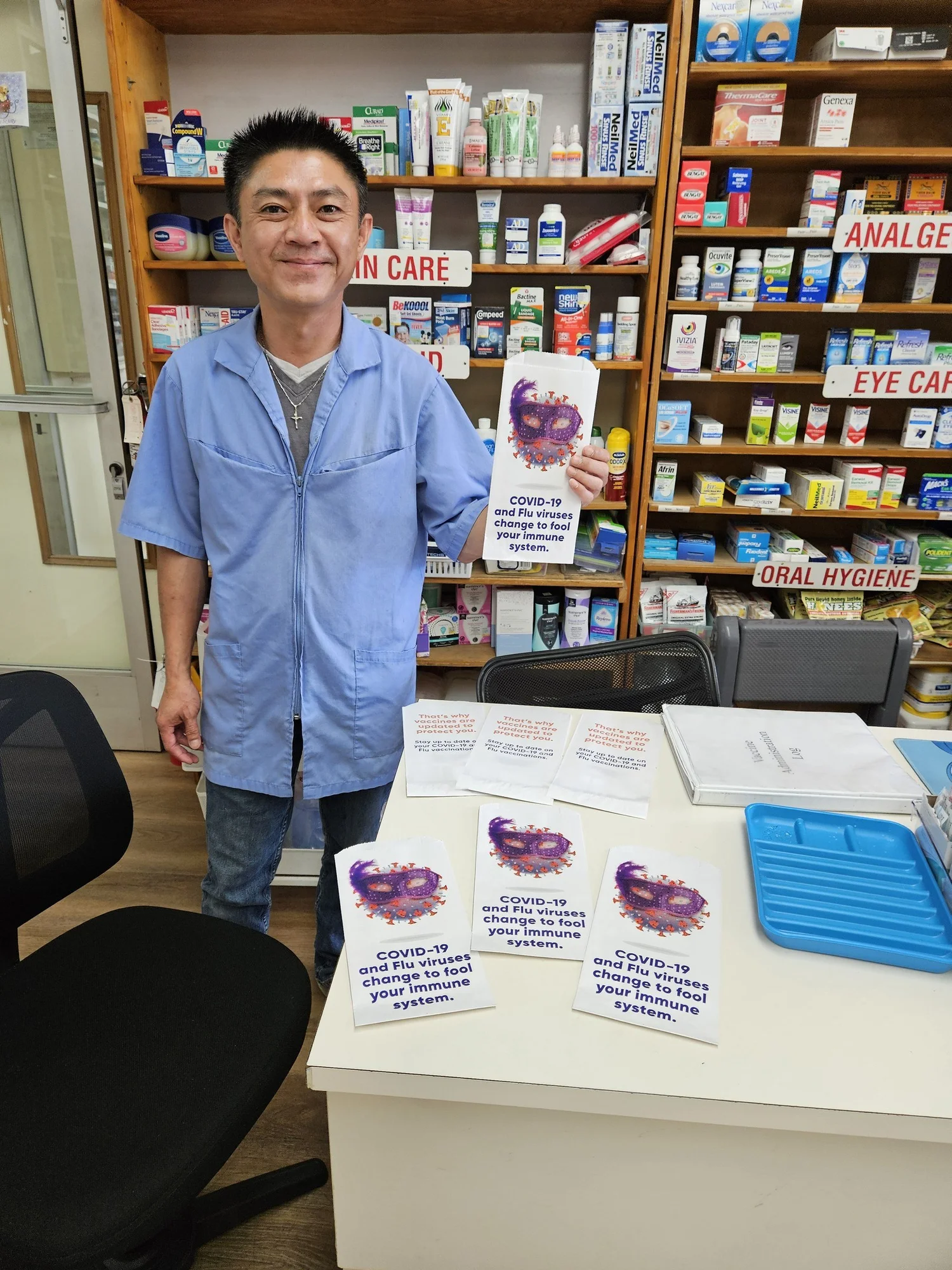
- Flu, COVID-19, RSV, and other vaccines
- Overdose prevention, naloxone, and fentanyl awareness
- Tobacco cessation
- Mental health and crisis resources, including 988
- Diabetes, heart health, and cancer screening
- HIV, STI, PrEP, and PEP education
- Maternal and infant health
- Medicare, Medicaid, and insurance enrollment
- Medication safety and disposal
Example: our SAMHSA-funded naloxone education and fentanyl awareness campaign used healthcare and community settings to reach populations hit hardest by the opioid crisis.
Case study: see how a city public health department ran flu, COVID-19 and RSV vaccination messages on digital screens in 36 pharmacies.
Hyper-local, on purpose.
Target by state, DMA, county, city, ZIP code, neighborhood, or individual location. We use demographic, socioeconomic, language, and health data to prioritize communities, so every pharmacy is chosen for its relevance, not because space was open.
- Counties with higher rates of a specific condition
- Communities with low vaccination or screening rates
- Neighborhoods with more older adults
- Areas with large Medicaid or Medicare populations
- Rural communities with care-access gaps
- Markets with specific language preferences
- Locations near priority clinics and hospitals
- Independent, regional, and grocery-based pharmacies
Follow the patient journey.
A patient may see a message at a clinic, get more detail at the pharmacy, and see it again at the grocery store. We plan those touchpoints as one campaign, from a single market to a national program.
Questions, answered.
01How does pharmacy advertising work?
Approved digital or printed messages run inside participating pharmacies. We build a media plan from your audience, geography, goals, timeline, and budget, then coordinate inventory, creative specs, installation, and reporting.
02Where do pharmacy ads appear?
Depending on the network and location: digital screens, posters, counter displays, window or wall clings, brochure holders, take-one displays, and other approved areas near pharmacy and retail activity. Your plan lists the exact formats and location types.
03Can pharmacy advertising be targeted by health condition?
Planning can use geographic health data to prioritize communities affected by a condition. Some networks offer more location-level targeting. Availability depends on the campaign, data source, network, and privacy requirements.
04Can we advertise in specific pharmacy chains?
It depends on market availability, timing, pharmacy participation, creative category, and approvals. We can evaluate chain, regional, independent, and grocery-based pharmacies in your markets.
05Can pharmacy campaigns use multiple languages?
Yes. Run different versions by market, language, location, or audience where the format and network support it. We provide specs and coordinate creative allocation.
06Who uses pharmacy media?
Pharmaceutical companies, health systems, health plans, government agencies, public health departments, nonprofits, medical-device companies, and consumer health brands.
07How much does pharmacy advertising cost?
It depends on markets, number and type of locations, formats, flight length, production, targeting, and reporting. Costs vary widely, so we build custom plans rather than quoting one national price.
08How long should a pharmacy campaign run?
Shorter flights suit seasonal vaccination, enrollment, or awareness pushes. Longer flights suit chronic-condition education, adherence, and sustained public health outreach.
09Can pharmacy advertising be combined with clinic advertising?
Yes. Pairing pharmacy and clinic media reinforces the message across the patient journey. We can build one point-of-care plan across pharmacies, physician offices, specialty practices, and community health centers.
10How are pharmacy campaigns measured?
Depending on network and format: location lists, estimated impressions, display delivery, pacing, proof-of-performance photos, QR activity, and web engagement. We confirm available measurement during planning.
Pair pharmacies with.
Point of care
Waiting rooms, exam rooms and HCP lounges.
Explore point of care →Grocery stores
Entrance, aisle, cart and checkout.
Explore grocery stores →Public health
Campaigns for health departments and nonprofits.
Explore public health →Multicultural
In-language, in-culture, in-neighborhood.
Explore multicultural →See every media solution.
All media solutions →Planning a campaign? Start with our public health advertising overview, compare DOOH advertising screens, or browse every OOH and DOOH media solution. Plan by audience with advertising to family caregivers and Medicaid outreach advertising.
Meet patients at pickup.
Tell us who you need to reach and where. We'll map pharmacies to your audience and come back with formats, locations, and a plan that fits your budget.