How to Buy Place-Based OOH and DOOH: An RFP and Procurement Guide for Agencies and Government Buyers
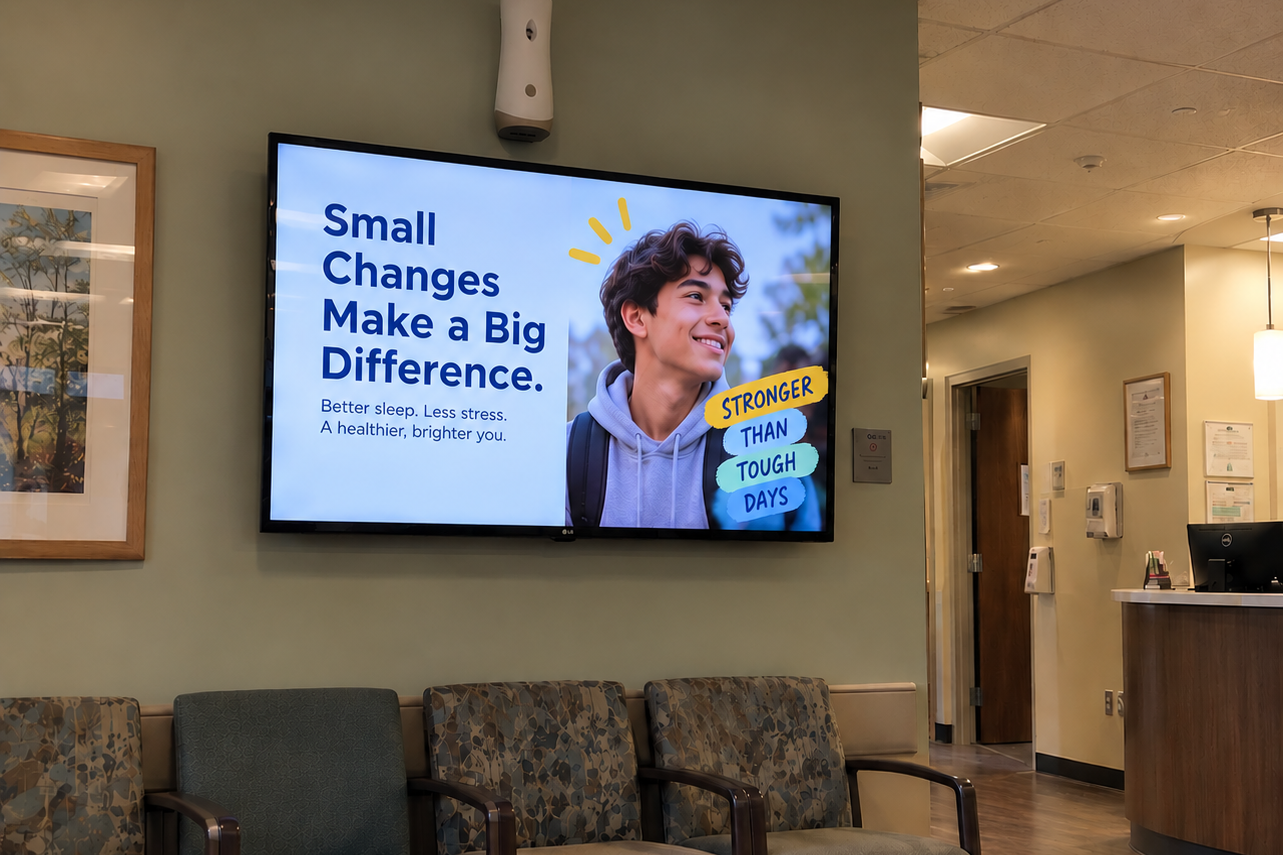
Buying place-based Out-of-Home (OOH) and Digital Out-of-Home (DOOH) through government procurement means defining the audience and behavior you need to reach, choosing the right buying path (a formal RFP, a smaller quote-based purchase, or a subcontract under an agency of record), and holding vendors to clear standards for delivery, proof, and reporting. Done well, it gets you media that reaches priority audiences in trusted venues, with documentation that holds up to an audit.
This guide is for state and local agencies, public health departments, DOTs, and the advertising agencies that buy on their behalf. It covers how to scope a place-based buy, which procurement paths are common, what to put in an RFP, the questions to ask every vendor, and what proof-of-performance and audit standards to expect.
Why Place-Based Buys Need a Different Scope
Traditional OOH is usually bought by the board: a location, a size, a traffic count. Place-based media is bought by the audience and the venue: clinics, pharmacies, gas stations, schools, grocery stores, bars, community centers, and multicultural venues. That changes what your scope of work has to say.
A scope that only asks for "OOH impressions in the state" invites vendors to compete on the biggest impression number. A place-based scope should ask who will be reached, in which venues, in which geographies, in which languages, and how delivery will be proven.

Step 1: Define the Audience, Behavior, and Geography
Before you write the solicitation, nail down:
The behavior. Call or text a hotline, get vaccinated, slow down in work zones, enroll in a program. One primary action.
The priority audience. Who has to change that behavior? Be specific: new drivers, expecting parents, adults 65+, Spanish-speaking households, young men 18–34.
The geography. Statewide, specific counties, high-burden ZIP codes, or corridors from your data.
The venues that reach that audience. Name venue types, or ask vendors to recommend and justify them.
Languages. Which languages, and whether creative should be transcreated, not just translated.
Flight dates and any fixed deadlines, such as awareness months, enrollment periods, or grant period end dates.
Step 2: Choose the Procurement Path
Rules vary by state, locality, and funding source. Your procurement office and grant terms decide which path applies. Common paths include:
Formal RFP. Best for larger or multi-year programs. You evaluate on qualifications, approach, and price, not price alone.
Request for quotes or small purchase. For smaller buys under your jurisdiction's threshold. These move faster, so a clear one-page scope matters even more.
Subcontract under an agency of record. Many agencies hold a master contract with a full-service ad agency, which then buys place-based media from specialist vendors.
Cooperative or existing contract vehicles, where your rules allow purchasing through a contract another public entity has already competed.
Sole-source or single-source, where rules allow and a vendor offers something no other vendor can, such as a specific venue network. These typically require written justification.
If federal funds are involved, check the grant's terms on paid media eligibility and any federal procurement requirements that flow down to your purchase.
Step 3: Write an RFP That Gets Comparable Answers
Ask every vendor to answer the same structured questions, so you're comparing like with like:
Proposed venue list: venue types, number of locations, and geographic distribution by county or ZIP.
Format and placement details: posters, screens, pump toppers, take-ones, and where they sit inside each venue.
Delivery guarantee: a guaranteed number of locations or impressions, and what happens if the vendor falls short.
Impression methodology: how impressions are calculated and whether a third party has reviewed the method.
Proof-of-performance: what documentation comes with every placement.
Reporting: cadence, format, and the breakdowns you need (geography, venue type, language).
Creative and production: who produces it, translation and transcreation, accessibility, and review rounds.
Compliance: how the vendor monitors placements during the flight and handles damaged or missing materials.
Timeline: time from award to launch.
Pricing: media, production, installation, and any fees as separate line items.
Step 4: The Questions to Ask Every Vendor
These separate accountable partners from impression resellers:
Do you operate this network or resell someone else's? Both can work, but you need to know who controls the venues and the proof.
Can I see the venue list before I sign? Location-level, not just a count.
Has your distribution been independently audited? By whom, and with what result?
What does proof of posting look like? Ask for a sample report.
What are your makegood terms? In writing, with timelines.
How do you handle in-language creative? Who writes it, who reviews it, and is it adapted for the culture or just translated?
Who's my day-to-day contact, and who handles production and installation? One partner or several subcontractors?
What's your experience with publicly funded campaigns? Ask about documentation for audits, public-records requests, and grant reports, without expecting them to name clients.
How do you protect privacy? In healthcare settings especially, targeting should be by location and venue type, never by patient data.
What does measurement look like beyond delivery? QR codes, vanity URLs, surveys, geo-lift against control areas.
Proof-of-Performance: What to Expect
At a minimum, a place-based vendor should provide:
Time-stamped, geo-tagged photos for each location, suitable for audits and public-records requests.
Delivery reports broken down by geography, venue type, and language, with documented methodology.
Compliance monitoring during the flight, not just at install.
Makegood documentation for any location that didn't run as contracted.
Response data from QR codes, vanity URLs, and UTM-tagged landing pages.
See what comprehensive campaign reporting looks like.
Audit Expectations: Self-Attestation vs. Independent Verification
Most place-based OOH is still reported on a self-attestation basis: the vendor runs the campaign, then sends its own report confirming it ran. For public money, that's a gap.
Independent verification closes it. The Alliance for Audited Media (AAM) is an independent nonprofit that audits media distribution claims. In an AAM audit, the scope is defined, source records are examined, delivered distribution is compared location by location against the guarantee, and AAM issues an independent statement.
PlaceBased has passed two consecutive AAM audits of its Physician Office Patient Education Program, delivering 113.3% and 111% of guaranteed distribution. The most recent covered the three months ending February 28, 2026, against a 345-location guarantee. Read more in The Accountability Gap in Place-Based Advertising.
We don't think every RFP has to require an AAM audit. We do think every RFP should ask whether a vendor has one, and score the answer.
Pricing: Compare Apples to Apples
Ask for CPM and total cost. CPM (cost per thousand impressions) is useful, but only when impression methods are comparable. Use our CPM calculator to normalize bids.
Break out production and installation. Print, shipping, and install can be real costs in place-based media.
Weigh delivery certainty. A slightly higher CPM with audited delivery and venue-level proof can be the better value for public dollars than a low CPM you can't verify.
Check for hidden fees. Creative changes, extra reporting, or translation shouldn't surprise you mid-flight.
For Ad Agencies: Working With a Place-Based Partner
If you're the agency of record, a place-based specialist should make your job easier, not add a vendor to manage:
One point of contact across media, creative adaptation, production, installation, compliance, and reporting.
RFP-ready documentation: venue lists, sample proof-of-performance reports, and audit documentation you can include in your client response.
Reporting in your format, so place-based data rolls into your client's broader campaign report.
Respect for your client relationship. Your client, your brand, your reporting.
For more on evaluating partners, see How to Choose a DOOH Provider and How to Buy DOOH Advertising.
A Simple Evaluation Scorecard
Audience fit: What good looks like: Venues clearly matched to the priority audience and behavior
Geographic fit: What good looks like: Location-level list covering your priority counties or ZIPs
Verification: What good looks like: Independent audit of distribution, plus venue-level proof of posting
Reporting: What good looks like: Breakdowns by geography, venue, and language, with documented methodology
Cultural capability: What good looks like: In-language, transcreated creative, reviewed by community members
Service model: What good looks like: One accountable partner from planning through reporting
Price: What good looks like: Transparent line items, comparable impression methodology
Frequently Asked Questions
Can government agencies buy place-based OOH through an RFP? Yes. Agencies commonly buy place-based media through formal RFPs, smaller quote-based purchases, or subcontracts under an agency of record, depending on budget size and local procurement rules.
What should a place-based OOH RFP require? A location-level venue list, a delivery guarantee with makegood terms, documented impression methodology, time-stamped and geo-tagged proof of posting, reporting by geography and venue type, and disclosure of any independent audit.
What is an AAM audit? An independent review by the Alliance for Audited Media that compares a media company's delivered distribution, location by location, against what it guaranteed, then issues a third-party statement of the result.
Is federally funded paid media eligible for place-based OOH? Place-based out-of-home advertising is an eligible paid media channel for many federally funded awareness campaigns, but always confirm against your specific grant terms.
Let's Talk
Writing an RFP, or responding to one for a public client? We'll walk you through venue options, sample proof-of-performance, and our audit documentation so you can compare vendors on evidence.
Sources
PlaceBased, "The Accountability Gap in Place-Based Advertising": AAM 113.3% and 111% across two consecutive audits; most recent covers three months ending Feb. 28, 2026, 345-location guarantee; AAM audit steps; self-attestation norm. https://placebased.media/blog/the-accountability-gap-in-place-based-advertising
PlaceBased, "We Promised 345 Locations. AAM Confirmed We Delivered 113.3%": AAM described as independent, nonprofit; audit category. https://placebased.media/blog/placebased-compliance-audits
PlaceBased fentanyl examples FAQ (paid media eligibility language, as quoted in the voice guide): https://placebased.media/blog/fentanyl-awareness-campaign-examples