How to Buy DOOH Advertising: A Complete Guide to Programmatic and Direct Buys
You can buy DOOH advertising two ways: directly through a media owner or network (direct buy), or programmatically through a demand-side platform (DSP) that accesses inventory in real time. Direct buys offer more control over placement and pricing; programmatic buys offer speed, targeting, and flexibility. Most modern DOOH campaigns use one or both depending on the campaign goal, geography, and budget. This guide walks through each method step by step.
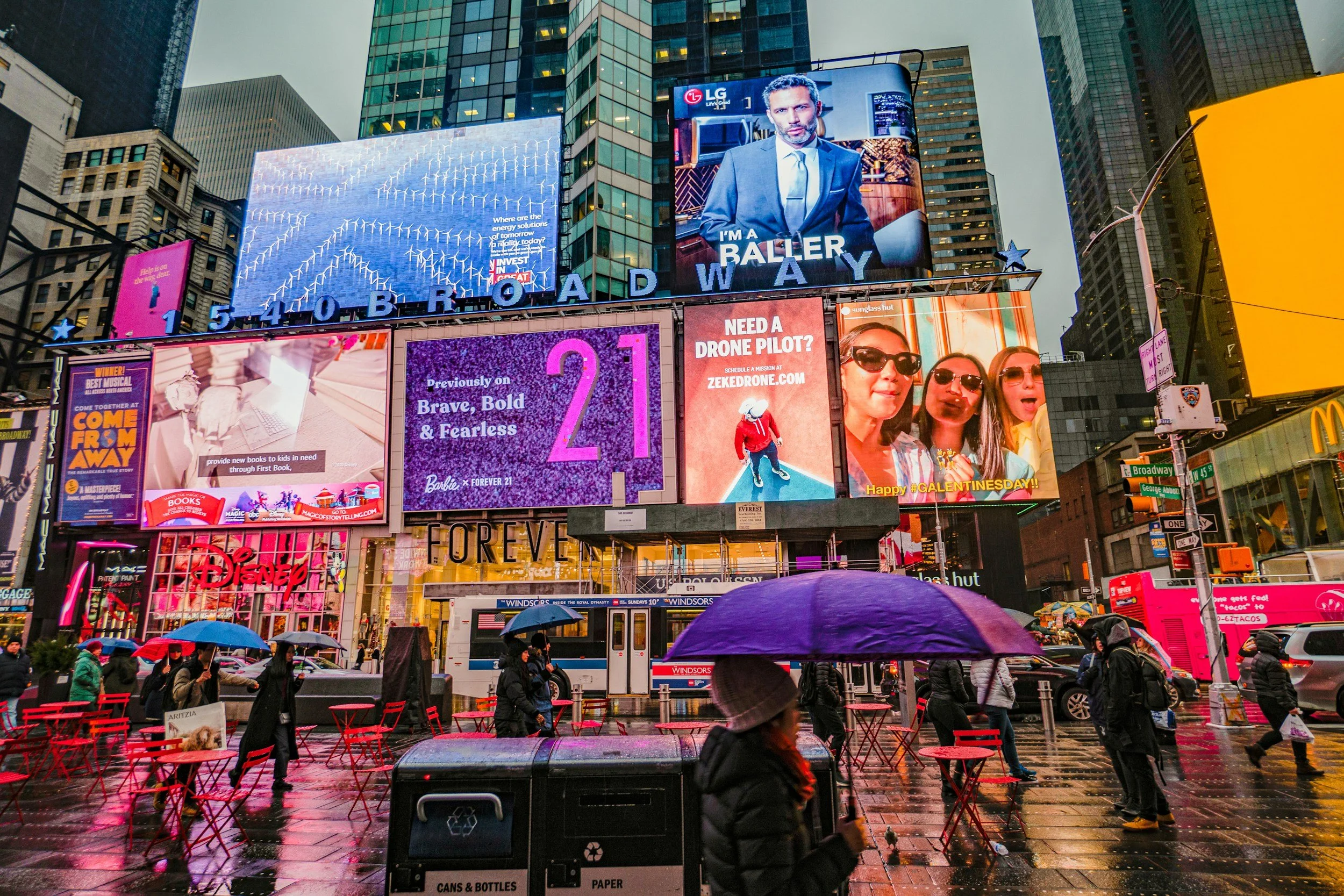
Step 1: Define Your Audience and Campaign Goal
Before buying anything, get clear on two things: who you are trying to reach, and what you want them to do.
Audience: DOOH is most powerful when the venue matches the audience. A pharmaceutical brand targeting patients should buy healthcare waiting rooms. A youth-focused public health campaign should buy high school hallways and community centers. A consumer brand targeting commuters should buy transit hubs and gas stations.
Goal: Are you driving awareness, foot traffic, website visits, or behavior change? Your goal determines which formats, venues, and measurement approach to use. Awareness campaigns prioritize impressions and reach; action-oriented campaigns prioritize contextual relevance and dwell time.
For a full breakdown of DOOH formats and venues, see What Is DOOH Advertising?
Step 2: Choose Your Buying Method — Direct or Programmatic
There are two primary ways to buy DOOH inventory:
Direct Buy
You contact a media owner or place-based network directly, negotiate pricing, and secure specific placements. Direct buys give you guaranteed inventory, more creative control, and often better rates for longer-term or high-volume commitments.
Best for: campaigns with specific venue requirements (e.g., a healthcare brand that needs clinic waiting rooms in 20 markets), long-term partnerships, and campaigns where creative quality and placement precision matter most.
Typical lead time: 2–4 weeks from contract to launch.
Programmatic Buy
You use a demand-side platform (DSP) to bid on DOOH inventory in real time across a network of screens. Programmatic DOOH lets you set audience parameters, daypart targeting, geographic filters, and budget caps — and adjust them on the fly.
Best for: campaigns that need rapid deployment, flexible budgets, multi-market reach, or real-time optimization. Also useful for brands already running programmatic digital campaigns who want to extend into OOH.
Typical lead time: 24–72 hours from brief to live, depending on creative approval.
Note: Not all DOOH inventory is available programmatically. Place-based networks in specialized venues (healthcare, schools, community centers) are often direct-buy only, which is why direct relationships with networks like PlaceBased Media remain essential for targeted campaigns.
Step 3: Select Your Venue Environment
DOOH inventory is organized by venue type. The right venue is the one where your target audience naturally spends time — and where your message will feel contextually relevant, not intrusive.
Healthcare / Point-of-Care: Clinics, hospitals, pharmacies. Best for pharma, health insurance, public health campaigns. Audiences have extended dwell times (15–45 minutes) and are in a health-focused mindset.
Educational: High schools, college campuses. Best for enrollment marketing, youth public health, and Gen Z brands.
Gas Stations & C-Stores: Pump-top screens and in-store displays. Best for CPG brands, drive-market tourism, and campaigns targeting a broad adult demographic in routine purchase mode.
Bars & Restaurants: Indoor screens in casual dining and bar environments. Best for alcohol brands, entertainment, and lifestyle campaigns targeting adults 21–45.
Community Centers & Recreation: Gyms, rec centers, community boards. Best for local government, nonprofits, health campaigns, and brands targeting families.
Transit & Airports: High-traffic environments with broad demographic reach. Best for national brands, travel advertisers, and awareness campaigns.
Step 4: Set Your Budget and Negotiate Pricing
DOOH pricing varies by venue type, market size, format (static vs. digital), and buying method. Here are general benchmarks:
CPM (Cost Per Thousand Impressions): $8–$25 for most place-based environments. Healthcare and educational venues carry premium CPMs ($15–$25) due to audience targeting precision. Gas stations and community venues are typically $8–$15.
Minimum spends: Direct buys often have market or network minimums, typically $5,000–$25,000 per market depending on the network. Programmatic buys can start lower, often $1,000–$5,000, but may have less venue specificity.
Flight lengths: Most campaigns run 4–13 weeks. Shorter flights (4 weeks) work for event-driven or seasonal campaigns; longer flights (8–13 weeks) are standard for awareness and behavior change campaigns where repetition matters.
Ask your media partner for a detailed rate card and audience delivery estimate before committing. Reputable networks provide impression estimates by market, venue type, and daypart.
Step 5: Build and Submit Your Creative
DOOH creative requirements vary by screen size, aspect ratio, and venue. Most digital place-based screens use one of these standard formats:
Landscape (16:9): Most common for roadside and transit DOOH. Typical resolution: 1920x1080px.
Portrait (9:16): Common for gas station pump screens, in-store displays, and some healthcare screens. Typical resolution: 1080x1920px.
Square (1:1): Used in some community and retail environments.
Creative best practices for DOOH:
Keep copy short. Viewers have 3–7 seconds of engagement time. Lead with the message; save the details for a QR code or URL.
Use high contrast. Screens in bright environments (gas stations, storefronts) need bold colors and high-contrast text to remain readable.
Include a clear call to action. QR codes, short URLs, or a phone number give viewers a next step. QR codes work especially well in high-dwell environments like waiting rooms.
Animate where possible. Motion catches attention on digital screens, but keep animations simple — looping graphics outperform complex video in most place-based environments.
Step 6: Launch and Monitor
Once creative is approved and your flight starts, your media partner or DSP will provide impression reporting. Key metrics to monitor:
Impressions delivered vs. contracted: Confirm your campaign is pacing to deliver the agreed volume.
Reach and frequency: How many unique individuals saw the ad, and how often. For behavior change campaigns, frequency of 3–5 exposures is generally the target.
Daypart performance: If running across multiple dayparts, check which times deliver the highest impression volume for your venue type.
Creative performance: If running multiple creative versions, compare engagement or downstream metrics to identify the strongest execution.
Step 7: Measure Results
DOOH measurement has matured significantly. Depending on your campaign goal, here are the measurement approaches available:
Foot traffic attribution: Mobile location data measures whether people exposed to your DOOH ad visited a specific location (store, clinic, event). Available through partners like Foursquare, Placer.ai, and others.
Mobile retargeting lift: Serve follow-up digital ads to mobile devices detected near DOOH screens, then measure lift in site visits, conversions, or app downloads vs. a control group.
Brand lift studies: Survey-based measurement of awareness, recall, and consideration among exposed vs. unexposed audiences. Best for large national campaigns.
Impression verification: Third-party verification that screens were live and serving impressions as contracted. Standard for programmatic buys; available on request for direct buys.
QR code / URL tracking: For campaigns with a direct response component, track scans and URL visits with UTM parameters to measure downstream web activity.
Programmatic DOOH vs. Direct Buy: A Quick Comparison
Choose Direct Buy if: You need specific venue types (healthcare, schools), guaranteed placement, long-term pricing, or campaigns where brand safety and context are critical.
Choose Programmatic if: You need speed to market, flexible budgets, multi-market scale, real-time optimization, or integration with an existing programmatic digital strategy.
Use both if: Your campaign has a national awareness layer (programmatic) and a targeted contextual layer (direct buy in specific venues). This hybrid approach is increasingly common for large public health and pharma campaigns.
Frequently Asked Questions
How much does DOOH advertising cost?
DOOH CPMs typically range from $8 to $25 depending on venue type, market, and format. Healthcare and educational venues carry the highest CPMs due to audience precision. Direct buys usually have market minimums of $5,000–$25,000; programmatic campaigns can start lower. Contact PlaceBased Media for a custom quote.
What is the minimum budget for a DOOH campaign?
Minimum budgets vary by network and buying method. Programmatic DOOH campaigns can start at $1,000–$5,000 per market. Direct buy campaigns with place-based networks typically start at $5,000–$10,000 per market for a 4-week flight. Larger multi-market campaigns scale from there.
How long does it take to launch a DOOH campaign?
Programmatic DOOH can go live in 24–72 hours once creative is approved. Direct buy campaigns typically require 2–4 weeks from contract signing to launch, depending on creative production timelines and network onboarding requirements.
Can I target specific audiences with DOOH?
Yes. Place-based DOOH targeting works by selecting venues where your target audience naturally spends time — healthcare settings for patients, high schools for teens, gas stations for commuters. Programmatic DOOH adds a layer of audience data targeting based on mobile device behavior and demographics near the screen.
What is programmatic DOOH?
Programmatic DOOH is the automated buying and selling of digital out-of-home advertising inventory through a demand-side platform (DSP). It uses real-time bidding, audience data, and algorithmic optimization to serve ads on digital screens — applying the same principles as programmatic digital advertising to physical screen environments. See: What Is DOOH Advertising?
Ready to launch your DOOH campaign? PlaceBased Media operates place-based DOOH networks across 300+ markets nationwide — from healthcare waiting rooms to high school hallways to gas station pumps. Contact us to get started →
Related: DOOH Advertising Solutions