Why SGM Young Adults Matter for Public Health Campaigns
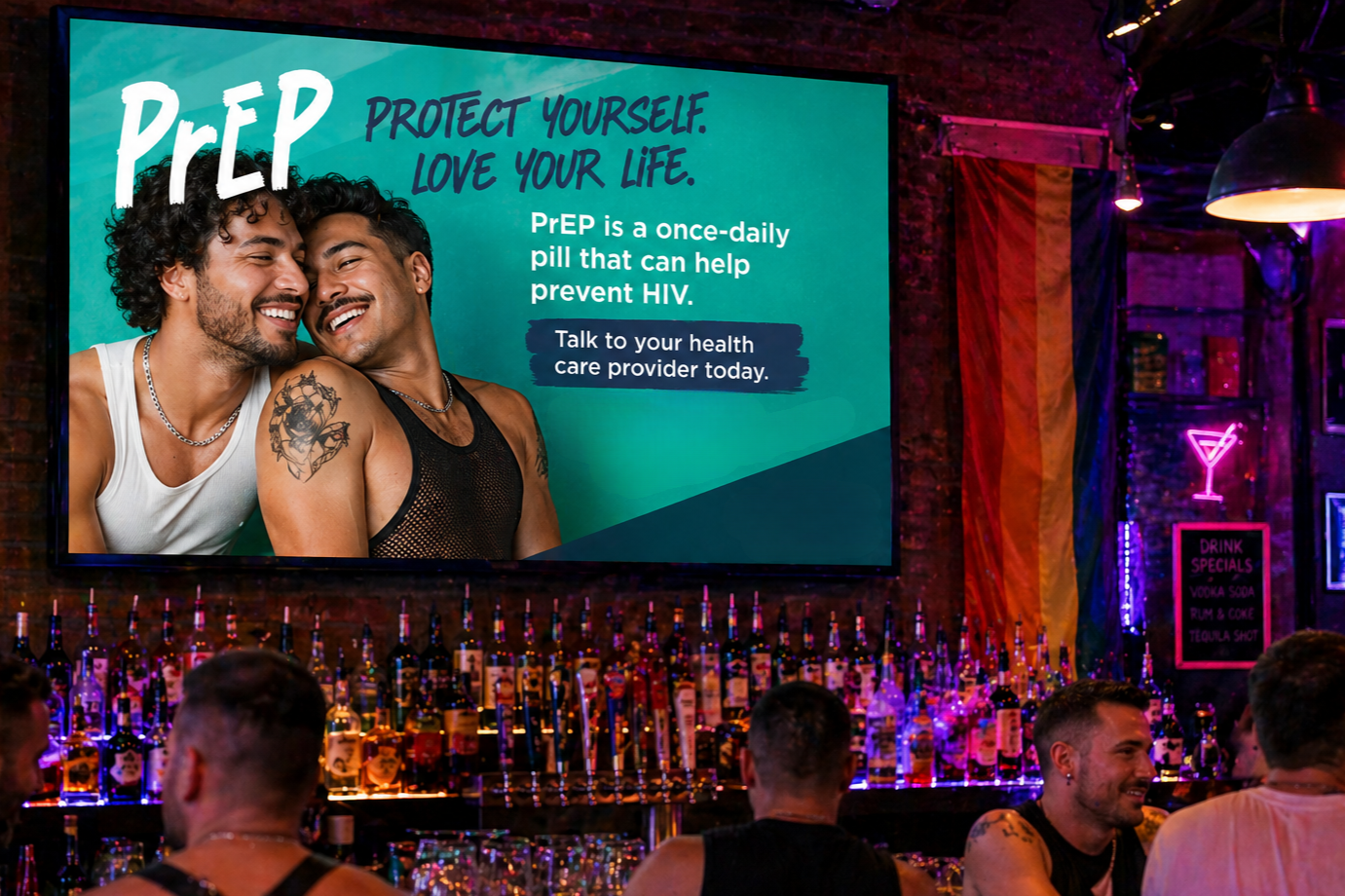
Sexual and Gender Minority (SGM) young adults — typically ages 18 to 29 — represent one of the most important and underserved audiences in public health outreach today. The community is also growing at a pace few demographic categories ever have. According to Gallup's generational tracking, the share of adults identifying as LGBTQ+ has roughly doubled with every cohort: 1% of the Silent Generation, 2.5% of Baby Boomers, 4.5% of Gen X, 10% of Millennials, and now 22% of Gen Z. That last figure is not a margin-of-error blip. It represents tens of millions of young adults who are increasingly visible, increasingly out, and increasingly central to the public health landscape — and whose health needs the traditional system has not historically been built to meet.
The disparity data underscores why this audience demands deliberate, well-designed outreach rather than general-market spillover. Most new HIV infections in the United States continue to occur among gay and bisexual men, the majority of whom are Black or Hispanic/Latino, according to CDC surveillance. The gap between need and access is stark: the CDC estimates that roughly 1.2 million Americans could benefit from PrEP, but in 2021 only about 11% of eligible Black individuals and 21% of eligible Hispanic/Latino individuals were prescribed it, compared with roughly 78% of eligible White individuals. Transgender communities face even sharper inequities. Peer-reviewed research published through the National Library of Medicine estimates that transgender women in the U.S. are 19 times more likely than cisgender women to be living with HIV, with roughly 1 in 7 (14%) transgender women estimated to be HIV-positive overall — and prevalence climbing to 44% among Black transgender women and 26% among Hispanic/Latina transgender women in some meta-analyses. The same body of research consistently finds that PrEP awareness and uptake among transgender and non-binary adolescents and young adults remain well below where they need to be, in part because educational outreach historically hasn't been designed with these communities in mind.
Beyond HIV, SGM young adults face elevated rates of mental health challenges, substance use, and tobacco-related disease, alongside lower trust in traditional healthcare institutions and a documented reliance on peer and community-based spaces for health information. They are, in other words, an audience that rewards being met where they actually live, gather, and seek care — and one that quickly disengages from messaging that feels generic, performative, or institutional. Reaching them effectively requires more than scale. It requires context, authenticity, and trust.
What Public Health Marketing Has Already Proven
Before turning to OOH specifically, it's worth grounding the conversation in what well-funded public health marketing has actually delivered. The most rigorously evaluated example in U.S. history is the CDC's Tips From Former Smokers campaign, the first federally funded national tobacco education campaign and a benchmark for what evidence-based public health communication can accomplish. Between 2012 and 2018, the CDC estimates that Tips drove more than 16.4 million quit attempts and approximately one million sustained quits, prevented roughly 129,000 premature deaths, and saved an estimated $7.3 billion in smoking-related healthcare costs. Cost-effectiveness analyses published in the American Journal of Preventive Medicine found the 2012 campaign cost just $480 per smoker who quit and $393 per year of life saved — roughly 100 times below the $50,000-per-life-year threshold typically used to evaluate public health interventions. By 2012–2023, Tips had generated more than two million additional calls to 1-800-QUIT-NOW, with peer-reviewed studies in Nicotine & Tobacco Research and Health Education & Behavior showing a clear dose-response relationship: the more campaign exposure smokers received, the more likely they were to attempt to quit, and the less likely former smokers were to relapse. The implication for any public health campaign — including SGM-focused HIV, PrEP, mental health, and substance use efforts — is consistent and well-documented: frequency, sustained presence, and emotionally resonant storytelling drive measurable behavior change at the population level.
The same patterns appear in HIV-specific public health marketing. CDC's Let's Stop HIV Together campaign, the national campaign anchoring the Ending the HIV Epidemic in the U.S. initiative and the National HIV/AIDS Strategy, has been a primary engine for HIV testing and stigma reduction outreach to communities most affected by HIV — including MSM, transgender women, and Black women. Its Doing It sub-campaign explicitly targets routine HIV testing as a normalized part of healthcare. Marketing-driven distribution programs have produced concrete numbers as well. The CDC-funded Together TakeMeHome HIV self-test distribution program, promoted through Let's Stop HIV Together, distributed 443,813 self-tests to 219,360 individuals in its first year alone (March 2023 to March 2024), with 67.9% of recipients coming from CDC-designated priority audiences disproportionately affected by HIV. Programs like these don't succeed because of any single channel. They succeed because trusted messaging is delivered repeatedly, in the right contexts, to audiences primed to act — which is precisely what well-executed Place-Based OOH offers.
Digital public health marketing reinforces the same lesson with different metrics. A large-scale meta-analysis of 819 randomized social media advertising experiments run by 174 public health organizations during the COVID-19 pandemic — collectively reaching 2.1 billion people — found that public health campaigns shifted self-reported beliefs at an estimated cost of about $3.41 per influenced person, with particularly strong performance on practical knowledge such as how and where to access vaccines. Smaller evaluations of locally led, place-based digital health promotion campaigns in the U.K. similarly found that targeted digital outreach can meaningfully boost participation in public health programs, especially when messaging cues a person's actual local environment. Across modalities, the through-line is the same: messaging works when it lands in the right context, at adequate frequency, with creative that respects the audience.

Why Place-Based OOH Works for This Audience
Out-of-Home advertising has quietly become one of the most resilient and effective channels in modern marketing. In 2024, U.S. OOH advertising revenue surpassed $9 billion for the first time, according to the Out of Home Advertising Association of America (OAAA), and the medium has now logged 18 consecutive quarters of year-over-year growth, per EMARKETER reporting. Globally, OOH spend is on pace to hit roughly $49.8 billion in 2025, according to the World Out of Home Organization. Within OOH, Digital Out-of-Home (DOOH) is the fastest-growing segment, projected by Grand View Research to grow from $20.74 billion globally in 2024 to $39.12 billion by 2030, a compound annual growth rate of 10.7%. Programmatic DOOH alone is forecast by StackAdapt and EMARKETER to grow 22.6% year over year in 2025 and reach $1.22 billion by 2026.
For public health audiences in particular, raw growth is less interesting than how OOH performs against other channels — and why that performance matters disproportionately when the audience is harder to reach through conventional means.
The first reason is attention. Place-Based OOH delivers the kind of focused exposure that almost no other medium can match in 2026. While digital ads contend with ad blockers, scroll-past behavior, and a feed environment optimized for fast disengagement, place-based environments give brands time. Healthcare waiting rooms generate average dwell times of 20 to 45 minutes, according to OOH industry benchmarks. Gym and fitness studio visits routinely run 45 to 75 minutes, with many members visiting two to four times per week. Cafés and coworking spaces hold attention for 30 minutes or more in a low-distraction setting. Nightlife venues — particularly LGBTQ+ bars, clubs, and lounges — keep patrons present for two to four hours of repeated, social exposure. None of those dwell-time figures are theoretical. They are baked into how SGM young adults move through their week, and they create an attentional surface that Instagram, TikTok, and connected TV simply cannot replicate.
The second reason is favorability and action, and here the evidence is particularly strong. The OAAA's landmark 2024 study with The Harris Poll, sponsored by the Foundation for Out of Home Advertising Research and Education (FOARE), found that 73% of consumers view DOOH ads favorably — significantly higher than television and video (50%) and social media (48%). Among recent DOOH viewers, 76% reported that a DOOH ad had recently prompted them to take some form of action, and 74% of mobile device users reported taking a follow-up action on their phone after DOOH exposure, including online searches (44%), direct visits to advertiser websites (38%), and social platform engagement (30%). Industry research shows that consumers exposed to OOH are roughly 48% more likely to visit a physical location than those who aren't — a statistic that translates directly into public health terms when the location in question is a clinic, testing site, or community health center. And critically, OOH is immune to ad blockers, an increasingly important attribute as a growing share of the digital ad ecosystem becomes invisible to younger audiences.
The third reason is recall and downstream behavior. OOH's frequency advantage compounds the dwell-time effect: it reaches roughly 90% of people in urban areas weekly, and the average city commuter is exposed to more than 5,000 OOH impressions per month, per industry data. The downstream effects are well-documented and consistent with what Tips From Former Smokers demonstrated about dose-response in tobacco marketing. Search campaigns paired with OOH typically see a 20% to 40% lift in performance. OOH exposure increases branded search volume by 10% to 50%. QR codes on OOH placements generate response rates two to four times higher than equivalent QR codes in print. Location-based targeting can lift OOH ROI by 15% to 40%. For a PrEP, HIV testing, smoking cessation, or behavioral health campaign, this means OOH is not just creating top-of-funnel awareness — it's driving the searches, scans, calls, and clinic visits that translate into measurable health outcomes.

Top Venue Types to Reach SGM Young Adults
A campaign's media plan is, ultimately, a hypothesis about where the audience actually is. For SGM young adults, several environment categories combine authenticity, scale, and dwell time in ways that make them especially well-suited to public health messaging.
LGBTQ+ nightlife and social spaces — gay bars, clubs, lounges, drag venues, event spaces, and Pride activations — are among the most powerful venues for PrEP awareness, HIV testing promotion, substance use messaging, and event-driven campaigns. Multi-hour dwell time, high social density, and trusted community context make these environments uniquely valuable. Coasters, mirror clings, restroom posters, and digital screens in these venues land in moments when the audience is socially engaged and culturally affirmed, creating the kind of repeated, peer-validated exposure that drives recall and conversation.
Affirming healthcare and community clinics — including LGBTQ+ health centers, sexual health clinics, and community-based organizations — are exceptionally well-suited to PrEP education, testing promotion, treatment adherence messaging, and healthcare navigation content. The 20- to 45-minute average dwell time in healthcare waiting rooms creates a captive audience at a moment of explicit health intent. Take-ones with display stands, brochures, counter mats, and patient-room posters allow campaigns to convert that intent into specific next steps, while building trust through co-location with affirming providers.
Fitness, wellness, and lifestyle spaces — boutique fitness studios, yoga studios, and wellness collectives popular within LGBTQ+ communities — work well for holistic health messaging, mental health promotion, and preventative care. The repetition is what matters here. Members typically visit two to four times per week, which builds the kind of cumulative exposure that mass media campaigns like Tips needed expensive television GRPs to achieve. In fitness environments, that frequency comes built in.
Cafés and social hubs in LGBTQ+ districts — coffee shops, coworking spaces, and creative hubs in known LGBTQ+ neighborhoods — are especially effective for awareness and consideration messaging. The dwell time is long, the environment is low-distraction, and the audience is identity-affirmed by default. These are the kinds of spaces where a poster, a take-one card, or a digital screen can deliver a more nuanced message than a billboard ever could.
College and young-adult environments — university-adjacent locations, off-campus cafés, and student-heavy retail neighborhoods — round out the mix. Many campuses themselves restrict outside ad placements, so well-designed Place-Based strategies typically focus on the off-campus environments where students actually spend their non-class time, preserving reach without running afoul of campus policies.
Spotlight: LGBTQ+ Bar Network — PlaceBased's Digital Network at Gay Bars Across the U.S.
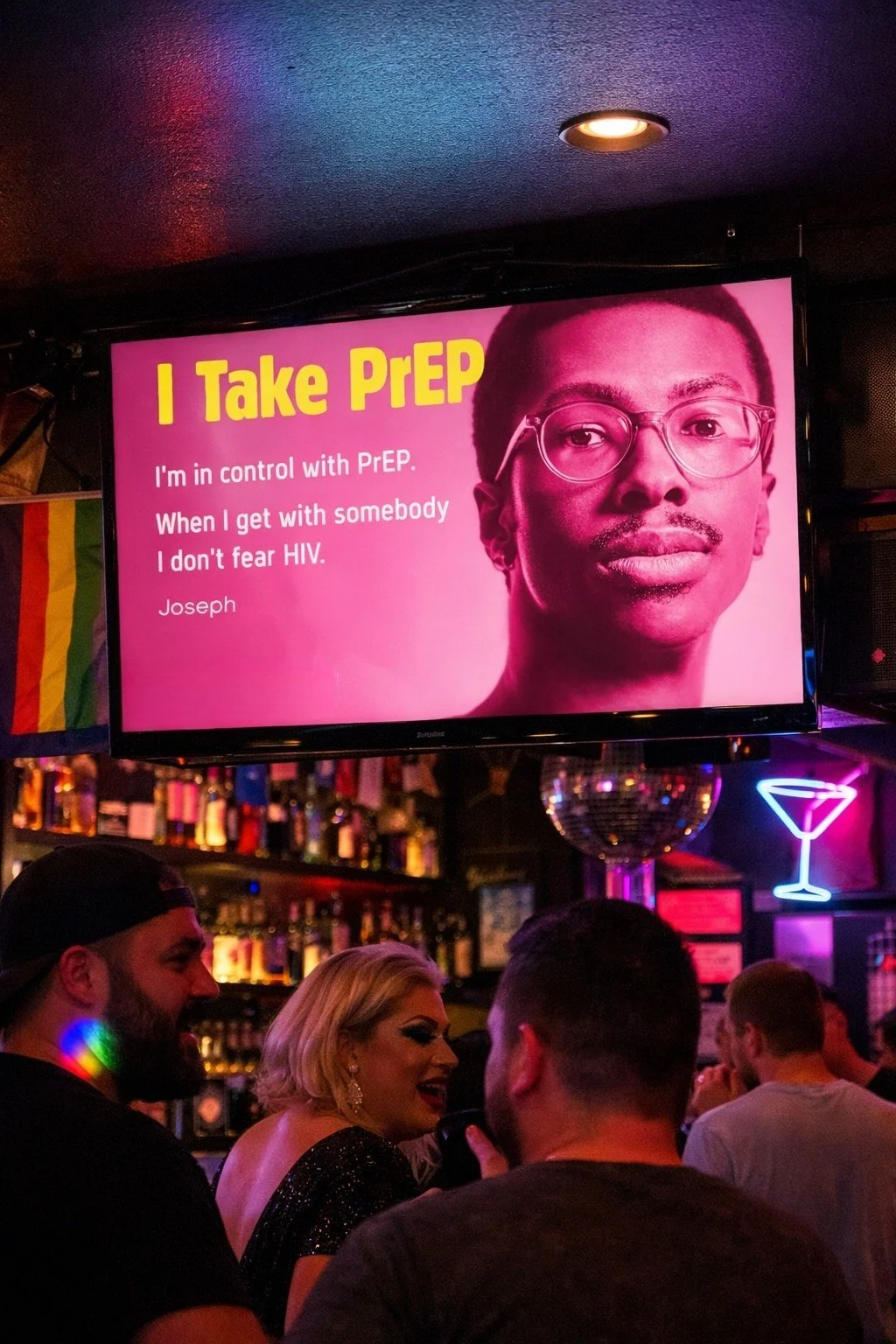
Of all the SGM-relevant venue categories, LGBTQ+ nightlife is in many ways the most strategically valuable — and the most historically underserved by mainstream media. To meet that gap, PlaceBased operates the LGBTQ+ Bar Network, a digital out-of-home network of screens placed inside gay bars and LGBTQ+ nightlife venues across the United States. The network brings full-motion DOOH advertising into the exact community spaces where SGM young adults gather, socialize, and form their most influential peer relationships — and it does so at a scale that allows national public health campaigns to deliver consistent, high-frequency exposure in markets that are otherwise difficult to reach with anything close to this level of cultural fidelity.
The strategic case for the LGBTQ+ Bar Network starts with the cultural significance of the venues themselves. Gay bars are not simply nightlife — they are, and have been for more than half a century, cultural cornerstones of LGBTQ+ life in America. They function as safe havens, social hubs, organizing spaces, and informal community health networks all at once. From the Stonewall era forward, gay bars have been the places where SGM communities first learned about HIV, first organized around prevention and treatment, and first built the peer-to-peer information channels that public health agencies still rely on today. When a PrEP, HIV testing, mental health, or substance use message appears on a screen inside one of these venues, it lands inside a context that already carries built-in trust. That cultural credibility is something no general-market DOOH network can replicate, and it's precisely what the DISQO 2025 LGBTQ+ Advertising Report identifies as the single most important factor in whether SGM audiences engage with or dismiss a campaign.
The performance case is equally strong. Bar-based DOOH delivers some of the highest recall and action rates in the entire OOH ecosystem. PlaceBased's own published data — drawn from OAAA research — finds that in-bar OOH media generates brand recall of up to 84%, attributed to the relaxed, leisurely environment in which patrons are unusually receptive and attentive to visual stimuli. OAAA research likewise finds that 71% of consumers recall OOH advertising in restaurant and bar categories, and a remarkable 86% take some form of action — talking about the brand, searching for it, reading reviews, or visiting in person. For bar-adjacent DOOH specifically, 45% of recent viewers report visiting an advertised location, demonstrating that in-venue and near-venue placements convert exposure into real-world behavior at rates most digital channels cannot match. When the desired action is a clinic visit, a PrEP prescription conversation, an HIV self-test order, or a quitline call, those numbers are not abstract marketing data — they are the conversion math that determines whether a public health campaign actually moves the needle.
The dwell-time profile of the network's environments amplifies that performance further. Patrons typically spend two to four hours per visit in a bar setting, with screens visible during conversation, drink ordering, restroom trips, and the natural lulls of social activity. Unlike a billboard flashed at 45 miles an hour or a social media ad scrolled past in 1.2 seconds, network creative gets watched, re-watched, and discussed. That repeated, ambient exposure is the same dose-response mechanic that made Tips From Former Smokers effective on television: the more times the audience encounters the message in a credible context, the higher the likelihood of behavioral change. The LGBTQ+ Bar Network builds that frequency in environments where the audience is already primed to absorb health information from sources they trust.
The LGBTQ+ Bar Network is also designed to be paired, not used in isolation. PlaceBased's full LGBTQ+ bar media stack — coasters, mirror clings, restroom posters, table tents, and take-ones — sits alongside the digital screens to create what amounts to an integrated venue takeover. Patrons see the screen, then encounter the same campaign on the coaster under their drink, then again on the mirror as they wash their hands, then once more on a take-one card by the door. That layered exposure is the in-venue equivalent of the multi-touchpoint funnels that drove Together TakeMeHome to distribute 443,813 HIV self-tests in its first year — sustained, credible, repeated messaging in trusted environments, with clear next steps every time.
For public health clients, the LGBTQ+ Bar Network also addresses one of the most persistent challenges in SGM-focused outreach: scale without sacrificing authenticity. A campaign running on the network reaches gay bars in major LGBTQ+ districts — including West Hollywood, Chelsea, the Castro, South Beach, Boystown, and dozens of secondary markets — at the kind of national footprint that a single grassroots partnership simply cannot achieve. At the same time, because every screen sits inside a venue that is already part of the LGBTQ+ community fabric, the cultural integrity of the placement is preserved by default. Campaigns don't have to choose between national reach and community credibility. The LGBTQ+ Bar Network delivers both.
Finally, the network's measurement infrastructure is built for the rigor that public health work requires. Campaigns can be tracked through QR scans, unique URLs and UTM parameters, POS promo codes, NFC chips, and — in many markets — venue-specific impression data tied to dwell time and traffic. Programs can be launched in 1 to 3 weeks once creative is approved, and PlaceBased's complimentary creative services for public health offices ensure that the messaging itself reflects the cultural fluency the audience demands. For HIV, PrEP, mental health, substance use, smoking cessation, and broader behavioral health campaigns, the LGBTQ+ Bar Network represents one of the most efficient, contextually credible, and measurable channels available for reaching SGM young adults in the United States today.
Creative That Connects: What the Research Says
Reaching SGM young adults isn't just a placement question; it's a creative one, and the data on what actually works is unusually clear. DISQO's 2025 LGBTQ+ Advertising Report — produced in partnership with Do the WeRQ — found that 77% of LGBTQ+ Gen Z consumers say inclusive ads influence their purchase and behavior decisions, with 60% of all LGBTQ+ content viewers reporting the same. Roughly 72% of Gen Z say they consider a brand's political and social stance before engaging. Yet the same body of research finds that 55% of LGBTQ+ adults say current LGBTQ+-focused ads feel insincere because they don't reflect real lived experience, per The Collage Group, and only 52% of consumers find LGBTQ+ advertising authentic, per DISQO. The implication for public health campaigns is direct and consequential: performative messaging doesn't just underperform — it actively erodes trust in the very institutions trying to deliver care to communities that already start with lower baseline trust.
What works, in practice, is representation that feels real rather than performative. Inclusive language and imagery that reflect actual intersectionality — race, gender identity, body diversity, age range — consistently outperform generic stock-image-driven creative. Clear, actionable next steps matter; a poster without a QR code, a URL, or a take-one card is leaving conversion on the table. Multiple creative versions reflecting the diversity within the audience tend to outperform single-execution campaigns. Localized copy is one of the highest-leverage creative choices a campaign can make, with research showing it can lift engagement by 20% to 45%. On digital screens specifically, motion content reliably outperforms static creative, and bold typography and human faces consistently lift emotional connection.
Equally important is what to avoid. Overly clinical or institutional tone tends to land as exactly what it is — a campaign produced by people outside the community for people inside it. Generic stock imagery that doesn't reflect actual SGM lives reads as exactly what it is. One-size-fits-all messaging fails for the same reason all generic marketing fails: the audience can tell. And rainbow-only or Pride-month-only campaigns — what Gen Z consumers explicitly call "rainbow washing" — generate the kind of backlash that erodes trust over time. Roughly half of Gen Z consumers in surveyed populations say they expect inclusion to extend beyond Pride Month, and brands that show up only in June frequently see their authenticity scores fall, not rise.
Added Value That Drives Impact
Place-Based campaigns succeed in part because they go beyond impressions. The most effective public health programs typically pair core OOH placements with tactile, take-home formats that extend exposure well beyond the venue visit itself. Take-ones with display stands are exceptional for PrEP and service navigation, giving the audience something to hold, study at home, and bring to a healthcare appointment. Window and mirror clings in high-traffic restrooms — particularly in nightlife venues and clinics — function as some of the highest-attention placements in the entire OOH ecosystem. Coasters in nightlife venues create extended in-hand engagement during exactly the social moments when peer conversations about health, testing, and prevention are most likely to happen. Counter mats and brochures in clinics and cafés convert dwell time into informational depth. These tactile formats create interaction rather than mere exposure, and they often outperform digital-only equivalents on cost-per-action metrics.
Measurement & Accountability
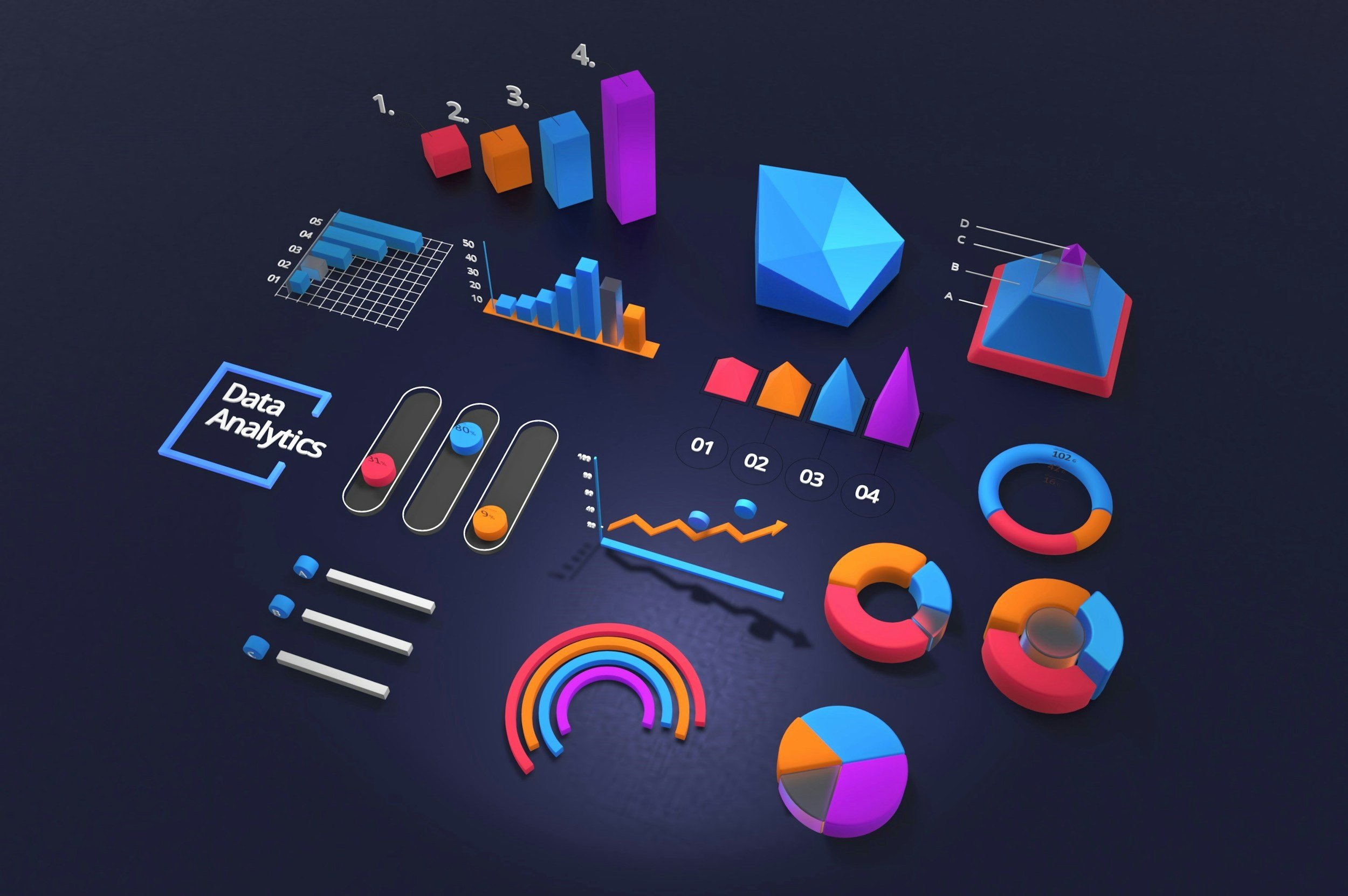
For public health clients, accountability is non-negotiable, and modern DOOH delivers measurement capabilities far superior to traditional static OOH. PlaceBased campaigns include verified location lists and mapping, proof-of-performance with field photos, verified impression counts derived from mobile location data, traffic sensors, and pedestrian counting systems, reach and frequency modeling based on real-world dwell time, demographic composition verification through anonymous audience measurement, and — for clients who want it — outcome measurement including prescription lift studies, branded search lift, clinic visit attribution, and QR scan tracking. Programmatic DOOH adds further capabilities: dayparting, weather-triggered creative, and real-time optimization of message rotation, none of which are available in traditional static OOH and many of which remain underused. StackAdapt's research finds that 59% of marketers still buy OOH inventory only through direct deals, leaving meaningful programmatic capability on the table.
The measurement parallel to public health is also worth drawing explicitly. Tips From Former Smokers succeeded in part because the CDC and its research partners built rigorous measurement infrastructure — gross rating points (GRPs) by media market, dose-response models, longitudinal surveys, and BRFSS-linked outcome tracking — that could attribute specific behavioral changes to specific campaign exposure levels. Place-Based DOOH offers the same evaluative discipline at the venue level: measurable frequency, measurable reach, and measurable downstream action.
Final Thought: Meet Them Where They Are
SGM young adults are not a niche audience. They are a rapidly growing, demographically diverse community with specific health needs, trusted spaces, and cultural nuance — and they are also a generation that rewards authentic representation and punishes performative messaging at unprecedented rates. The history of effective public health communication, from Tips From Former Smokers to Let's Stop HIV Together, is a history of meeting audiences where they are with messaging built specifically for them, sustained at adequate dose, and measured rigorously enough to prove it worked.
Place-Based OOH allows public health campaigns to do exactly that. It shows up in environments where attention, trust, and dwell time intersect. It delivers messages with the credibility that comes from venue context rather than interruption. And it drives real-world behavior change that is measurable in scans, searches, calls, store visits, and prescription lift. In a media landscape where ad blockers are ubiquitous, social trust is fragile, and attention is fragmented across dozens of platforms, context is what cuts through. The data is clear: DOOH outperforms competing media on favorability (73%), action (76%), and trust, and it does so in the exact environments — nightlife, clinics, gyms, cafés, and community spaces — where SGM young adults already live, gather, and seek care.
For the public health work that matters most, that is where impact begins.
Frequently Asked Questions
What does SGM mean in public health?
SGM stands for Sexual and Gender Minority. It's the standard term used by the National Institutes of Health, CDC, and other federal public health agencies to describe lesbian, gay, bisexual, transgender, queer, intersex, and other non-heterosexual or non-cisgender populations. Public health campaigns increasingly use SGM rather than LGBTQ+ in technical and clinical contexts because it more accurately captures the population dimensions relevant to health outcomes research.
Why is Place-Based OOH effective for reaching LGBTQ+ young adults?
LGBTQ+ young adults — particularly Gen Z, 22% of whom identify as LGBTQ+ per Gallup — spend significant time in identity-affirming venues like gay bars, LGBTQ+ health clinics, queer-friendly cafés, and community centers. Place-Based OOH delivers messages in these high-trust environments with extended dwell times (20 to 45 minutes in clinics, 2 to 4 hours in nightlife venues), producing recall and action rates that outperform social media and digital display. OAAA research shows 73% of consumers view DOOH ads favorably, compared with 50% for TV and 48% for social media.
What is the LGBTQ+ Bar Network?
The LGBTQ+ Bar Network is PlaceBased's digital and out-of-home advertising network of screens and displays placed inside gay bars and LGBTQ+ nightlife venues across the United States. It allows public health agencies, nonprofits, and brands to deliver full-motion DOOH campaigns in trusted LGBTQ+ community spaces — including markets like West Hollywood, Chelsea, the Castro, Boystown, and South Beach — with the cultural credibility that mainstream OOH and DOOH networks cannot match.
What public health topics work best for LGBTQ+ Place-Based OOH campaigns?
The strongest fits are HIV prevention and PrEP awareness, HIV testing promotion, sexual health and STI testing, mental health and 988 awareness, substance use prevention, smoking cessation, and gender-affirming care navigation. Each maps to specific venue types — for example, PrEP and HIV testing campaigns perform best in gay bars and sexual health clinics, while mental health messaging often performs best in LGBTQ+ community centers and gyms.
How do you measure a Place-Based OOH campaign for SGM audiences?
PlaceBased campaigns include verified location lists, proof-of-performance with field photos, mobile-location-based impression verification, reach and frequency modeling tied to dwell time, and — for public health clients — outcome measurement including QR scans, branded search lift, clinic visit attribution, and prescription lift studies. The same dose-response measurement framework that validated the CDC's Tips From Former Smokers campaign applies at the venue level.
Why does authentic representation matter so much for LGBTQ+ public health campaigns?
DISQO's 2025 LGBTQ+ Advertising Report found that 77% of LGBTQ+ Gen Z consumers say inclusive ads influence their decisions, but only 52% find current LGBTQ+ ads authentic, and 55% of LGBTQ+ adults say current campaigns feel insincere because they don't reflect lived experience. For public health campaigns specifically, performative or "rainbow-washed" creative doesn't just underperform — it actively erodes trust in the institutions trying to deliver care, in communities that already start with a lower baseline trust in healthcare systems.
Sources & Further Reading
Out of Home Advertising Association of America (OAAA), 2024–2025 quarterly reports. The Harris Poll / FOARE: The Effectiveness of Digital OOH Advertising, 2024. EMARKETER: U.S. OOH and DOOH forecasts, 2025. Statista: Digital Out-of-Home Advertising — United States, 2025. Grand View Research: Digital Out-of-Home Advertising Market Report, 2025–2030. Fortune Business Insights: DOOH Market Size & Share, 2025. StackAdapt: OOH Advertising Statistics Every Marketer Should Know, 2026. DISQO: 2025 LGBTQ+ Advertising Report (with Do the WeRQ). Gallup: LGBTQ+ identification by generation. CDC: HIV surveillance reports and PrEP coverage estimates. CDC: Tips From Former Smokers impact and cost-effectiveness studies, American Journal of Preventive Medicine, Nicotine & Tobacco Research, Health Education & Behavior. CDC: Let's Stop HIV Together and Together TakeMeHome program data, MMWR June 2024. NCBI/PMC: Peer-reviewed research on PrEP disparities among TGNB youth and young adults. Allcott et al.: Meta-analysis of 819 social media public health advertising experiments (174 organizations, 2.1 billion people reached).