Digital Out-of-Home (DOOH) Advertising
Digital out-of-home (DOOH) advertising runs your message on screens inside the places people visit on purpose: healthcare facilities, schools, colleges, grocery stores, gas stations, and community venues. Unlike a billboard, it reaches a defined audience, and you can target by DMA, ZIP code, venue type, or language. PlaceBased Media buys DOOH programmatically or direct.
300+ U.S. markets · AAM-audited delivery · English, Spanish + 15 more languages · Fully managed
Reach targeted audiences through digital screens in the places they shop, study, receive care, work, travel, and spend time. PlaceBased Media plans and executes hyper-local DOOH advertising campaigns across healthcare facilities, schools, colleges, grocery stores, gas stations, community venues, entertainment locations, and other high-impact environments nationwide.
What is DOOH Advertising?
Digital out-of-home advertising, commonly called DOOH advertising, delivers digital messages through screens located outside the home. Unlike online advertising, DOOH reaches people in physical environments such as healthcare facilities, schools, colleges, grocery stores, gas stations, restaurants, community centers, retail locations, transit areas, and other public spaces.
DOOH combines the visibility of traditional out-of-home advertising with the flexibility of digital media. Campaign creative can be updated without reprinting materials, scheduled by location or time of day, and adapted for different audiences, markets, languages, or community needs.
How Does DOOH Advertising Work?
DOOH advertisements appear within a rotating loop of content displayed on strategically located digital screens. Campaigns can be planned nationally or targeted by state, DMA, county, city, ZIP code, neighborhood, venue category, audience, or healthcare specialty.
Depending on the campaign and screen network, advertisers may use:
Static digital advertisements
Motion graphics or short-form video
Multiple creative versions
English and multilingual messaging
Market-specific or location-specific creative
Daypart scheduling
Contextual messaging based on venue or audience
Programmatic or directly purchased inventory
This flexibility allows advertisers to reach priority audiences with relevant messaging while maintaining consistent creative across multiple markets and venue types.
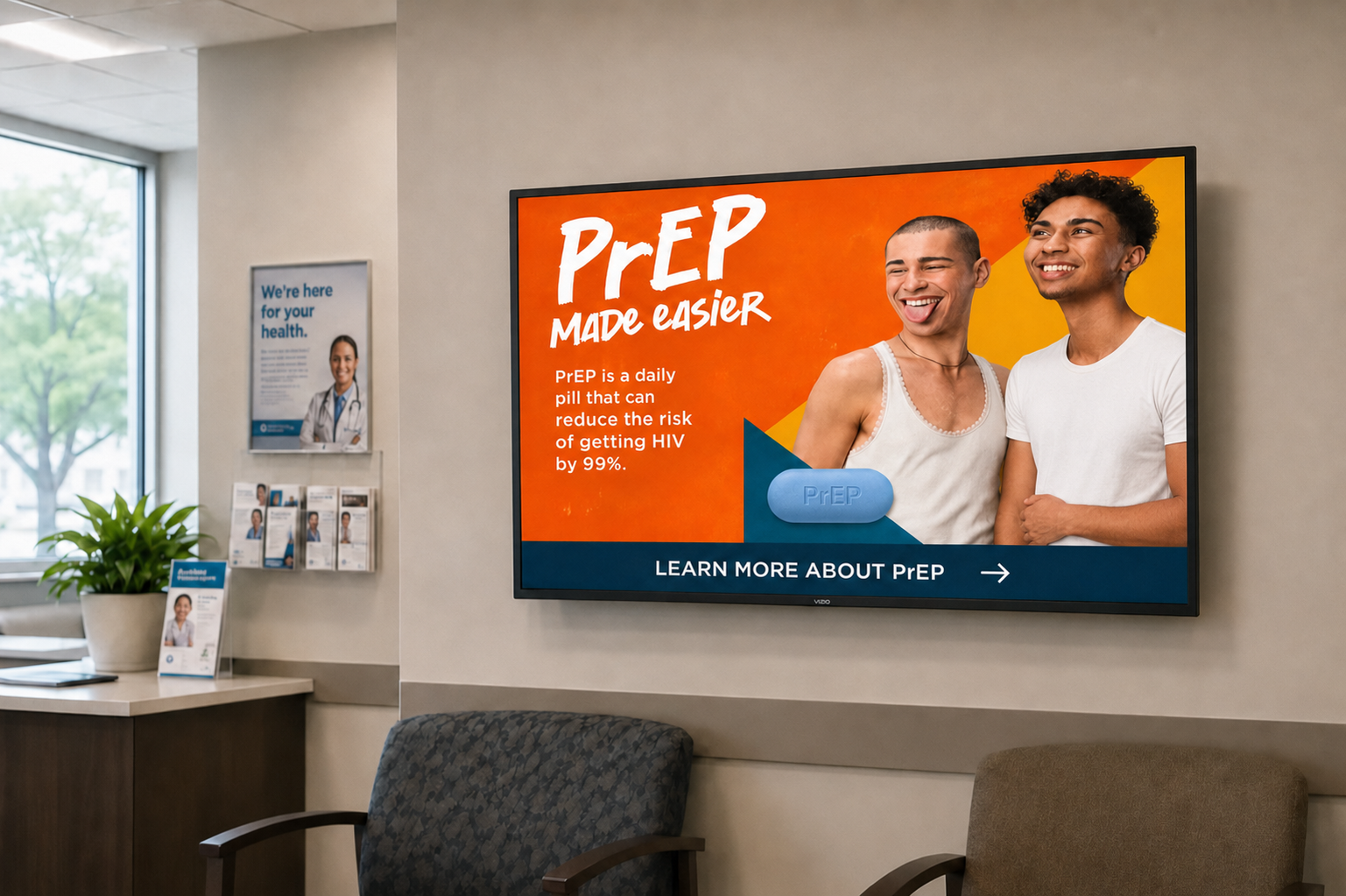
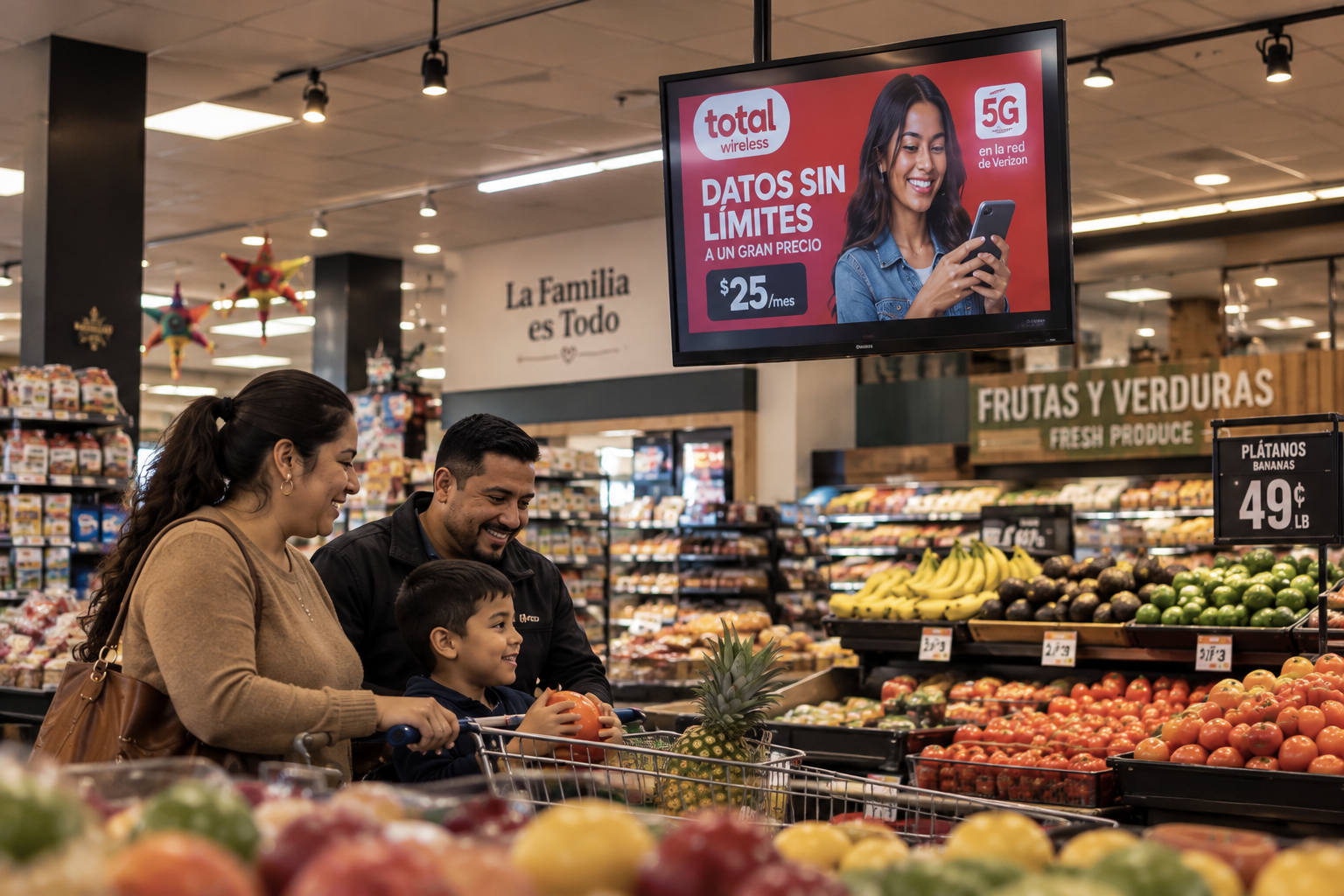
Place-Based DOOH vs. Digital Billboards
Digital billboards generally reach broad audiences traveling along highways and major roads. Place-based DOOH reaches people inside the environments they intentionally visit.
A billboard may reach everyone passing through an area. Place-based DOOH can reach patients inside healthcare facilities, students on college campuses, shoppers in grocery stores, families at community centers, or customers inside neighborhood businesses.
This audience-first approach helps reduce wasted exposure while placing messages in environments that support the campaign’s purpose and call to action.
DOOH as Part of an Omnichannel Strategy
DOOH works especially well when coordinated with other media channels. A person may first encounter a campaign through social media, streaming video, search, radio, or television, then see the same message again on a digital screen inside a healthcare facility, college, grocery store, or community venue.
This repeated exposure helps reinforce campaign awareness, improve message recall, and connect digital outreach with relevant real-world environments. Creative can be adapted to each channel while maintaining a consistent message, visual identity, and call to action.
Where Does DOOH Advertising Work Best?
Urban Areas and Retail Environments
DOOH advertising performs especially well in high-traffic urban and retail environments, where steady foot traffic creates frequent opportunities to reach consumers throughout the day. Urban panel advertising places digital messages at eye level near busy intersections, transit stops, shopping districts, and neighborhood hubs—reaching commuters, pedestrians, shoppers, and tourists as they move through the city.
Inside retail environments, digital screens connect with consumers while they are actively shopping and making purchase decisions. PlaceBased offers digital advertising across grocery stores and supermarkets, as well as gas stations and convenience stores. Campaigns can use in-store displays, checkout screens, gas station TV, digital pump screens, and other high-visibility formats to influence awareness and action near the point of purchase.
Entertainment and Lifestyle Venues
Bars, restaurants, sports facilities, and entertainment venues create valuable DOOH opportunities because audiences are relaxed, socially engaged, and often remain in one location for an extended period. Digital screens can provide repeated exposure as customers enjoy meals, meet friends, watch sporting events, or attend live entertainment.
PlaceBased’s bar and restaurant advertising network includes digital screens and other indoor advertising formats positioned in dining areas, entrances, common spaces, and restrooms. These placements help brands and public agencies reach consumers during high-dwell leisure moments in environments where messages are difficult to skip or scroll past.
Healthcare and Point-of-Care Environments
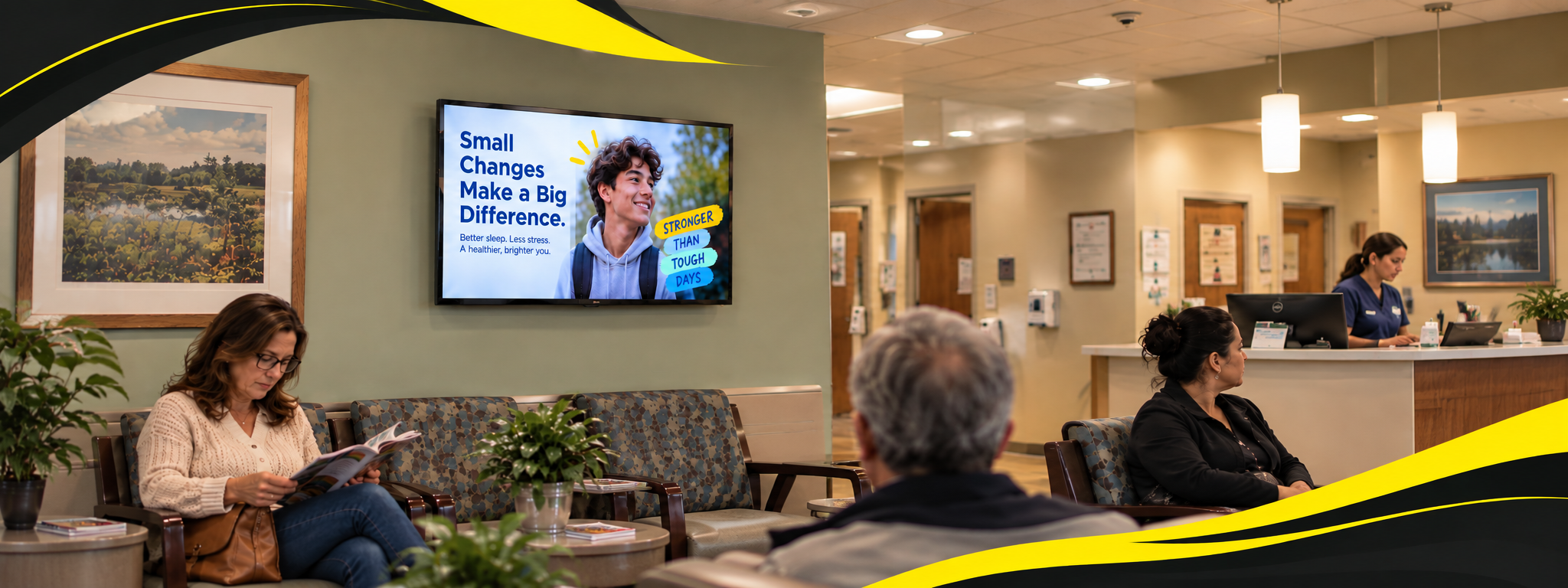
Healthcare settings are highly relevant environments for DOOH advertising, particularly for pharmaceutical brands, public health organizations, healthcare systems, and wellness-focused campaigns. Patients, caregivers, and family members often spend extended time in waiting rooms, exam rooms, lobbies, and pharmacy areas while actively thinking about health-related needs and decisions.
PlaceBased’s point-of-care advertising network reaches audiences through digital displays, waiting-room television, interactive kiosks, and other formats across clinics, hospitals, urgent care centers, specialty practices, and pharmacies. Campaigns can be targeted by geography, facility type, medical specialty, audience, and language—helping deliver contextually relevant information at meaningful points in the healthcare journey.
Health Messaging That Adapts
Public health messages rarely stay the same for long. DOOH lets agencies and health organizations update creative quickly when conditions change — a heat advisory, an outbreak update, a new vaccine clinic, an open-enrollment deadline — without reprinting a single poster.
It also makes in-language messaging practical. The same campaign can run in English in one ZIP code and in Spanish or another language in the next, matched to the community each screen serves. Messages can be tailored by age group, community, and local health priorities, and every placement should end with a clear, low-barrier next step: a number to call, a clinic to visit, a QR code to scan.
Targeting happens by place, not by person. Health campaigns are planned by venue type, medical specialty, and geography — never by individual patient health data.
Educational and Community Environments
Schools, college campuses, community centers, and recreation facilities provide direct access to students, young adults, parents, families, and other community audiences that can be difficult to reach through traditional digital channels. Digital screens in cafeterias, student unions, gymnasiums, lobbies, common areas, and recreational facilities create consistent exposure in trusted, familiar environments.
PlaceBased offers targeted DOOH campaigns across high schools, colleges and universities, and community and recreation centers. Campaigns can be planned nationally or targeted by state, market, county, ZIP code, school, campus, or community—making these networks well suited for public health education, recruitment, enrollment, youth outreach, and family-focused messaging.
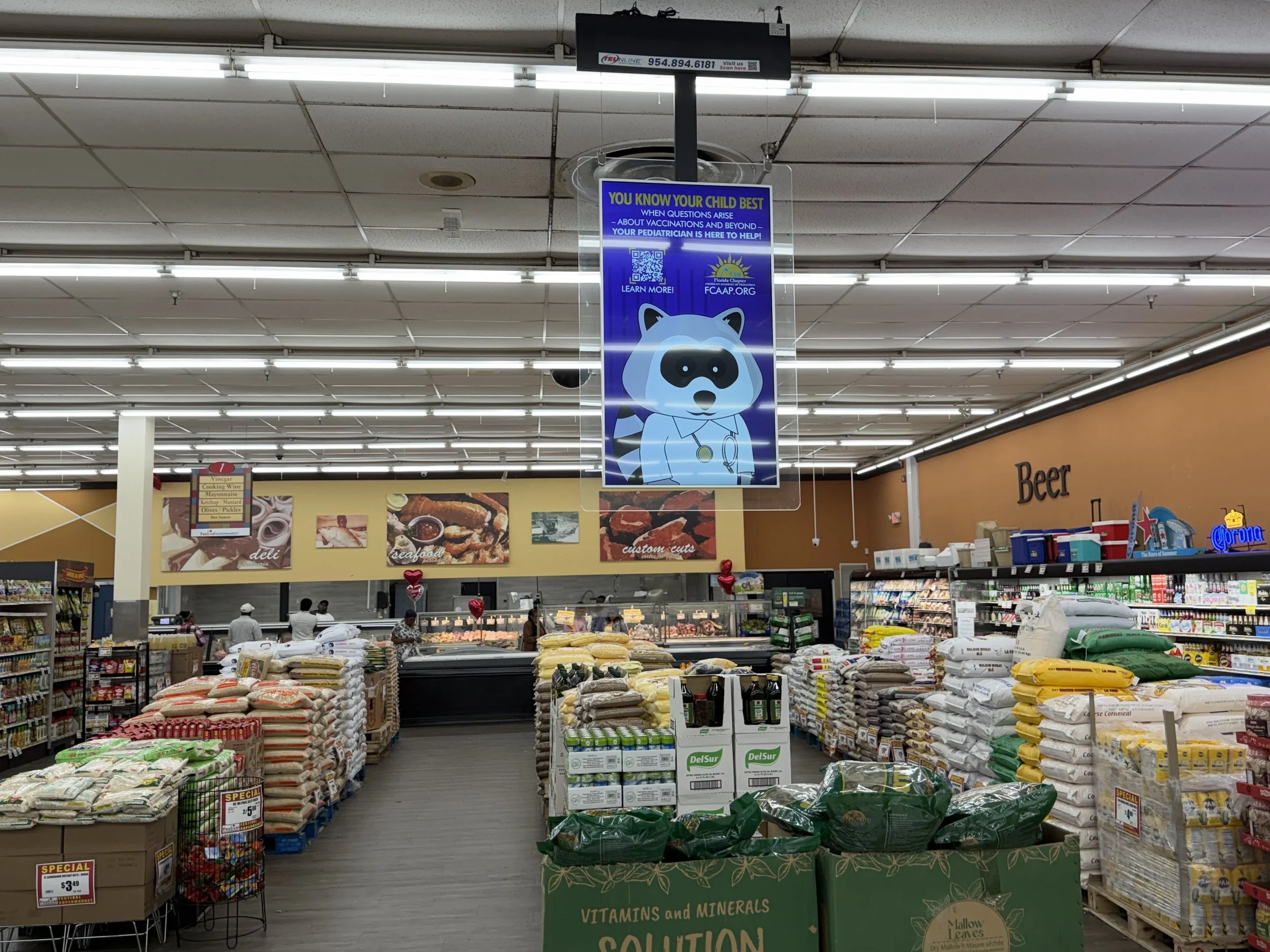
One Campaign. Multiple Environments.
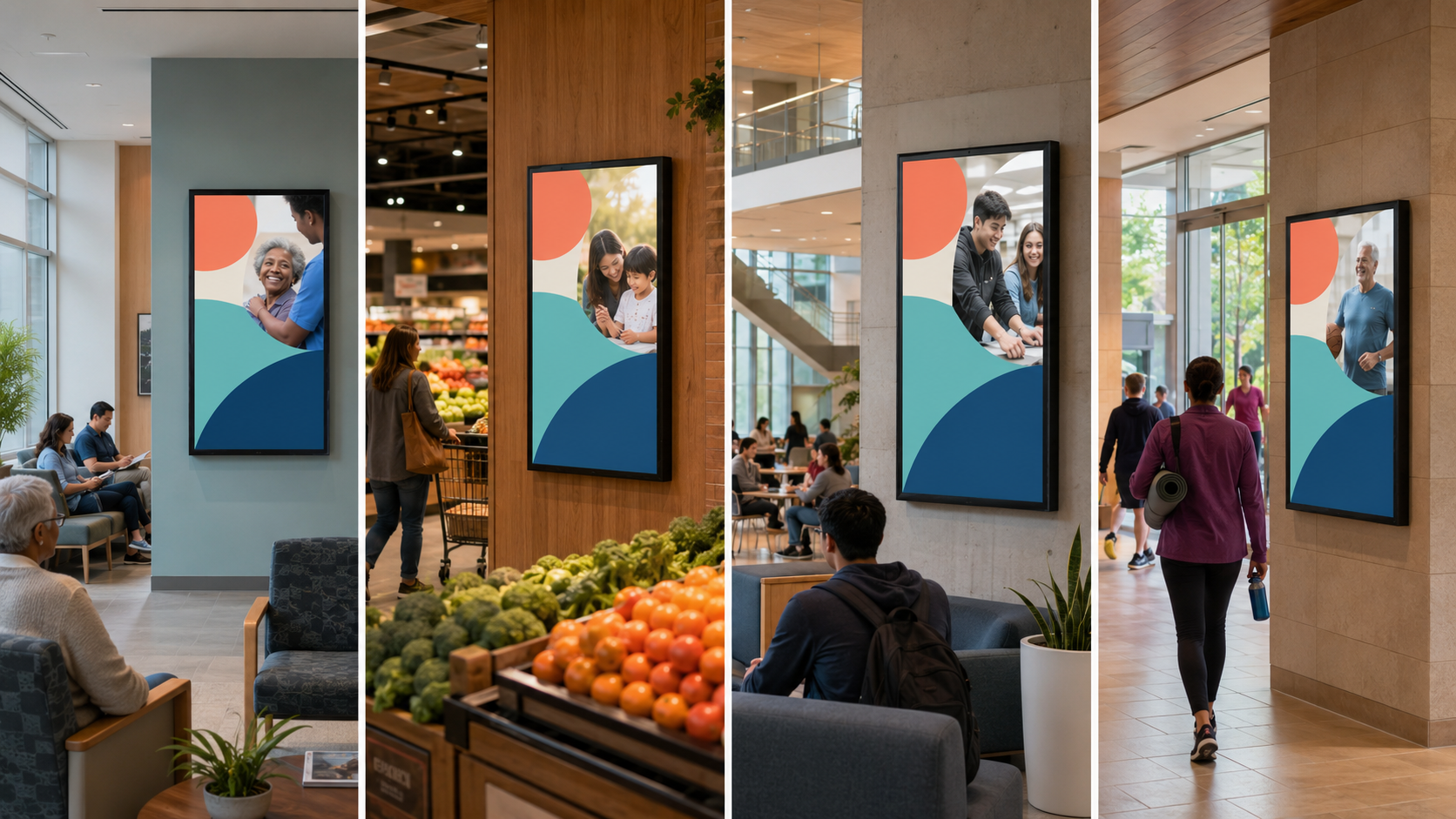
Audiences move through many environments throughout their day—and an effective DOOH campaign can meet them at multiple points along the way. PlaceBased Media coordinates digital screen placements across healthcare facilities, grocery stores, schools, college campuses, gas stations, and community centers.
By combining complementary venue networks, advertisers can reinforce a consistent message while reaching priority audiences as they shop, study, receive care, travel, and participate in their communities.
Hyper-Local Targeting
Reach priority audiences through digital screens in the communities and environments most relevant to them. PlaceBased Media uses geographic, demographic, socioeconomic, health, and population data to guide placement decisions—helping advertisers reduce wasted exposure and deliver more meaningful impressions.
Data-Driven Placement Strategy
Hyper-local DOOH targeting goes beyond selecting a city or ZIP code. PlaceBased uses layered data—including census demographics, health-disparity indicators, population density, language preferences, and community behavioral patterns—to identify the neighborhoods and venues where a campaign can have the greatest reach and relevance. For example, a public health advertising campaign can prioritize clinics and pharmacies serving communities with elevated rates of a targeted health condition. A consumer or retail campaign can focus on grocery stores and gas stations and convenience stores in neighborhoods that align with its core customer profile. The result is a more intentional media plan with less wasted spend and greater community relevance.
Reaching Underserved and Multicultural Communities
One of the most valuable applications of hyper-local DOOH is its ability to reach audiences that broad-reach advertising may overlook. By placing digital screens in community and recreation centers, neighborhood retailers, barbershops, cultural venues, and healthcare facilities, PlaceBased helps brands and public agencies connect with diverse communities in trusted, familiar environments. Campaigns can be planned specifically to reach Hispanic and Latino audiences, Black and African American audiences, Asian American and Pacific Islander audiences, LGBTQ+ communities, and rural populations. This multicultural advertising approach places culturally and contextually relevant messaging where people already shop, gather, receive care, and spend time—helping campaigns build familiarity, relevance, and trust within the communities they are intended to serve.
Hyper-Local DOOH vs. Traditional Billboard Advertising
Traditional billboard advertising casts a wide net, reaching nearly anyone who travels past a location—whether or not they match the intended audience. Hyper-local DOOH starts with the audience. Instead of asking, “Where is billboard inventory available?” PlaceBased asks, “Where does the intended audience live, shop, study, seek care, and spend time?” This audience-first approach combines community-level data with relevant venue selection. Each screen placement is chosen intentionally, helping ensure that campaign messages reach the right audiences in the right environments—and that every media dollar works harder.
Why PlaceBased Media?
PlaceBased Media plans and executes targeted DOOH campaigns across healthcare, education, retail, community, lifestyle, and entertainment environments nationwide. Rather than beginning with available screens, we start with the people and communities the campaign needs to reach.
Audience-First Media Planning
Every campaign is customized around the advertiser’s audience, geography, objectives, timeline, and budget. We use demographic, geographic, socioeconomic, health, and population data to identify the venue categories and communities most relevant to the campaign.
Access to Specialized DOOH Networks
PlaceBased provides access to digital screens across healthcare facilities, high schools, colleges and universities, grocery stores, gas stations and convenience stores, community and recreation centers, bars and restaurants, and other high-impact environments.
These networks can be combined into a single coordinated campaign or selected individually based on where the intended audience shops, studies, receives care, works, travels, and spends time.
Campaign Support From Planning Through Reporting
Our team supports each campaign from initial strategy and venue selection through creative specifications, production coordination, campaign execution, and reporting. Campaigns can be planned locally, regionally, across multiple states, or nationwide, with creative tailored by market, audience, language, or venue type.
Request a Customized DOOH Media Plan
Tell us who you need to reach, where you need to reach them, and what you want the campaign to accomplish. PlaceBased Media will develop a customized DOOH strategy based on your audience, geography, venue preferences, timeline, and budget.
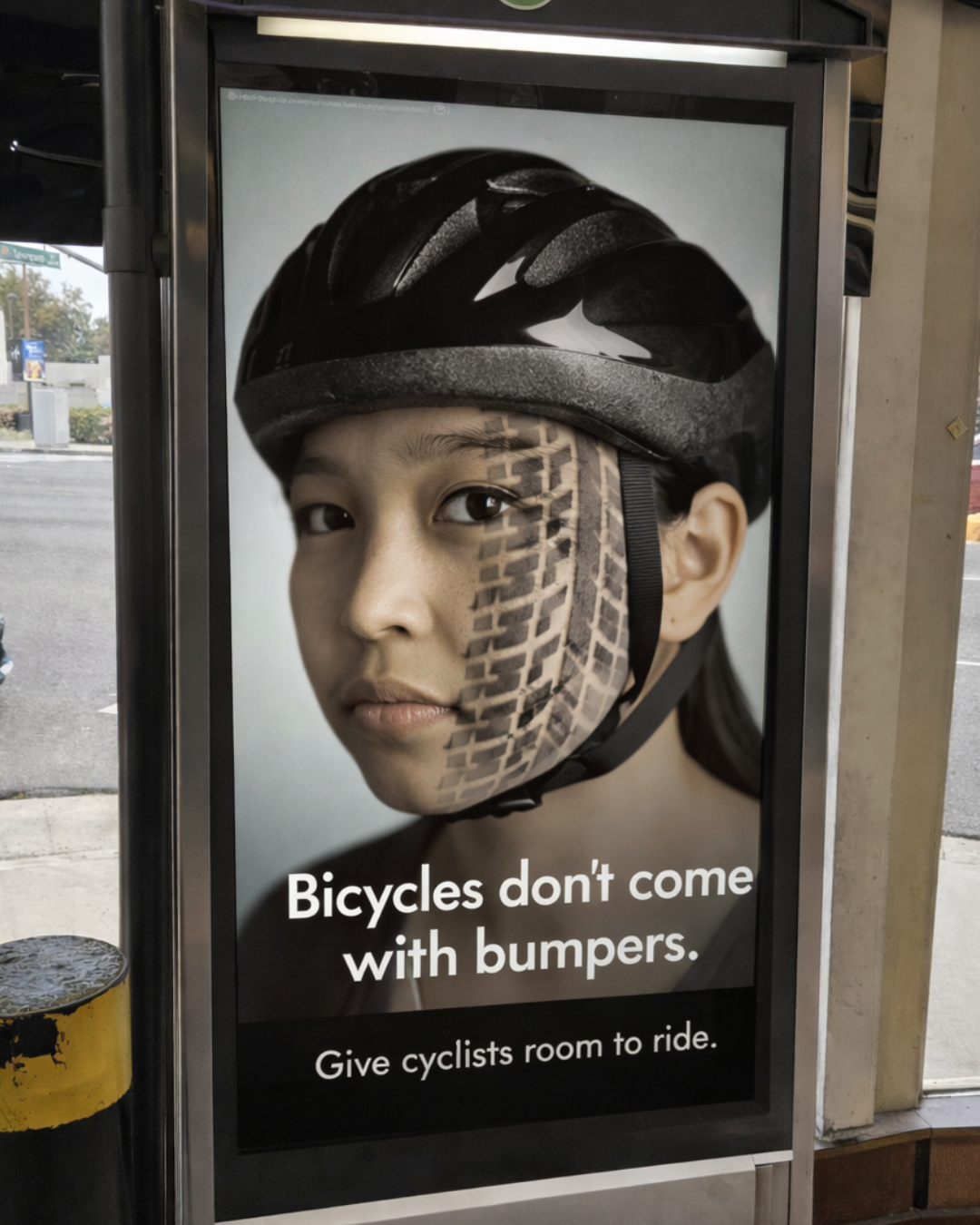
Effective digital out-of-home advertising is about more than putting an ad on a screen. Where a message appears can influence how relevant and useful it feels to the audience.
A safety campaign near streets and transportation hubs, a health message inside a pharmacy or healthcare facility, or a consumer advertisement near the point of purchase each reaches people within a different real-world context. Matching the message, audience, and environment can make DOOH advertising more relevant to what people are doing or thinking about at that moment.
This is one of the advantages of place-based DOOH advertising: advertisers can select not only a geographic market, but also the types of locations and environments that best support the campaign message. Explore our audience targeting solutions to see how PlaceBased Media helps advertisers reach specific demographic, behavioral, and community audiences in relevant real-world environments.
Why Context Matters in DOOH Advertising
Digital Out-of-Home FAQs
What Is DOOH Advertising?
Digital out-of-home advertising, or DOOH, uses digital screens to reach audiences outside their homes. These screens can be located in healthcare facilities, schools, colleges, grocery stores, gas stations, restaurants, community centers, retail locations, transit areas, and other public environments. Unlike online advertising, DOOH reaches people as they move through real-world locations where they shop, study, receive care, work, travel, and spend time.
How Is DOOH Different From Traditional OOH Advertising?
Traditional out-of-home advertising primarily uses printed formats such as billboards, posters, transit displays, and wall graphics. DOOH delivers advertising through digital screens, allowing creative to be updated without printing and adapted for different locations, audiences, markets, languages, or times of day. Digital billboards are one type of DOOH. Place-based DOOH focuses on screens inside or near specific destinations, helping advertisers reach audiences within relevant everyday environments.
Where Can DOOH Ads Be Placed?
DOOH ads can appear across a wide range of venues, including healthcare facilities, high schools, colleges and universities, grocery stores, gas stations and convenience stores, community and recreation centers, bars and restaurants, retail locations, transit areas, entertainment venues, and other high-traffic environments. The right venue mix depends on the campaign’s audience, geography, objectives, timeline, and budget.
How Does DOOH Advertising Target Specific Audiences?
DOOH campaigns can be targeted by state, DMA, county, city, ZIP code, neighborhood, venue category, audience segment, or healthcare specialty. Geographic targeting can also be informed by census demographics, population density, language preferences, health-disparity indicators, and other relevant community data. PlaceBased uses this audience-first approach to identify the locations and venue types most likely to reach a campaign’s intended audience.
Can DOOH Campaigns Use Video or Multiple Advertisements?
Depending on the screen network, DOOH campaigns may use static digital advertisements, motion graphics, short-form video, or multiple creative versions. Advertisers can also run different messages by audience, market, language, venue category, campaign phase, or time of day. Creative specifications and capabilities vary by network, so PlaceBased provides the required dimensions, file formats, animation limits, and other production requirements for each campaign.
Is DOOH Effective for Public Health Campaigns?
DOOH is well suited for public health advertising campaigns because messages can be placed within the communities and environments most relevant to the health topic. For example, campaigns can reach patients at healthcare facilities, students on school campuses, families at community centers, or shoppers inside neighborhood retailers. DOOH also makes it possible to coordinate multilingual or market-specific messages across multiple venue categories while maintaining a consistent campaign identity and call to action.
Can DOOH Reach Multicultural and Underserved Communities?
Yes. Hyper-local DOOH can help public agencies and brands reach multicultural audiences through screens located in trusted neighborhood environments. Campaigns can be planned to reach Hispanic and Latino audiences, Black and African American audiences, Asian American and Pacific Islander audiences, LGBTQ+ communities, and rural populations. Venue selection, geography, language, and creative can be customized to reflect the communities the campaign is intended to serve.
Can DOOH Campaigns Be Local or Nationwide?
Yes. DOOH campaigns can focus on a single community, target selected markets, or run across multiple states nationwide. PlaceBased Media can build campaigns around specific counties, ZIP codes, designated market areas, priority neighborhoods, individual venues, or a broader national footprint. This flexibility makes DOOH suitable for local businesses, public agencies, healthcare organizations, pharmaceutical brands, nonprofit organizations, and national advertisers.
How Much Does DOOH Advertising Cost?
DOOH advertising costs depend on the markets, venue categories, number of screens, campaign duration, estimated impressions, targeting requirements, creative formats, and measurement capabilities included in the plan. Because campaigns are customized, there is no single standard price for every DOOH placement. PlaceBased develops media plans around each advertiser’s audience, geography, objectives, timeline, and available budget.
How Is a DOOH Campaign Measured?
DOOH campaigns can be evaluated using estimated impressions, screen delivery, geographic coverage, campaign pacing, venue reporting, QR-code activity, website traffic, brand-lift research, and other engagement indicators. Available measurement varies by screen network, campaign design, budget, and advertiser objectives. PlaceBased provides reporting based on the formats and measurement capabilities included in each customized media plan.
What Is Programmatic DOOH?
Programmatic DOOH uses technology platforms to purchase and deliver digital out-of-home inventory based on defined targeting and scheduling criteria. This can provide additional flexibility for campaign pacing, geographic targeting, and creative delivery. However, not every place-based screen network is available programmatically. PlaceBased can recommend directly purchased, programmatic, or blended DOOH inventory based on the campaign’s audience and goals.
Let’s Talk.