
Vaccine & Immunization Advertising Guide:Reaching People Where Vaccine Decisions Happen

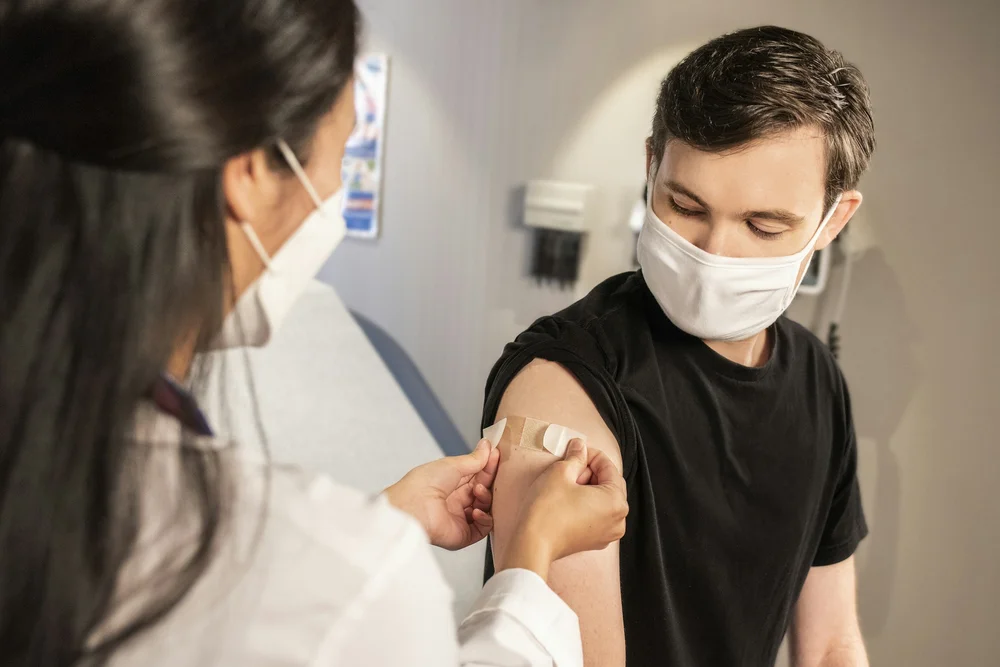
In this article
Vaccine awareness advertising works best close to the decision: in the pharmacy line, the pediatric waiting room, the daycare hallway, and the clinic where a trusted provider answers questions. Place-based out-of-home (OOH) and digital out-of-home (DOOH) media puts flu, respiratory syncytial virus (RSV), COVID-19, and immunization messages in those settings, timed to the season and in the audience's language.
500,000+ locations · 300+ U.S. markets · Alliance for Audited Media (AAM)-audited delivery · English, Spanish + 15 more languages · Fully managed
This guide is for health departments, immunization programs, health systems, nonprofits, and the agencies that serve them. It covers why place-based media fits vaccine messaging, which venues reach which audiences, how to time flu, RSV, COVID-19, and back-to-school campaigns, and how to measure results. It's about advertising strategy, not clinical guidance. Build your creative from the recommendations your program follows, and run it through your own clinical and legal review.
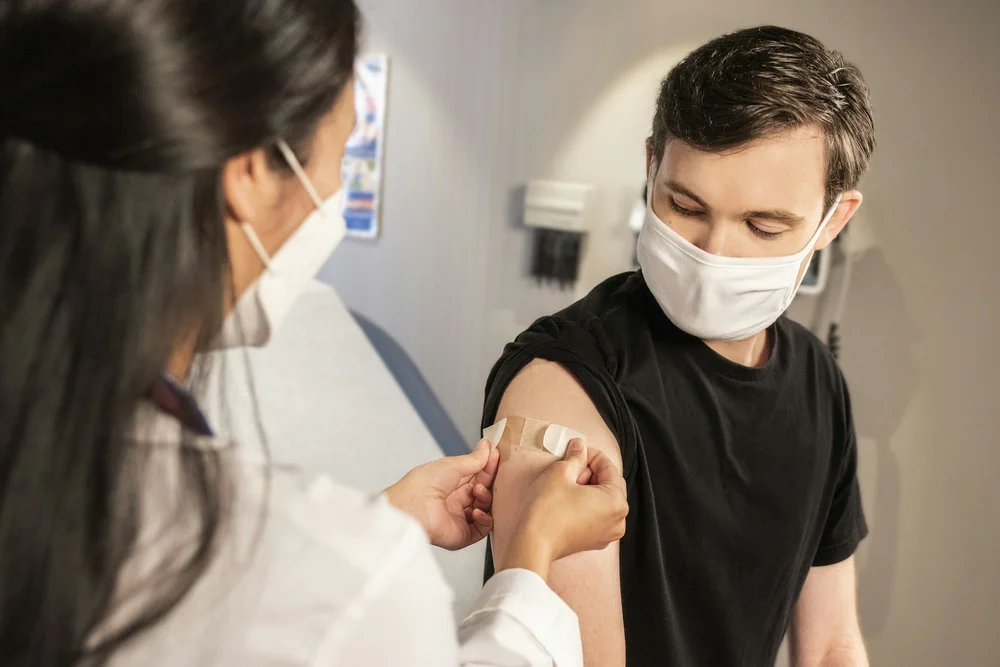
Why Vaccine Campaigns Need a Different Plan Now
Coverage is slipping, according to the Centers for Disease Control and Prevention (CDC), and the gap is widest in places traditional media reaches least.
- In the 2024–25 flu season, 41.9% of U.S. adults got a flu vaccine, down 3.0 points from the season before. Coverage among children was 50.2%, the lowest in 15 seasons (CDC FluVaxView).
- Children outside metro areas had 37.8% flu coverage, compared with 57.0% for children in principal cities (CDC FluVaxView).
- In the 2025–26 school year, 4.2% of kindergartners had an exemption from one or more required vaccines, up from 3.6% the year before. That's about 155,000 children (CDC SchoolVaxView).
Cost and access aren't the main barrier. When parents explain why their child didn't get a flu vaccine, the most common reasons are concern about side effects or safety, doubt that the vaccine works well, and a belief that their child is unlikely to get very sick. Fewer than 4% cite cost or access (CDC FluVaxView). That's a confidence and reminder problem, and it calls for messages in trusted settings, repeated often, with an easy next step.
Why Place-Based OOH Works for Vaccine Messaging
Trusted settings
People trust the person who knows their health. In an April 2025 KFF poll, 83% of adults said they trust their own doctor or health care provider for reliable vaccine information, and 81% of parents said the same of their child's pediatrician. Those were the highest shares of any source tested (KFF). A poster in the exam room or a screen in the waiting room borrows that trust and nudges the conversation: "Ask your provider about your vaccines today."
Near the point of decision
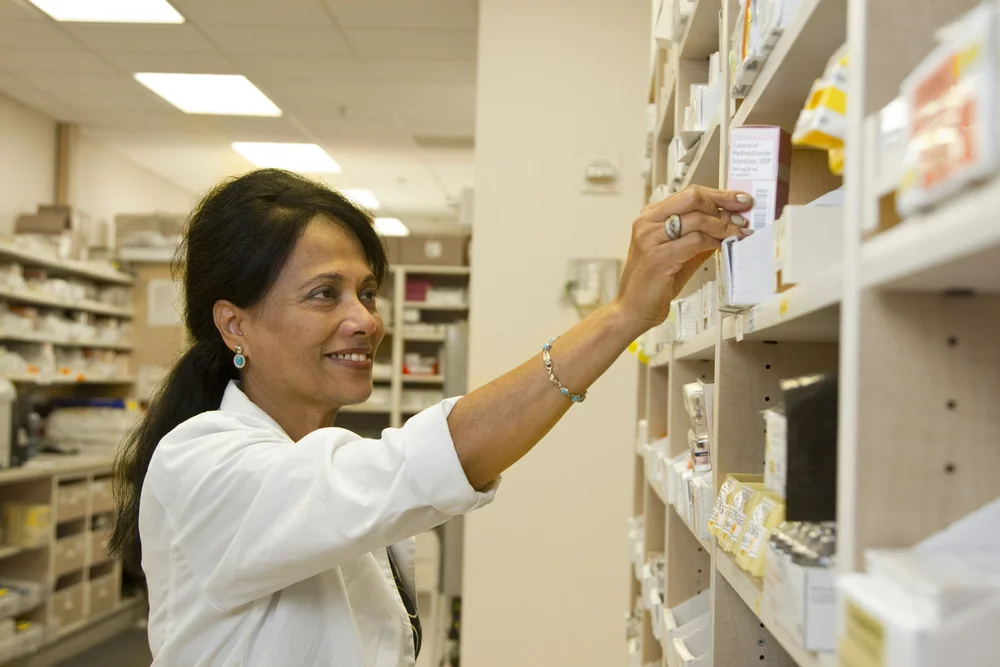
For adults, the pharmacy is where the shot happens. In the 2023–24 season, pharmacies or drug stores were the most common place adults got their flu vaccine (48.0%), their COVID-19 vaccine (71.5%), and, for adults 60 and older, their RSV vaccine (81.7%) (CDC RespVaxView). For children, it's the doctor's office. In 2024–25, 61.3% of vaccinated children got their flu vaccine at a doctor's office, 14.4% at a pharmacy, and 13.7% at a clinic or health center (CDC FluVaxView).
So adult campaigns lean on pharmacy advertising, and pediatric campaigns lean on point-of-care advertising in pediatric and family practice offices. Both put the message steps away from the action.
Reaching hesitant and underserved groups
Pharmacy-only plans miss people. For Black, Hispanic, and American Indian or Alaska Native adults, uninsured adults, and adults living in poverty, medical settings were still the most common place to get a flu vaccine (CDC RespVaxView). Those audiences need community health centers, clinics, and Indian Health Service (IHS) locations in the plan.
Care teams matter too. Among adults whose provider recommended a flu vaccine in 2023–24, 61.3% got one, yet only 43.6% of adults said a provider recommended it (CDC FluVaxView). Reminders in healthcare professional (HCP) staff lounges and exam rooms put the vaccine program in front of the people who make that recommendation.
Physical placements also reach people who skip digital ads or have spotty broadband.
Which Venues Fit Which Audiences
Start with the audience and the moment, then pick the venue.
- Parents of babies and young children, Moment: Daycare drop-off, well-child visits. Venues: Daycare and childcare, pediatric offices, Women, Infants, and Children (WIC) program settings. Message angle: Schedule reminders; "Ask your pediatrician"
- Expecting parents, Moment: Prenatal visits. Venues: Obstetrics and gynecology (OB/GYN) offices (maternal health campaigns). Message angle: "Ask your provider which vaccines are right for you and your baby"
- Seniors 65+, Moment: Prescription pickup, senior center visits. Venues: Pharmacies, senior centers, clinics (aging population). Message angle: Large type, high contrast, one clear action
- Teens, Moment: The school day. Venues: High schools (youth and teens). Message angle: Approved, plain-spoken creative; a prompt to talk with a parent or provider
- College students, Moment: Residence halls, dining, student unions. Venues: Colleges. Message angle: Campus health hours and walk-in clinics
- Rural communities, Moment: Fuel stops, grocery runs, the local pharmacy. Venues: Gas stations (29,000+), grocery stores, pharmacies (rural audiences). Message angle: Where to get vaccinated locally
- Tribal communities, Moment: IHS visits, community events. Venues: Tribal Community Centers, IHS locations, and reservations. Message angle: Built with Tribal health departments and community approval
- Care teams, Moment: Between patients. Venues: HCP staff lounges and exam rooms (physicians and HCPs). Message angle: Vaccine program and schedule reminders
- Patients in clinics, Moment: The wait before the visit. Venues: Waiting and exam rooms (patients). Message angle: "Ask about your vaccines today"
Most plans pair a care setting with an everyday one, like grocery, daycare, or a gas station, so the reminder shows up before the visit too.
For point-of-care placements, delivery is independently verified. Delivery is audited by the Alliance for Audited Media (AAM).
Seasonal Timing: Flu, RSV, COVID-19, and Back-to-School
Vaccine campaigns live and die by the calendar. Our planning guide recommends starting 6 to 10 weeks before launch, so fall campaigns are planned in summer.
- Back-to-school (July–August). School-entry and childcare requirements bring parents to pediatric offices. Run reminders in daycares, pediatric waiting rooms, grocery stores, and community centers in the weeks before school starts.
- Flu (September through winter). CDC says September and October are generally good times for most people to get a flu vaccine, ideally by the end of October (CDC). Flu activity most often peaks between December and February (CDC), and CDC says vaccination should continue as long as flu viruses are circulating (CDC FluVaxView). Launch in September, then switch to "It's not too late" creative for November through January.
- RSV (fall through spring). In most of the U.S., RSV season starts in the fall, peaks in winter, and ends in spring. Before the pandemic, onset ranged from mid-September to November and peaks from November to February. Florida's season starts earlier and lasts longer (CDC). Plan regional flights so creative is up before local onset.
- COVID-19 (fall, with change built in). Guidance has shifted. In a July 2025 KFF poll, 48% of parents weren't sure whether federal health agencies recommended a COVID-19 vaccine for healthy children that fall (KFF). Point people to a trusted local source, like their pharmacist or provider. Favor digital screens, where copy can change fast.
- Year-round. Routine childhood and adult vaccines don't have a season. A steady, lighter presence in pediatric, OB/GYN, and HCP settings keeps schedules on people's minds between fall pushes.
Multicultural and In-Language Creative
More than one in five U.S. residents age 5 and older speak a language other than English at home (U.S. Census Bureau). Coverage gaps follow some of the same lines: in 2024–25, Hispanic adults had lower flu vaccination coverage than Black adults and adults of other or multiple races, and White adults had the highest coverage (CDC FluVaxView).
- Plan language first. Choose languages by community data before choosing venues. We produce creative in English, Spanish, and 15 more languages.
- Adapt, don't just translate. Have native speakers from the community review every version.
- Keep bilingual versions equal in size and placement.
- Show real families, settings, and foods, and avoid clichés.
- Use the right venues: neighborhood markets, multicultural community centers, and faith-based and cultural venues alongside clinics.
See multicultural advertising, Hispanic and Latino audiences, and Asian American advertising.
Creative Tips for Vaccine Advertising
- One action per piece. Keep the headline to seven words or fewer. "Get your flu shot here today" beats a paragraph.
- Lead with the person, not the virus. Show the grandparent, the newborn, the coach. Fear alone doesn't move people.
- Answer the real question. Safety is the top concern parents name, so don't argue. Invite the conversation: "Questions? Ask your pharmacist."
- Name the next step and the place. Walk-in hours, a clinic address, a QR code to a local vaccine finder. Confirm with each venue that the offer is true there.
- Fit the copy to the setting. An exam room poster can carry more detail. A pump-top needs a few words and a big number or URL.
- Build versions for change. Make separate creative for flu, RSV, and COVID-19 so one update doesn't force a full reprint. Use DOOH where guidance may shift mid-season.
- Respect the audience. No shaming, no stereotypes. Use person-first language.
How to Measure Results
Set measurement before launch, and keep delivery separate from outcomes.
- Delivery: locations installed, time-stamped and geo-tagged photo proof for each one, and breakdowns by ZIP code, county, venue type, and language. See what comprehensive campaign reporting looks like.
- Engagement: QR code scans, vanity URL visits, and text short-code replies, tracked by venue type and language.
- Outcomes: appointment bookings, clinic and pharmacy dose counts, or immunization registry data in campaign ZIP codes, compared with matched control ZIP codes that didn't get the campaign. Pull a baseline from last season first.
Not every vaccination can be traced to one poster. The goal is a credible chain from verified delivery to engagement to local uptake.
Frequently Asked Questions
01When should a flu vaccine campaign launch?
Plan in summer and go live in September. CDC says September and October are generally good times for most people to get vaccinated. Keep a lighter "not too late" flight running into winter, since flu activity most often peaks between December and February.
02Where should an RSV vaccine campaign run?
Match the venue to the audience your program is targeting. Pharmacies were the most common place adults 60 and older got an RSV vaccine in 2023–24. OB/GYN offices, pediatric offices, and daycares reach expecting and new parents.
03How do we reach vaccine-hesitant parents without backlash?
Use trusted settings like pediatric offices and daycares, a calm tone, and an invitation to ask questions rather than an argument. Point to the pediatrician, whom most parents trust for vaccine information.
04Can place-based media reach rural and Tribal communities?
Yes. Gas stations, grocery stores, pharmacies, and clinics act as rural community hubs. Tribal Community Centers, IHS locations, and reservation venues are planned with Tribal health departments.
05Can we target areas with low vaccination rates?
Yes. We can prioritize counties and ZIP codes using public coverage data. We never use individual health data.
06Can vaccine campaigns run in more than one language?
Yes. Creative runs in English, Spanish, and 15 more languages, with versions assigned by market, location, or venue.
07How do we know it worked?
Start with photo-verified delivery, then track QR and URL response, then compare local uptake in campaign ZIP codes against matched areas.
Let's Talk
Planning a fall push, a back-to-school reminder, or a year-round immunization program? Tell us who you need to reach and where. We'll map the venues, the timing, and the languages, and give you a straight answer on what your budget can cover.
Sources
- CDC, FluVaxView, "Flu Vaccination Coverage, United States, 2024–25 Influenza Season" (Jan. 8, 2026). https://www.cdc.gov/fluvaxview/coverage-by-season/2024-2025.html
- CDC, SchoolVaxView, "Vaccination Coverage and Exemptions among Kindergartners" (2025–2026 school year; updated Aug. 17, 2026). https://www.cdc.gov/schoolvaxview/data/
- CDC, RespVaxView, "National and state-specific estimates of settings where adults received influenza, updated COVID-19, and RSV vaccinations, 2023–2024 respiratory virus season." https://www.cdc.gov/respvaxview/publications/national-state-vaccination-estimates.html
- KFF, "KFF Tracking Poll on Health Information and Trust: Vaccine Safety and Trust" (May 6, 2025). https://www.kff.org/health-information-trust/kff-tracking-poll-on-health-information-and-trust-vaccine-safety-and-trust/
- KFF, "KFF Tracking Poll on Health Information and Trust: COVID-19 Vaccine Update" (Aug. 1, 2025). https://www.kff.org/health-information-trust/kff-tracking-poll-on-health-information-and-trust-covid-19-vaccine-update/
- CDC, "Key Facts About Seasonal Flu Vaccine." https://www.cdc.gov/flu/vaccines/keyfacts.html
- CDC, "Flu Season." https://www.cdc.gov/flu/about/season.html
- CDC, "Surveillance of RSV." https://www.cdc.gov/rsv/php/surveillance/index.html
- U.S. Census Bureau, "Most Americans Speak Only English at Home or Speak English 'Very Well'" (Dec. 7, 2023). https://www.census.gov/newsroom/press-releases/2023/language-at-home-acs-5-year.html
Get a free media plan
Tell us your audience, topic, and geography and we'll map them to the places they already visit.
Get a free media planRelated articles.
Teen Advertising & Youth Marketing: The Ultimate Guide
Learn how youth and teen advertising reaches young people through high schools, colleges, community centers and other trusted environments. Explore OOH and DOOH formats, creative b
How to Use Digital Out-of-Home to Promote Youth Mental Health?
PlaceBased Media offers DOOH advertising in high schools is to promote social and environmental causes. Advertisements can raise awareness about issues such as climate change, ment
Maternal Health Campaigns: Reaching Expecting and New Parents Where They Are
Effective maternal health campaigns reach expecting and new parents where they live, shop, and receive care. Discover how place-based advertising in OB-GYN offices, pharmacies, gro
Plan your next campaign.
Reach your audience in the clinics, schools, pharmacies, gas stations, and community places they already visit.