Public Health Paid Media Planning Guide & OOH Benchmarks — 2027
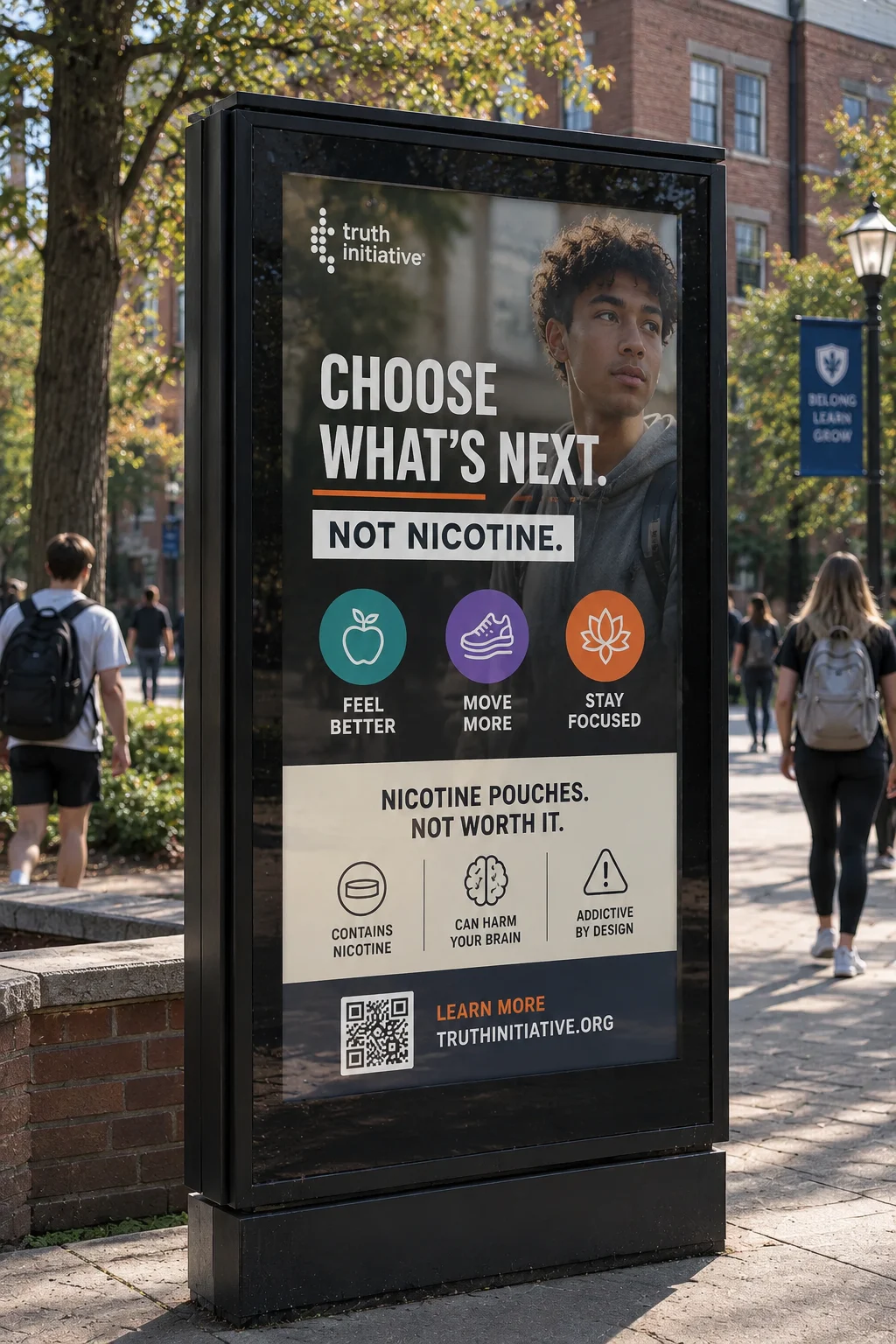
Public health campaigns face a different media challenge than most consumer advertising.
The goal is rarely just awareness. Public health agencies are often trying to change behavior, increase enrollment, encourage preventive care, connect people to services, reduce stigma, or reach populations that traditional digital advertising may miss.
That makes media planning especially important.
This guide provides a practical framework for planning public health paid media campaigns, including budgeting, campaign duration, OOH and place-based media benchmarks, audience targeting, rural outreach, Medicaid communications, 988 promotion, and sample media planning approaches.
The benchmarks in this guide are intended as planning ranges rather than universal pricing. Actual costs vary by geography, media format, audience, inventory availability, production requirements, campaign length, and the number of markets included.

What Is Public Health Paid Media?
Public health paid media includes advertising purchased by government agencies, health departments, nonprofits, coalitions, healthcare organizations, and their agency partners to communicate health information to defined populations.
Common campaign objectives include:
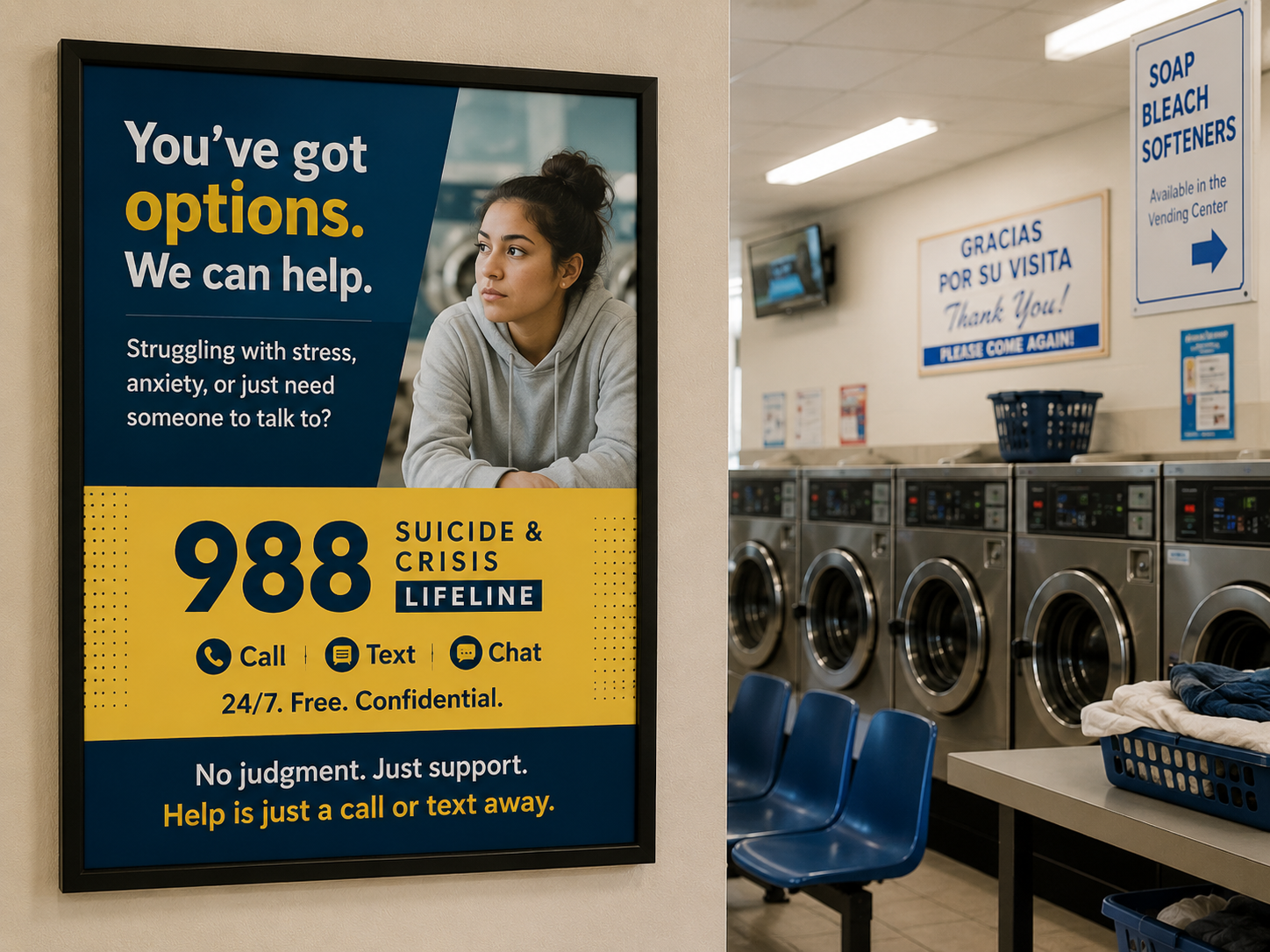
988 Suicide & Crisis Lifeline awareness
Medicaid and health insurance enrollment
WIC enrollment
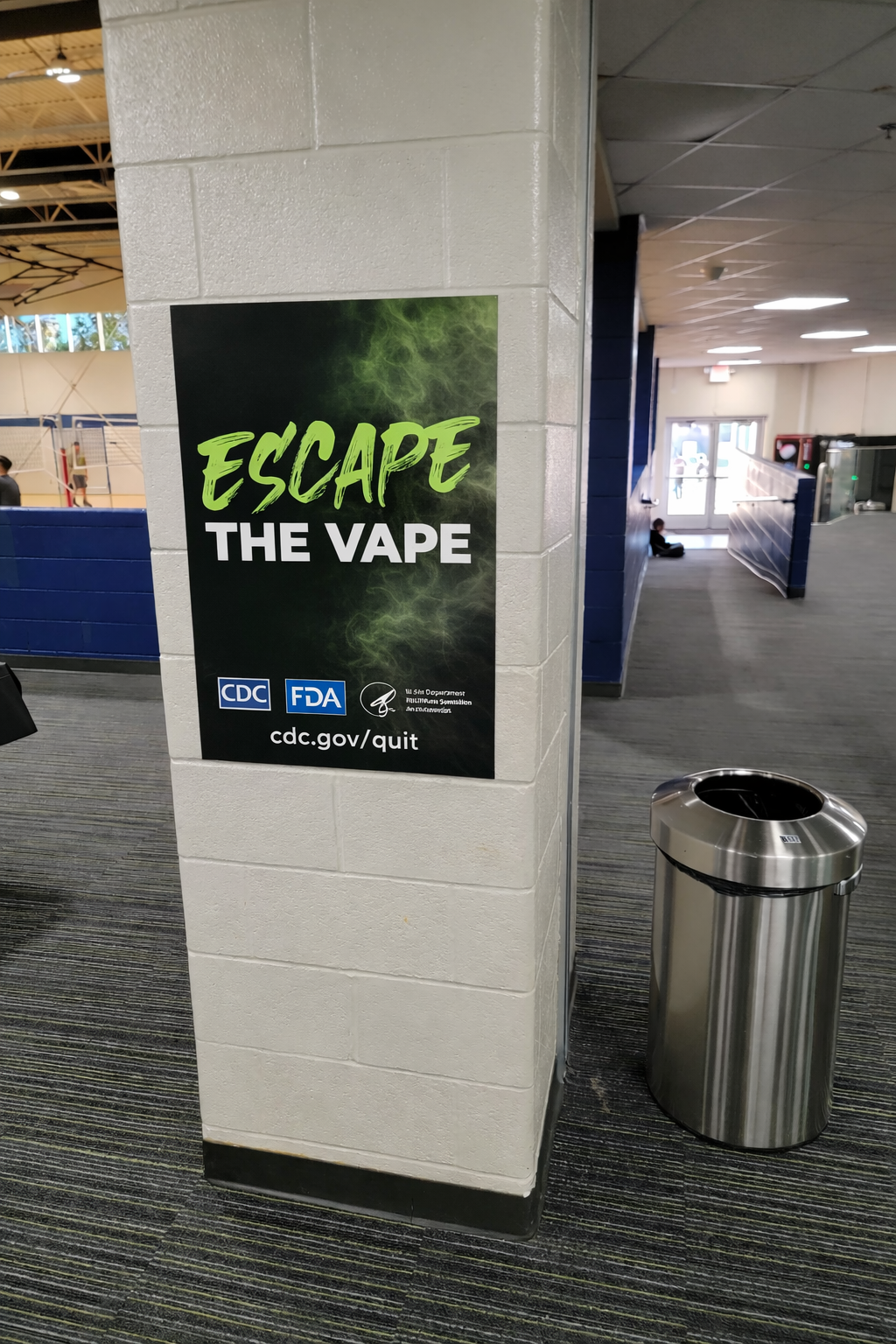
Tobacco and vaping prevention
Opioid and fentanyl prevention
Cannabis education
Vaccination and immunization
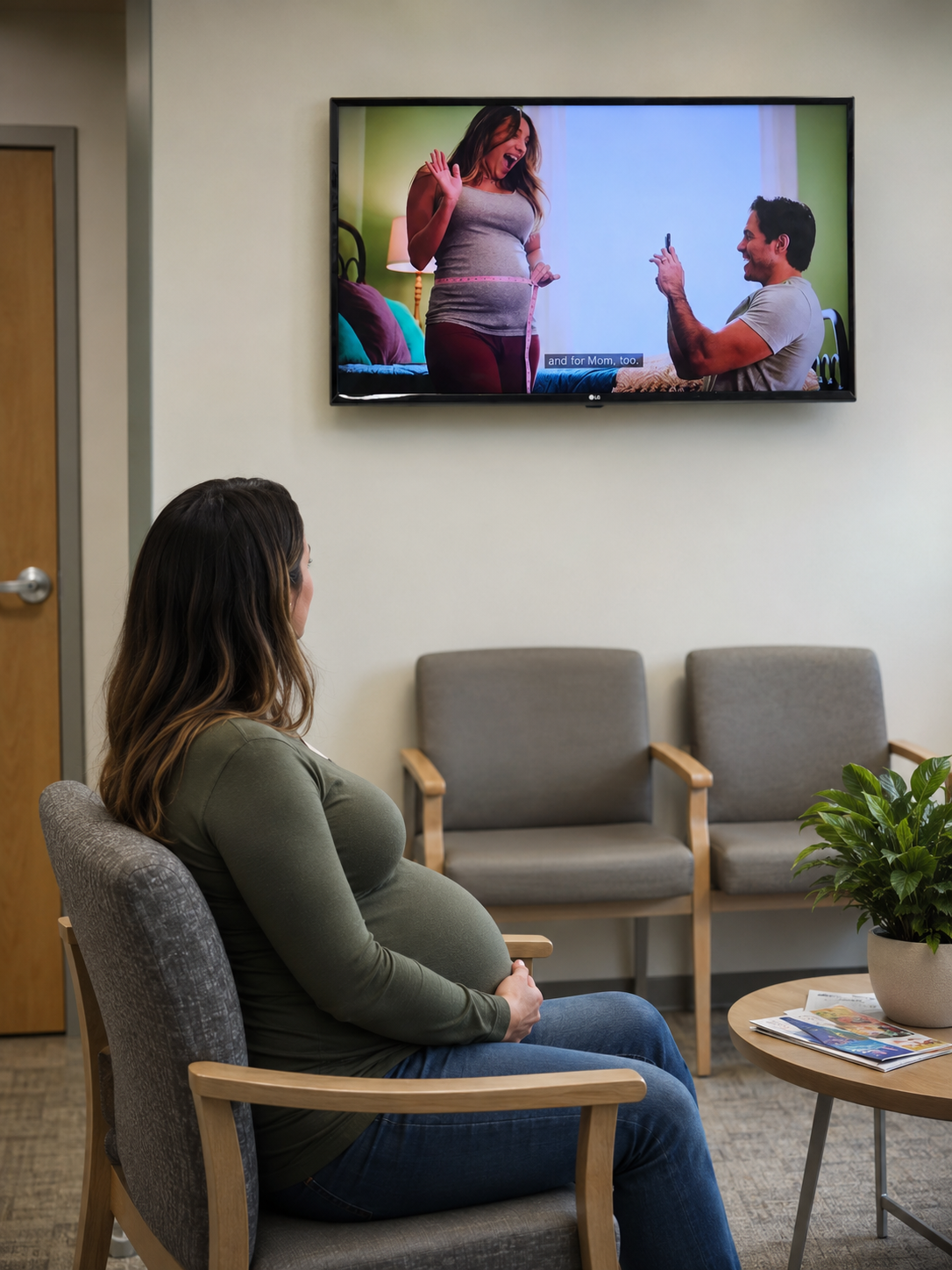
Maternal and child health
Mental health awareness
Sexual health and HIV prevention
Chronic disease prevention
Lead poisoning prevention
Safe storage and injury prevention
Substance-use prevention and treatment
Public benefit enrollment
Workforce recruitment for health and human-services programs
Unlike many commercial advertising campaigns, public health campaigns frequently need to reach populations based on a combination of geography, demographics, community behavior, healthcare access, and trusted environments.
For that reason, effective campaigns often use a mix of digital media and community-based channels.
CDC guidance emphasizes identifying the intended audience, researching what that audience needs, defining the desired behavioral objective, and selecting distribution channels that match how the audience actually receives and uses information.

How Much Should a Public Health Campaign Cost?
There is no single correct public health advertising budget.
A better approach is to start with four questions:
Who needs to be reached?
Where are they located?
How difficult are they to reach through conventional media?
How much repetition is required before the campaign can reasonably influence awareness or behavior?
For place-based and OOH programs, the investment required can vary significantly depending on whether the campaign is targeting one county, several metropolitan areas, or an entire state.
Illustrative Place-Based Planning Ranges
| Campaign Scope | Approximate Planning Range |
|---|---|
| Small county or local market | $10,000–$25,000 |
| Larger county / single metro | $20,000–$50,000 |
| Multiple markets | $40,000–$100,000+ |
| Large regional campaign | $75,000–$200,000+ |
| Statewide multi-venue campaign | $100,000–$500,000+ |
These are planning ranges rather than fixed rate-card pricing.
Campaigns using highly targeted venue networks can often begin with smaller investments because media can be concentrated in environments frequented by the intended audience rather than purchased broadly across an entire DMA.
For example, a campaign seeking Medicaid-eligible households may prioritize pharmacies, community centers, clinics, grocery stores, social-service environments, libraries, and other community locations rather than relying entirely on broad-market advertising.
| Media Type | Illustrative CPM |
|---|---|
| OOH Bulletins | $3–$10 |
| OOH Posters | $2–$13 |
| Digital Place-Based Media | $7–$16 |
| Digital Display | $5–$6 |
| Social Media | $2–$8 |
| Radio | $4–$8 |
| Digital Video | $11–$13 |
| Podcasts | $18–$25 |
| Streaming | $23–$34 |
| Broadcast TV, Primetime | $45–$49 |
Public Health Advertising CPM Benchmarks
Cost per thousand impressions, or CPM, is one way to compare advertising channels.
OOH can be particularly efficient when the objective is broad awareness or repeated exposure in physical environments.
Industry research published by the Out of Home Advertising Association of America cites 2025 media CPM ranges of approximately:
How Many Times Should Someone See a Public Health Message?
Public health communication generally benefits from repetition.
Someone may see a message about 988, Medicaid enrollment, quitting tobacco, overdose prevention, or another health initiative several times before remembering the resource or taking action.
OOH and place-based media can be particularly useful for creating repeated exposure because people routinely return to the same environments:
Planning Question: Will members of the intended audience encounter this message repeatedly during their normal routines?
How to Choose Public Health Media Channels
Start with the audience rather than the media format.
A useful planning framework is: Audience → Location → Environment → Format.
Who specifically needs to receive the message?
Consider where the audience lives, learns, works, shops, receives care, and gathers.
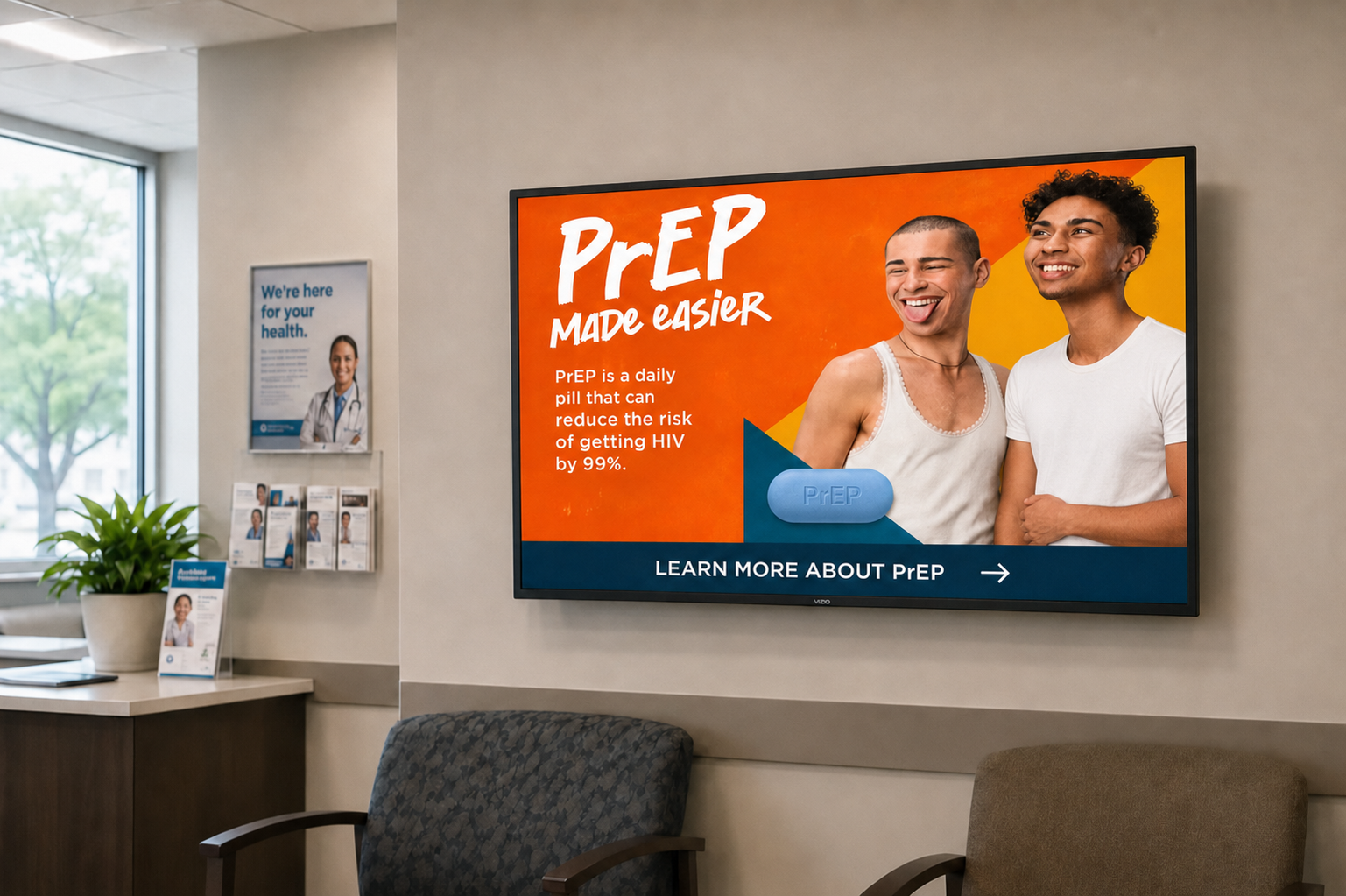
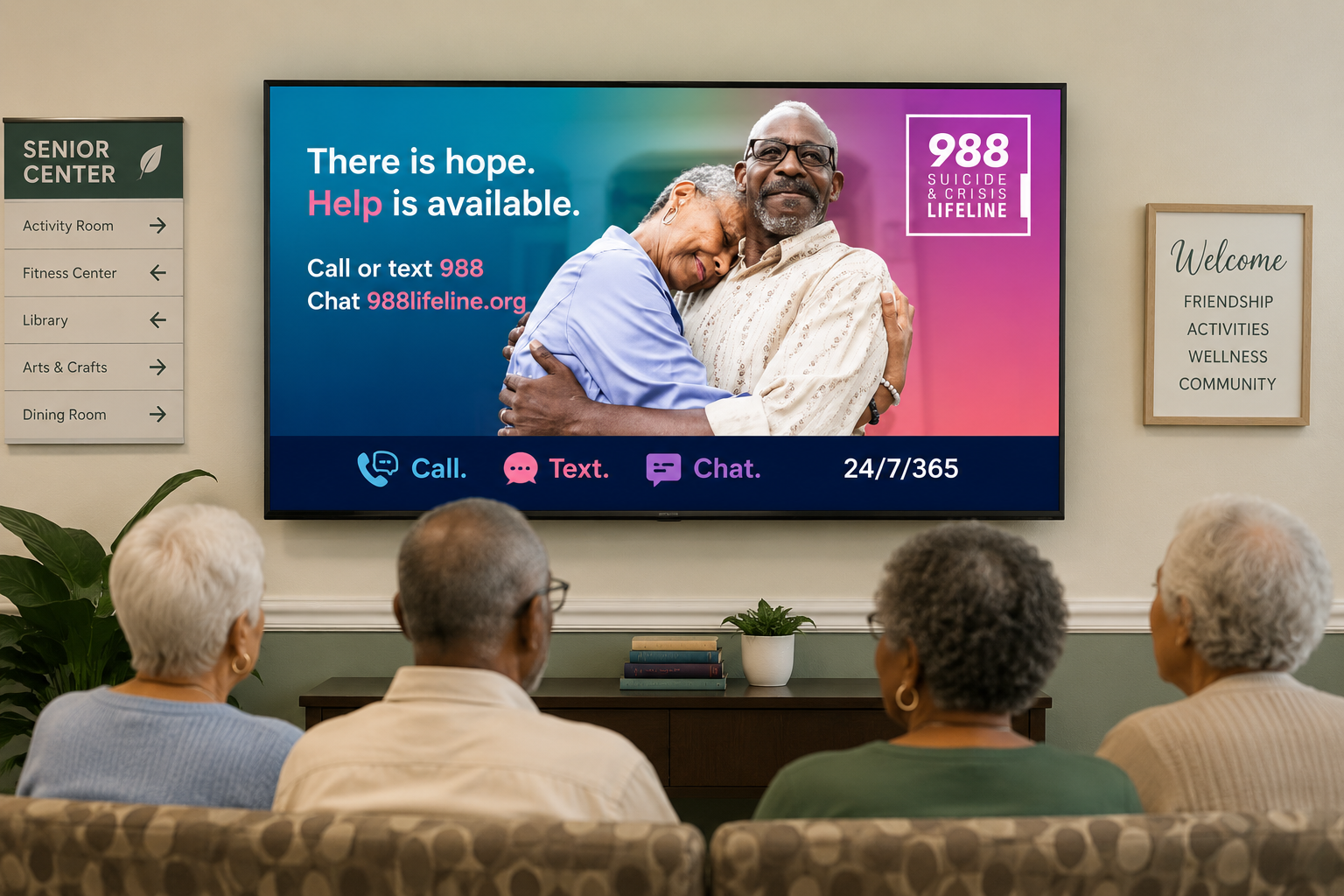
How to Reach Medicaid Populations
Reaching Medicaid-eligible and Medicaid-enrolled populations often requires a community-centered media strategy.
Effective outreach may require reaching consumers through a combination of healthcare environments, trusted community organizations, retail destinations, and other places they visit during everyday life.
Place-Based Environments to Consider
- Pharmacies
- Federally Qualified Health Centers
- Community clinics
- Community centers
- Libraries
- Grocery stores
- Convenience stores and gas stations
- Social-service organizations
- Workforce centers
- Laundromats
- Faith-based organizations
- Multicultural retailers
Planning Principle: The goal is not simply to identify “low-income locations.” Prioritize environments that are frequently used, geographically relevant, appropriate for the message, and trusted by the intended audience.
Explore: Pharmacy Advertising | Community Center Advertising | Grocery Store Advertising | Gas Station and C-Store Advertising
How to Advertise 988
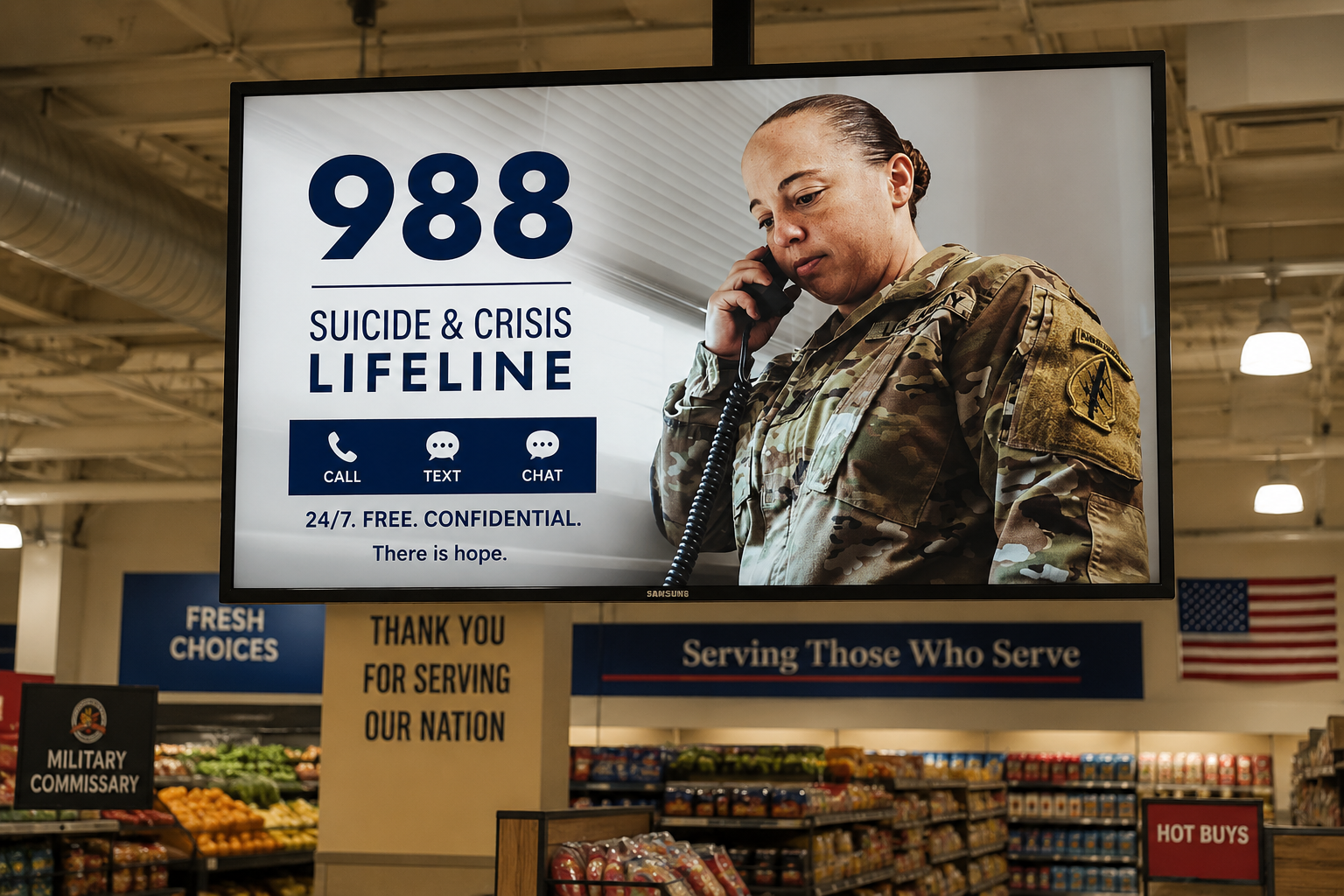
988 campaigns typically need to accomplish two things: build recognition of the number itself and explain when someone should use it.
That makes simplicity and repetition especially important.
Elements of a Strong 988 Campaign
- Large, highly legible 988 branding
- A short supporting message
- Clear crisis-support positioning
- Language accessibility
- Repeated exposure
- Environments where people have time to process the message
Potential 988 Advertising Environments
Campaign planners should confirm that creative aligns with current federal, state, and local 988 branding and messaging requirements.
How to Reach Rural Populations
Rural campaigns create a different media-planning challenge.
Population density is lower, but the number of available media channels may also be more limited. That can make community-based environments disproportionately valuable.
Rather than relying exclusively on traditional outdoor boards, rural campaigns may consider:
- Grocery stores
- Pharmacies
- Gas stations
- Convenience stores
- Clinics
- Farm and agricultural supply stores
- Libraries
- Community centers
- Schools
- Faith-based organizations
- Local gathering places
Rural Media Planning Principle: Think in terms of community hubs, not simply population density. A single grocery store, pharmacy, clinic, or convenience store may serve residents across a much wider geographic area.
Explore Rural Audience Solutions →
Static OOH vs. Digital OOH
Both static and digital out-of-home (DOOH) formats can play important roles in public health campaigns.
Static Media
Static posters, displays, clings, counter mats, and similar formats can provide:
- Continuous presence
- Long dwell time
- Strong frequency
- Large creative footprint
- Cost efficiency
- Simple campaign execution
Static media can be especially effective when the campaign has one primary message.
Digital OOH
Digital screens can provide:
- Multiple creative rotations
- Fast creative changes
- Dayparting opportunities
- Shorter lead times in some networks
- Animation or motion where permitted
- Easier multi-language rotation
Digital can be especially useful when multiple messages or languages need to run simultaneously.
Hybrid Campaigns
Many public health campaigns benefit from combining static and digital formats.
Static media creates persistent visibility, while DOOH adds flexibility and creative variation.
Explore Digital OOH Advertising →
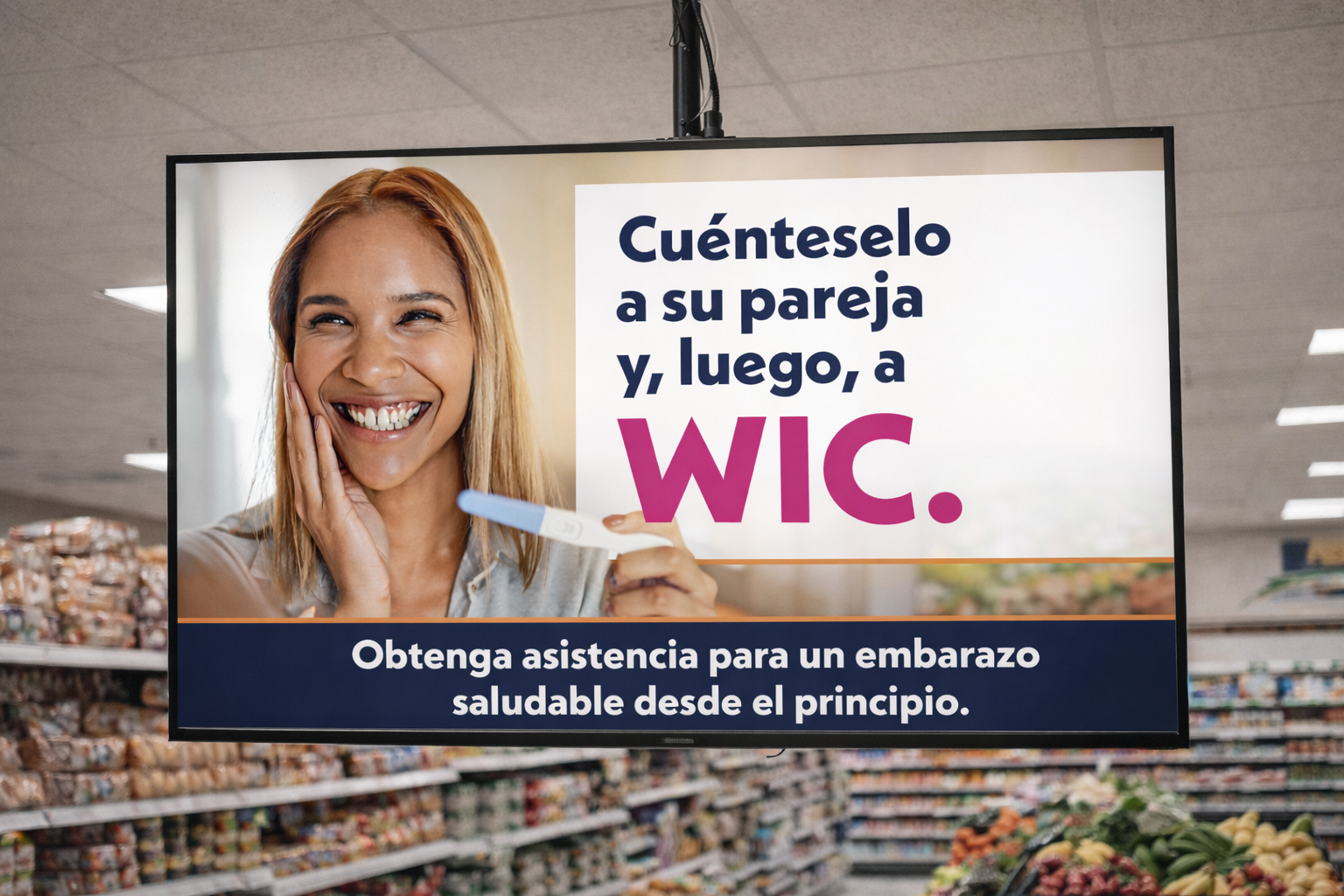
Multilingual Public Health Advertising
Language should be considered during media planning rather than added at the end of the process.
Depending on the community, campaigns may require languages such as:
- Spanish
- Chinese
- Vietnamese
- Arabic
- Somali
- Hmong
- Russian
- Indigenous languages
- Other locally relevant languages
Multilingual Media Planning Options
- Rotate languages digitally
- Produce separate static creative
- Allocate languages geographically
- Select venues based on community demographics
- Use bilingual creative where appropriate
The right approach depends on population concentration, available inventory, creative format, and message complexity.
Public Health Media Planning Timeline
Public health campaigns often require more lead time than advertisers expect.
Approvals and execution may involve:
- Health department review
- Agency review
- Legal or compliance approval
- Translation
- Accessibility review
- Venue approval
- Production
- Printing
- Distribution
- Installation
- Reporting setup
| Timing | Recommended Planning Activity |
|---|---|
| 6–10 Weeks Before Launch | Define the audience, geography, campaign goals, media strategy, budget, and venue mix. |
| 4–8 Weeks Before Launch | Finalize media availability, formats, specifications, and creative requirements. |
| 3–6 Weeks Before Launch | Complete creative, translations, approvals, production, and distribution planning. |
| Campaign Launch | Install, post, or activate media across approved locations. |
| During Campaign | Monitor delivery and resolve inventory, installation, or replacement issues. |
| After Campaign | Complete proof-of-performance reporting and final location documentation. |
Starting early becomes increasingly important for statewide campaigns, multilingual programs, or campaigns involving hundreds of physical locations.
Public Health Media Plan Example
Consider a hypothetical $75,000 regional behavioral-health awareness campaign.
The objective is to reach adults and families across several counties, including lower-income and rural communities.
A potential media allocation might look like:
| Allocation | Media Category | Example Environments |
|---|---|---|
| 40% | Community Place-Based Media | Pharmacies, community centers, libraries, and grocery environments |
| 25% | Healthcare Environments | Clinics, community health centers, and other patient-facing locations |
| 20% | Digital OOH | Digital screens in relevant high-frequency environments |
| 15% | Testing / Supplemental Media | Additional targeted media based on local audience needs |
Important: This is an illustrative planning example, not a recommended allocation for every public health campaign.
The purpose is to demonstrate how public health planners can start with audience behavior and environment rather than dividing the budget among media channels before determining where the intended population can actually be reached.
Measuring Public Health OOH Campaigns
Public health campaigns should establish measurement expectations before launch.
Depending on the campaign, reporting may include:
Not every behavioral outcome can be directly attributed to OOH.
Campaign measurement should distinguish between media-delivery metrics and behavioral outcomes.
OOH can document that media ran where and when planned. Determining whether that exposure directly caused an individual action may require additional research, attribution, survey, or outcome data.
Public Health OOH Planning Checklist
Before approving a public health media plan, consider the following questions:
- Who is the primary audience?
- What behavior or action are we trying to influence?
- Which communities have the greatest need?
- Where does the audience spend time offline?
- Which environments are appropriate for the message?
- Are rural communities being treated differently from urban markets?
- Does the campaign require multilingual creative?
- Is the message simple enough for the selected format?
- Is campaign duration sufficient to build frequency?
- Are production and installation included in the budget?
- How will placements be documented?
- What does proof of performance include?
- How will media delivery be measured?
- What behavioral outcomes will be evaluated separately?
- Is enough lead time built into the schedule?
Frequently Asked Questions
How much does public health advertising cost?
Public health media budgets can range from approximately $10,000 for concentrated local programs to several hundred thousand dollars for statewide, multi-market campaigns. Geography, format, audience, duration, production requirements, and venue availability all affect pricing.
What is a typical OOH CPM?
Broad industry comparisons place traditional and digital OOH CPMs across a range depending on format, geography, audience, and inventory. CPM should be considered alongside audience relevance, environment, frequency, and campaign objectives rather than evaluated in isolation.
How long should a public health campaign run?
Four to eight weeks can support short awareness campaigns, while sustained behavioral-health, prevention, and enrollment campaigns may benefit from several months of exposure.
What media works best for Medicaid outreach?
There is no universal channel. Community clinics, pharmacies, grocery stores, libraries, community organizations, social-service environments, and other high-frequency destinations may all be relevant depending on the population and geography.
How can health departments reach rural communities?
Focus on high-frequency community hubs such as pharmacies, grocery stores, gas stations, clinics, libraries, schools, and community organizations rather than simply attempting to replicate an urban media plan across a less densely populated geography. Learn more about reaching rural audiences.
Does OOH work for 988 campaigns?
OOH and place-based media can support 988 awareness by creating repeated exposure to the 988 number in schools, colleges, community locations, healthcare environments, and other frequently visited settings.
Should public health campaigns use static or digital media?
Both can be effective. Static placements provide persistent exposure, while digital OOH offers greater creative flexibility. Many campaigns use a combination of both.
About These Public Health Media Benchmarks
The media cost comparisons referenced in this guide are intended as broad industry planning benchmarks.
Public health planning ranges, sample budgets, venue recommendations, and campaign-duration frameworks are intended as practical planning guidance rather than universal industry standards.
As PlaceBased Media expands its public health benchmark dataset, future editions of this guide may include aggregated data such as:
- Median campaign investment
- Median campaign duration
- Median number of locations
- Venue-category distribution
- Static vs. digital media mix
- Multilingual campaign frequency
- Average CPM by format
- Rural vs. urban campaign characteristics
- Campaign topic distribution
- Geographic coverage
Benchmark reporting can be aggregated and anonymized so individual advertisers, agencies, campaign budgets, and location lists remain confidential.
About PlaceBased Media
PlaceBased Media helps government agencies, public health organizations, and advertising agencies reach priority audiences through OOH and place-based media across healthcare, education, community, and consumer environments.
Campaign strategies can include static OOH, digital OOH, pharmacy media, healthcare environments, schools, colleges, community centers, libraries, convenience and grocery environments, and other audience-specific venue networks.
For additional examples of public health strategy and execution, explore PlaceBased Media's public health campaign case studies.
Planning a Public Health Campaign?
PlaceBased Media can develop market-specific OOH and place-based media recommendations based on your audience, geography, campaign objectives, timing, and budget.
Let’s Work Together
Independent Verification. Greater Accountability.
PlaceBased Media uses independent auditing and proof-of-performance practices to strengthen campaign accountability. AAM recently featured our approach to verified campaign delivery, transparency and building advertiser trust.
Read the AAM Media Matters Feature