Distracted Driving Campaigns: A Place-Based OOH Strategy for DOTs and Highway Safety Offices
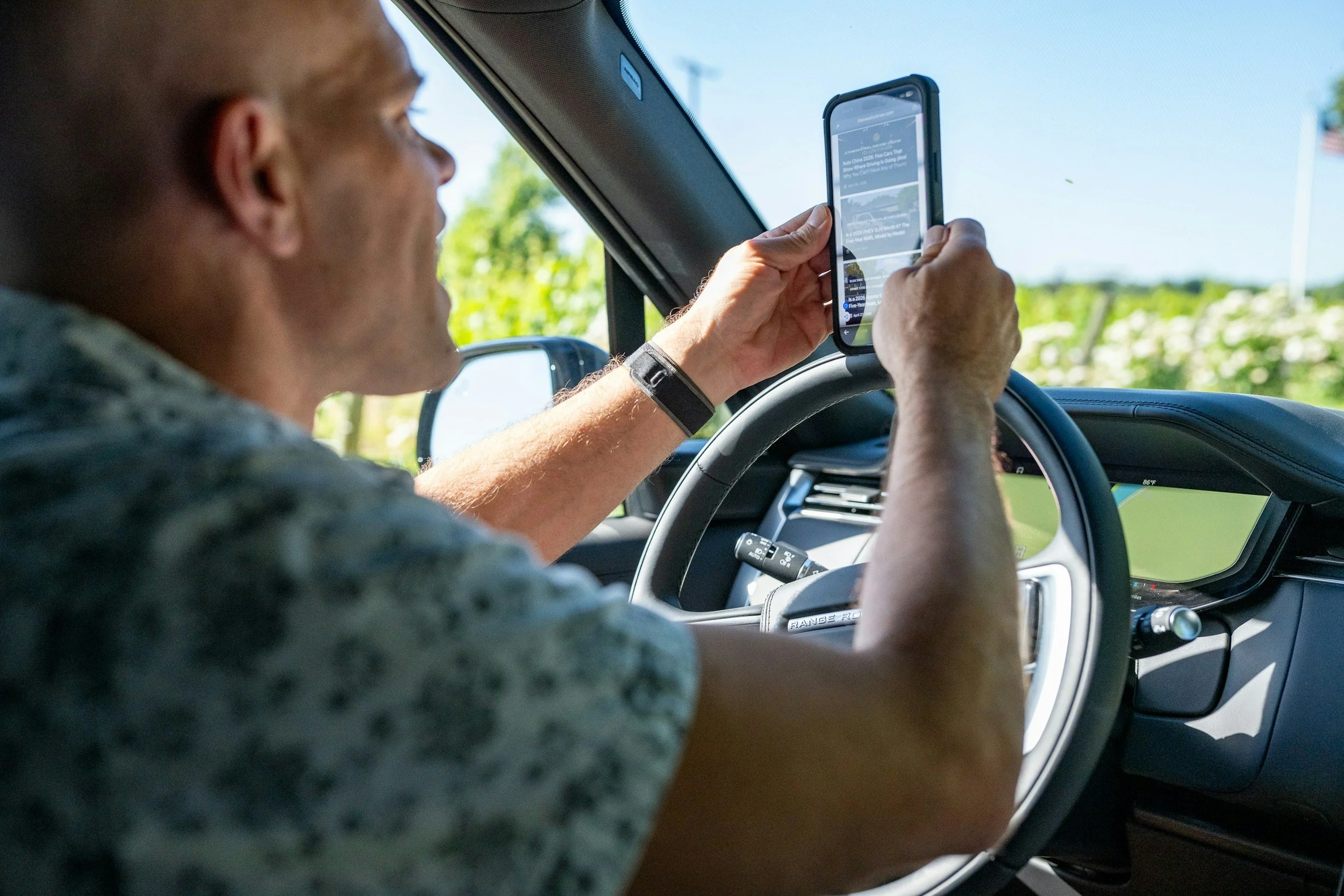
A distracted driving campaign is a coordinated media and outreach effort, usually funded by a state department of transportation (DOT) or highway safety office, that gets drivers to put the phone down before the car moves and leave it down until the car is parked. The campaigns that work don't depend on roadside reach alone. They put the message where the habit starts: at the pump, in the convenience store line, at the high school, and at the bar before the drive home.
This guide explains why distracted driving is so hard to change, where place-based Out-of-Home (OOH) and Digital Out-of-Home (DOOH) media fit in a highway safety plan, which venues and audiences to prioritize, how to write creative for those venues, and how to report results the way public programs require.
The Problem, in NHTSA's Numbers
The National Highway Traffic Safety Administration (NHTSA) reports that distracted driving claimed 3,208 lives in 2024 and injured 315,167 people.
NHTSA also puts the risk in terms anyone can picture. Sending or reading a text takes your eyes off the road for about five seconds. At 55 mph, that's like driving the length of a football field with your eyes closed.
Every one of those deaths is a person who didn't get home. Most of them were avoidable. That's the reason to fund this work, and it's also the reason to fund it carefully.
Why Distracted Driving Is Hard to Change
Most drivers already know texting and driving is dangerous. Knowing hasn't been enough. A few reasons:
Everyone thinks they're the exception. Drivers judge other people's phone use as reckless and their own as under control.
It's a habit, not a decision. Reaching for a buzzing phone happens before anyone thinks about it.
Phones are built to pull attention. Notifications compete with the road every minute of the drive.
Laws and enforcement vary. NHTSA notes that states set their own distracted driving laws, so what's illegal in one state may only be discouraged in the next.
So more awareness isn't the job. The job is to interrupt a habit right before it happens and give drivers a simple, specific action to take instead.
Why Place-Based OOH Belongs in a Highway Safety Plan
A billboard reaches everyone driving past at highway speed. That's useful for broad awareness. But a driver doing 65 mph has a few seconds to read a board, and the board can't tell where that driver is headed or what they're about to do.
Place-based media works differently. It reaches people inside the venues where they already spend time, and many of those venues sit right before or right after a drive:
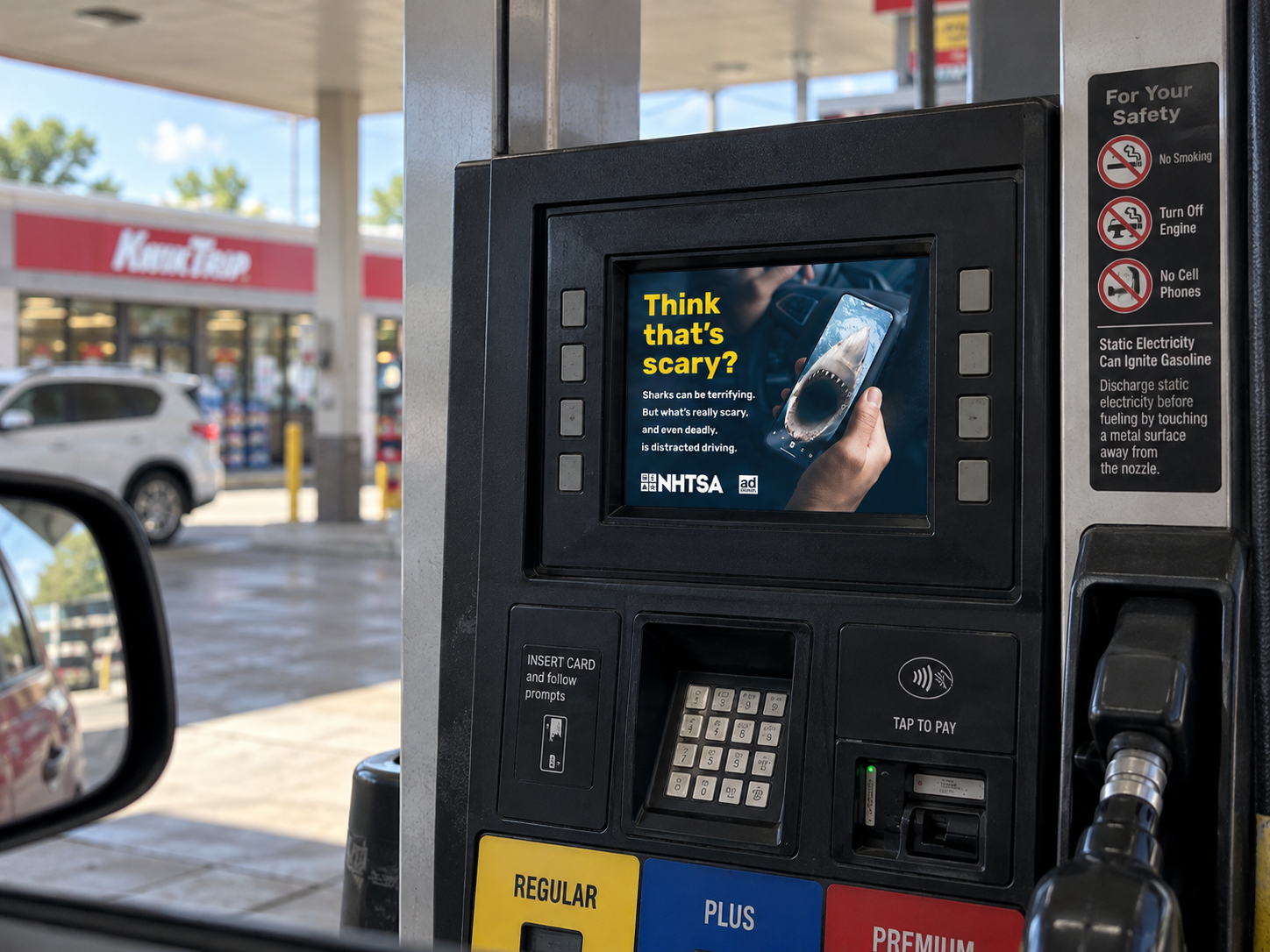
Right before the drive. A driver standing at the pump is about to get back in the car. A message there lands minutes, not miles, before the behavior you want to change.
High dwell time. Pump-top screens, c-store displays, school hallways, and restroom panels hold attention longer than a roadside glance.
Audience precision. You can put teen-driver messaging in high schools, nightlife messaging in bars, and commuter messaging along specific corridors instead of buying everyone in a DMA.
It backs up enforcement. Place-based OOH doesn't replace high-visibility enforcement, earned media, or digital. It reinforces them in the places where drivers actually make the choice.
Many media companies specialize in impressions. For a highway safety office, the question is whether the right drivers saw the right message at the right moment. That's what place-based planning is built to answer.
Where to Reach Drivers: Venue Strategy
Gas stations and c-stores: The moment: Fueling up, seconds from pulling out; Common formats: Pump toppers, gas station TV, window clings, counter mats
High schools: The moment: New and soon-to-be drivers, plus parents; Common formats: Hallway posters, digital screens
College campuses: The moment: Young drivers with new independence; Common formats: Campus posters and DOOH
Bars and restaurants: The moment: Before the drive home; Common formats: Restroom panels, in-venue screens, table tents
Community and youth sports venues: The moment: Parents driving kids to and from activities; Common formats: Posters and screens in rec centers and fields
Truck stops and travel plazas: The moment: Commercial and long-haul drivers; Common formats: Pump toppers, in-store digital
Gas Stations and Convenience Stores
This is the closest a message can get to the moment of driving without being on the road. Almost every driver fuels up. Pump-top and gas station TV placements let you hit specific counties, corridors, or crash-heavy ZIP codes. See our gas station advertising options.
High Schools and College Campuses
New drivers are forming habits now. School-based media reaches teens where they spend most of their day, and it reaches the parents who set the rules at home. NHTSA encourages teens to speak up when a friend drives distracted, and that peer-to-peer angle works well on a school wall.
Bars, Restaurants, and Nightlife
Nightlife venues are usually planned for impaired driving, but the same audience is often distracted on the drive home: texting a ride, checking directions, replying to the group chat. Pairing a "phone down" line with your existing sober-driving flight costs little and adds a second behavior.
Community Centers and Youth Sports
Parents behind the wheel with kids in the back are a strong audience. They respond to protecting their family, and they model behavior their kids will copy behind the wheel in a few years.
Priority Audiences
Pick audiences based on your state's crash data, then match each one to the venues where it spends time:
Teen and novice drivers. NHTSA reminds parents that in states with graduated driver licensing, a distracted driving violation can delay or suspend a teen's license. That's a concrete, local consequence worth putting on the poster.
Young men 18–34. Reach them in bars, gas stations, campuses, and sports venues.
Commuters. Place media along the corridors your crash data flags.
Commercial and gig drivers. Truck stops, travel plazas, and c-stores reach people who drive for a living.
Multicultural and in-language audiences. If a meaningful share of drivers in a county speaks Spanish or another language at home, run in-language creative at equal prominence, not as an afterthought.
Creative That Works in the Venue
Place-based creative has a few seconds to land and a few minutes to sink in. Keep it tight:
Seven words or fewer for the hero line. "Phone down. Eyes up." "It can wait. Your kid can't."
One action. Turn on Do Not Disturb before you drive. Put the phone in the glove box. Pick one.
Make it local. County names, local roads, and the state's own law beat generic national copy.
Don't rely on fear alone. Shock creative can get attention, but pair it with a doable next step and a reason to believe it matters.
Match the venue. At the pump: "Before you pull out, silence it." In a bar restroom: "Texting your ride? Do it before you drive."
Transcreate, don't just translate. In-language versions should be written for that community, not run through a translation tool.
Timing: Plan Around the Moments That Matter
April. NHTSA's Distracted Driving Awareness Month pairs a national advertising campaign with a law enforcement crackdown. State campaigns that run in the same window ride that national wave.
Back-to-school. New teen drivers, new routes, more kids walking near roads.
Prom and graduation season. More young drivers out late.
Holiday travel. Longer trips and unfamiliar roads.
A baseline the rest of the year. Habits don't take months off. A lighter always-on presence keeps the message from disappearing between flights.
Pair Place-Based Media With the Rest of the Plan
Place-based OOH is strongest as part of a mix. Extend venue placements with mobile advertising that retargets devices seen at those venues, line up with enforcement periods and earned media, and keep the creative consistent across every channel so the message builds instead of resetting.
Measurement and Accountability for Public Dollars
Highway safety dollars are public dollars. Your campaign should come with evidence, not just an impression total:
Venue-level proof of posting. Time-stamped, geo-tagged photos for every location, suitable for audits and public-records requests.
Delivery reporting. Impressions and placements broken down by county, ZIP, venue type, and language.
Response tracking. QR codes, vanity URLs, and UTM tags for pledge pages or educational landing pages.
Behavior and attitude measures. Pre- and post-campaign surveys, or geo-lift comparisons against matched control ZIPs.
Independent verification. PlaceBased's distribution has been confirmed in two consecutive Alliance for Audited Media (AAM) audits, at 113.3% and 111% of guaranteed distribution.
How PlaceBased Supports Highway Safety Offices
We run traffic safety campaigns as a fully managed service: media planning, venue selection, creative, production, installation, compliance monitoring, and proof-of-performance in one place. Our network covers 300+ U.S. markets, so a statewide campaign can reach rural counties and urban corridors under one plan and one report. See our Department of Transportation case studies and our guide to public safety messaging.
Frequently Asked Questions
What is the best place to advertise a distracted driving campaign? Venues that come right before a drive. Gas stations and convenience stores reach drivers seconds before they pull out. Schools reach new drivers and parents. Bars and restaurants reach people before the drive home.
Can federal highway safety funds pay for place-based OOH? Paid media is a common part of state highway safety programs, but eligibility depends on your grant terms and your state's plan. Confirm with your program manager. We provide the documentation, including proof of posting and delivery reports, that program reviews usually ask for.
How do you measure a distracted driving campaign? Start with verified delivery: proof of posting and delivery by venue and geography. Add response tracking through QR codes and vanity URLs, then pre/post surveys or geo-lift analysis against control areas to measure changes in attitudes and self-reported behavior.
How fast can a campaign launch? It depends on venue mix and creative approval, but many place-based campaigns can be planned, produced, and in market within a few weeks. Build in time for agency creative review.
Let's Talk
Your crash data tells you who's at risk and where. We'll help you reach those drivers in the places they stop before they drive, and we'll give you reporting you can stand behind.
Sources
NHTSA, "Distracted Driving": 3,208 killed and 315,167 injured in 2024; five seconds eyes off road at 55 mph ≈ a football field; GDL violations can delay or suspend a teen's license; states set distracted driving laws; April Distracted Driving Awareness Month pairs a national ad campaign with an enforcement crackdown. https://www.nhtsa.gov/risky-driving/distracted-driving
PlaceBased AAM audit figures (113.3% and 111%): https://placebased.media/blog/the-accountability-gap-in-place-based-advertising