
How Can States Spend Meta Settlement Money?A Practical Guide for 2027

On this page
Updated October 30, 2026. This is a guide, not legal advice. Each state's terms and laws control how its share can be used.
In August 2026, Meta agreed to pay a bipartisan coalition of states at least $12.1 billion, and up to $17.1 billion, to resolve claims that Instagram and Facebook harmed young people [1][2]. The first payments went out this fall. The second arrives January 15, 2027, just as most legislatures go into session [3]. The question now is how the money can be spent and who decides.
What the settlement actually says
The settlement lets each state use its money for "any lawful purpose consistent with the Attorney General's authority." It then lists examples of remedial uses, including [3]:
- 988 and text-based youth crisis lines
- After-school and summer programs, and outdoor activities
- Public health advertising credits
- A digital wellness public education fund
- Youth mental health programming
- Digital literacy counselors and phone-free schools
- Training for health care providers
- Grants to school districts and local governments
Two things matter here. First, these are examples, not requirements. Second, two of them, advertising credits and a public education fund, explicitly describe public awareness work. That's unusual language for a legal settlement, and it makes clear that public education is a legitimate use.
Who controls the money? Three models
Each state's own terms (Exhibit C of the settlement) and state law decide the path [3]. In practice we see three models:
1. Attorney general discretion. The AG holds the money in a consumer protection or settlement fund and decides how to use it. Kansas is an example: its Meta money goes to the AG's Public Protection Consumer Education and Enforcement Fund or a consumer protection account [4].
2. Legislative appropriation. The money goes into the state treasury, and lawmakers decide. In Mississippi, the Attorney General set agency-level allocations, including $6.8 million a year for the Department of Mental Health's youth programs from January 2027, but the AG's office says "the Legislature decides how the funds will be appropriated" [5].
3. A dedicated fund created by law. Tennessee created a Children's Digital Protection Fund with a list of allowed uses, including education about social media's effects on minors and youth suicide prevention [6].
Some states are still debating. In New Jersey, a bill to create a dedicated Social Media Settlement Fund was withdrawn in September 2026, and a non-binding Assembly resolution introduced in October urges sending the money to under-funded school districts [7][8].
How much is truly discretionary? One analysis reported by the New York Times estimated that about 70% of the money is left to state officials' discretion, and about 23% is aimed specifically at youth mental health or social media harms [9]. We haven't been able to check the underlying method, so treat those percentages as estimates.
Where awareness and education fit, state by state
Based on the settlement's state terms and state actions so far, these are the clearest fits for public awareness work [3][5][6][10]:
| State | Why awareness fits | Who decides |
|---|---|---|
| Nevada | Grant language includes "public awareness and communication strategies" | Grants under the state's terms |
| Arizona | A 25% remediation share can fund a digital wellness public education fund | Per state terms |
| Delaware | 50% goes through the Governor's budget office for remedial uses, including a digital wellness public education fund | Governor / OMB |
| Massachusetts | Names public health advertising credits and a digital wellness fund | Per state terms |
| Tennessee | Fund allows education about social media's effects on minors and youth suicide prevention | General Assembly |
| New Mexico (own judgment) | $33M for awareness and prevention, including media campaigns | Court-supervised; Meta plans to appeal |
This is not a complete list, and it doesn't mean money has been set aside for campaigns in these states.
What makes a settlement-funded campaign easy to fund and defend
Settlement money gets public scrutiny. The opioid settlements showed that awareness spending without a clear audience and measurement draws criticism (read the lessons). A campaign that holds up under scrutiny usually has:
- A defined audience: teens 12–18, parents of young children, educators, or providers. Name one, not "the public."
- A clear action: use the parental controls, call or text 988, talk to your pediatrician, take a phone-free pledge.
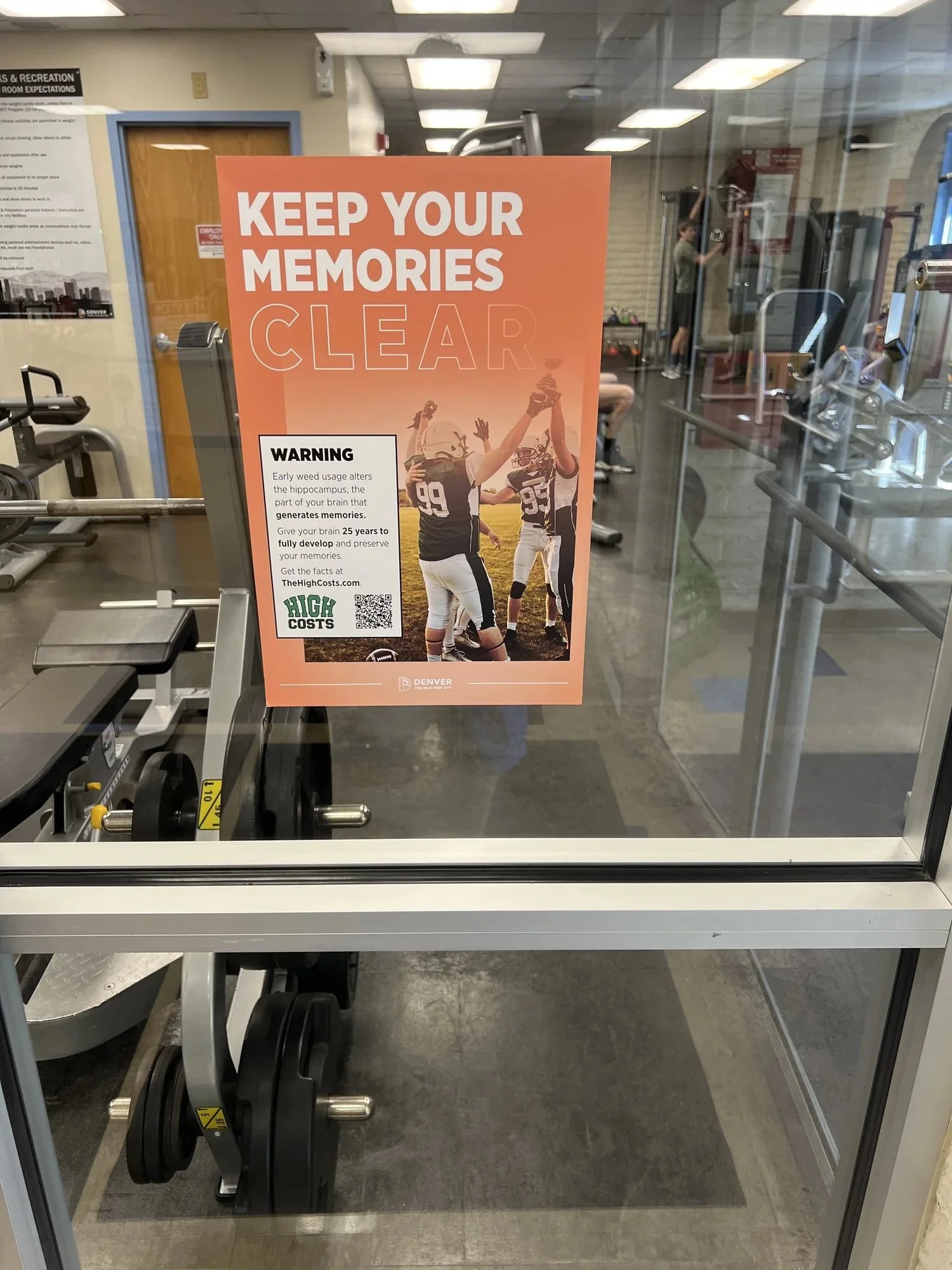
- A channel that matches the message: a campaign about social media harms shouldn't depend mostly on social media ads. Offline, place-based channels such as K-12 schools, 7,500+ pediatric offices, community and recreation centers, daycare centers and gas stations reach the same families away from the feed.
- Coverage the state can show: delivery by county or district that legislators can see.
- Proof of delivery: independent or audited proof-of-performance, not just impression estimates.
The 2027 timeline to watch
- January 15, 2027: second annual installment [3].
- January–spring 2027: most legislative sessions. Watch for appropriations in states like Mississippi and Tennessee [5][6].
- Ongoing: the contingent ~30% of payments depends on Snap, TikTok and YouTube becoming bound in each state. It hadn't been triggered anywhere as of mid-October 2026 [11].
FAQ
01Can Meta settlement money be used for advertising?
The settlement lists "public health advertising credits" and a "digital wellness public education fund" among its example uses. Whether a given campaign qualifies depends on each state's terms and on decisions by its attorney general or legislature.
02Who decides how my state spends its Meta settlement money?
It depends on the state. In some states the attorney general has discretion (for example Kansas), in others the legislature appropriates the money (for example Mississippi), and some have created dedicated funds by law (for example Tennessee).
03When will states start spending Meta settlement money?
The first installment was due in fall 2026, and the next arrives January 15, 2027. Many states will make spending decisions during 2027 legislative sessions.
Planning a settlement-funded youth campaign?
PlaceBased Media is the offline, place-based media partner for state programs and their agencies, and we plan and deliver the offline part of the plan.
Sources
- NY AG press release, Aug 26, 2026: https://ag.ny.gov/press-release/2026/attorney-general-james-secures-171-billion-and-groundbreaking-reforms-meta
- Utah AG: https://attorneygeneral.utah.gov/utah-meta-settlement/
- Meta consent judgment and settlement agreement, Sec. VI.C (installments), VI.D (contingency), VI.G.1 (example uses, incl. "(c) Public health advertising credits; (d) A digital wellness public education fund"), Exhibit C (state terms): https://www.attorneygeneral.gov/wp-content/uploads/2026-08-26-META-23-05448-ECF-572-1-Exhibit-1-MDL-Consent-Judgment-FINAL-Settlment-Agreement-Fully-Executed.pdf
- Topeka Capital-Journal: https://www.cjonline.com/story/news/politics/government/2026/08/26/meta-to-pay-17-1b-to-kansas-others-for-social-media-harm-to-children/91474700007/
- Mississippi Today, Sept 16, 2026: https://mississippitoday.org/2026/09/16/fitch-mississippi-meta-settlement/
- Tennessee SB2061 (Pub. Ch. 1114): https://wapp.capitol.tn.gov/apps/BillInfo/Default.aspx?BillNumber=SB2061&GA=114
- NJ A5438 (withdrawn 9/24/2026): https://www.njleg.state.nj.us/bill-search/2026/A5438
- NJ AR160: https://www.njleg.state.nj.us/bill-search/2026/AR160
- Arkansas Democrat-Gazette (citing NYT analysis): https://www.arkansasonline.com/news/2026/oct/18/best-use-for-meta-settlement-funds-point-of-debate/
- New Mexico judgment: https://nmcourts.gov/wp-content/uploads/2026/08/D-101-CV-2023-02838-Final-FOFCOL-and-Judgment-of-the-Court.pdf ; appeal/stay: https://www.santafenewmexican.com/news/local_news/meta-asks-new-mexico-court-to-stay-enforcement-of-942-million-judgment-pending-appeal/article_40aca50f-aee2-4b7a-8c23-d80c21d0c543.html
- Settlement Insight state tracker: https://settlementinsight.com/meta-state-settlement
Related articles.
Youth Social Media Settlement Funds
How states can spend Meta and TikTok settlement funds on youth mental health and digital wellness, and how to reach teens and parents offline.
Lessons From Opioid Settlement Media Campaigns for Social Media Settlement Funds
What opioid settlement awareness spending got right and wrong, and five lessons for states planning campaigns with Meta and TikTok settlement money.
Sample Settlement-Funded Youth Media Plan
A free sample media plan and checklist for youth campaigns funded by Meta and TikTok settlements. Audiences, venues, timing and reporting.
Plan your next campaign.
Reach your audience in the clinics, schools, pharmacies, gas stations, and community places they already visit.