

Doctor's Office Advertising: Waiting Rooms, Exam Rooms & HCP Break RoomsHealth messages, where the visit happens.
Doctor's office advertising places health messages inside physician practices: in waiting rooms, in exam rooms and in the staff lounges and break rooms where care teams step away between patients. PlaceBased Media plans fully managed campaigns across primary care and specialty offices, from pediatrics and OB/GYN to cardiology and oncology. Two consecutive AAM audits verified 113.3% and 111% of guaranteed distribution.
- Primary care + 10 specialties
- AAM-audited delivery
- English, Spanish + 15 more languages
- Fully managed
Why the Doctor's Office Is Worth It.
Americans made about 1.0 billion physician office visits in a year, roughly 320.7 visits for every 100 people.
Source: CDC National Center for Health Statistics, “FastStats: Physician Office Visits” (National Ambulatory Medical Care Survey, 2019 data).71.9% of physician office visits involve drug therapy, a medication provided or prescribed.
Source: CDC National Center for Health Statistics, “FastStats: Therapeutic Drug Use” (National Ambulatory Medical Care Survey, 2019 data).The average medical visit keeps patients in the clinic for 84 minutes, but only about 20 of those minutes are face-to-face with the physician.
Source: Ray KN, Chari AV, Engberg J, et al. (American Journal of Managed Care), “Opportunity Costs of Ambulatory Medical Care in the United States,” 2015.Three Rooms, One Visit
A doctor's office visit moves through three spaces, and each one does a different job in a campaign.
Waiting rooms
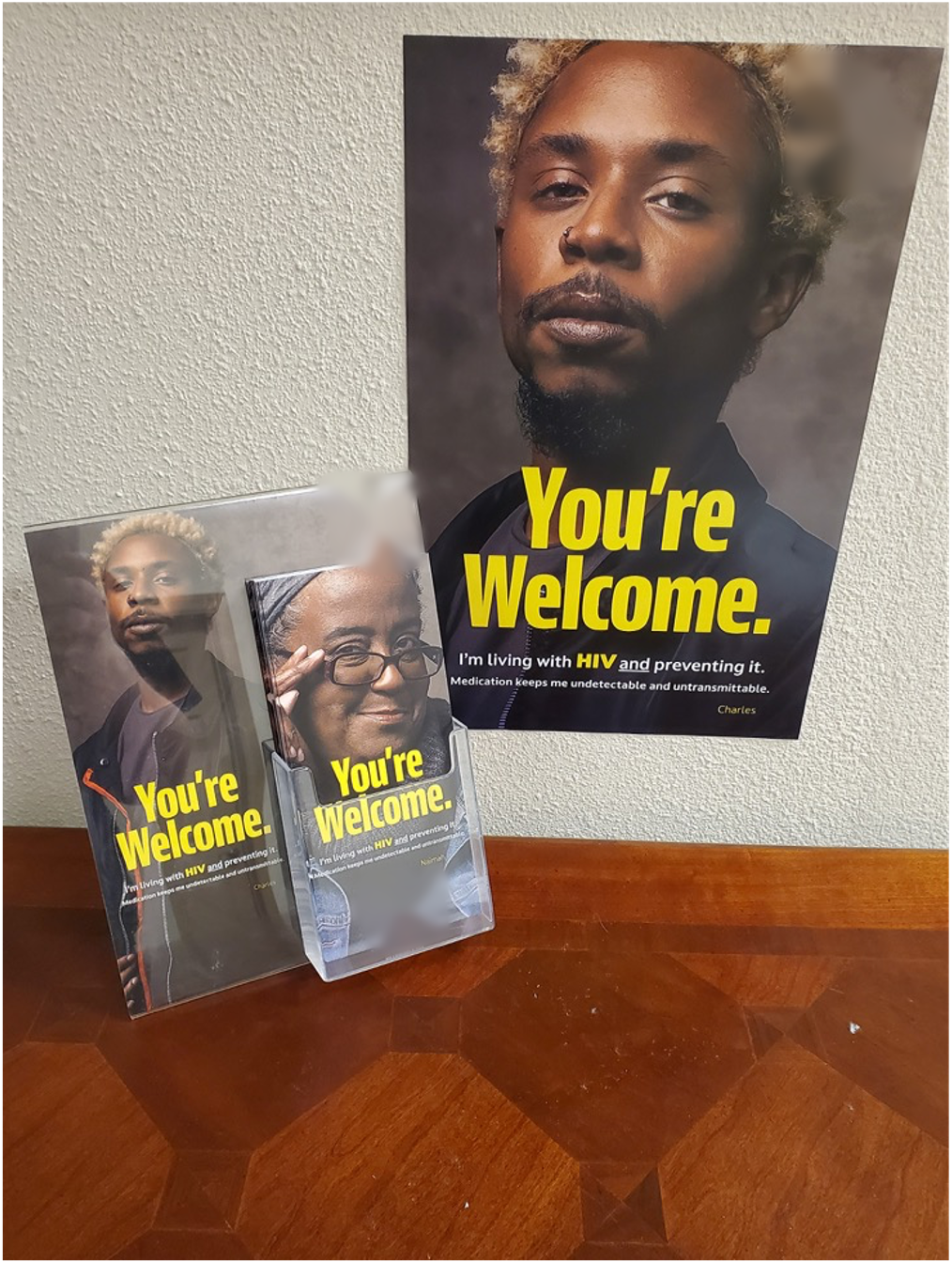
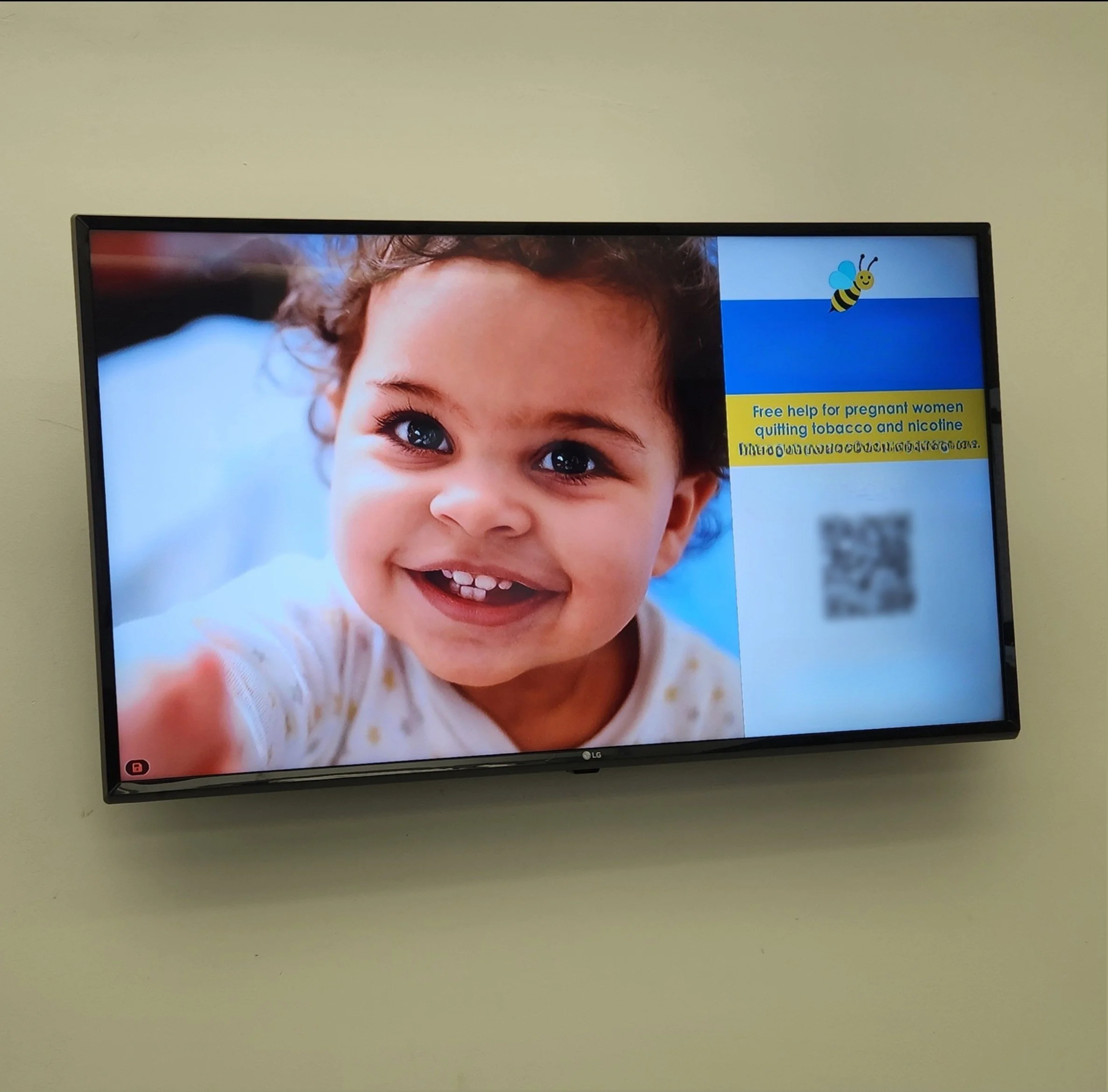
Posters, wallboards and brochure and take-one displays, plus digital screens or waiting-room TV in offices that have them. Patients and the family members with them see the message between check-in and the exam room.
Exam rooms
Posters, wallboards and take-ones at eye level in the room where the patient waits for the provider, and where the provider and patient talk through care decisions.
HCP break rooms and staff lounges
Posters and displays where physicians, nurse practitioners, nurses and office staff step away between patients, so the care team sees the same story as the patient.
Formats vary by office, and not every office has every format, including screens. Your plan shows the offices and formats available in your markets.

Almost Everyone Sits in a Doctor's Office
Adults
84.7% of U.S. adults had a visit with a doctor or other health care professional in the past year (2025) (CDC NCHS).
Children
94.7% of U.S. children had a visit with a doctor or other health care professional in the past year (2025) (CDC NCHS).
Primary care
50.3% of physician office visits were made to primary care physicians, and the rest went to specialists (CDC NCHS, NAMCS 2019).
National background figures from federal sources, not PlaceBased campaign results.
Primary Care and Specialty Offices
Start broad in primary care, where about half of physician office visits happen, or go deep in the specialty offices that match your condition or program. Most plans mix both.
| Office type | Who's in the waiting room | Offices in network |
|---|---|---|
| Primary care | Adults, children and older patients at checkups, vaccines and follow-ups | Listed in your plan |
| Pediatrics | Parents and caregivers making health decisions for children and teens. | 7,500+ |
| OB/GYN | Women from contraception and pregnancy through postpartum and menopause. | 6,000+ |
| Orthopedics | Patients with joint pain, osteoporosis, sports injuries and post-surgical recovery. | 3,500+ |
| Dermatology | Patients with psoriasis, eczema, acne and skin cancer concerns. | 3,000+ |
| Cardiology | Patients managing heart disease, high blood pressure, cholesterol and blood thinners. | 2,500+ |
| Gastroenterology | Patients with IBD, reflux and liver disease, plus colorectal screening. | 2,500+ |
| Oncology | Patients and caregivers through cancer treatment, immunotherapy and survivorship. | 2,000+ |
| Neurology | Patients with migraine, epilepsy, MS and Parkinson's disease. | 2,000+ |
| Endocrinology | Patients managing diabetes, obesity, thyroid disease and GLP-1 medications. | 1,500+ |
| Pulmonology | Patients with asthma, COPD and other lung conditions. | 1,000+ |
Specialty office counts are from our point-of-care network. Primary care clinics are mapped by market, so your plan lists them by address.
Reach the Care Team, Too
PlaceBased reaches HCPs in staff lounges, break rooms and exam rooms at clinics across the U.S. HCP placements can run alone or alongside patient-facing media in the same offices, so the patient and the provider hear one story.
- Staff loungeswhere physicians, nurses and office staff gather between patients, away from the waiting room.
- Break roomswhere care teams take meal and rest breaks during the workday, so a message builds frequency without anyone needing to click or open anything.
- Exam roomswhere providers see the same message as the patient during the visit.
See how we plan physician and HCP advertising, including disease-state education, patient support program awareness and public health reminders for care teams.
Who Advertises in Doctor's Offices
- 01Pharmaceutical, biotech and device brandsdisease-state and unbranded education, treatment awareness and patient-support programs, with creative cleared through your own MLR review.
- 02Health systems and health plansservice lines, referral networks, enrollment and preventive benefit reminders.
- 03Public health departments and agenciesvaccination, screening, tobacco cessation and overdose prevention campaigns that point patients back to their own clinician.
- 04Nonprofits and patient groupschronic disease programs, caregiver support and community resources.
How a Doctor's Office Campaign Runs
Pick the offices
choose primary care and specialty offices by state, DMA, county or ZIP code.
Match formats to each office
your plan shows the offices and formats available in your markets.
Clear the creative
your medical, legal and regulatory team approves the creative, and we handle the rest. Run it in English, Spanish or 15 more languages.
Install and report
we handle production and installation, then report with time-stamped, geo-tagged proof of posting.
Compliance-Friendly Creative
- MLR-reviewedYour creative goes through your own medical, legal and regulatory (MLR) review. PlaceBased doesn't write, edit or add product claims.
- Fair balance supportedFormats can carry fair balance and Important Safety Information (ISI) when your brand team requires it.
- Point to the clinicianMessages like “Ask your doctor about...” support the visit instead of competing with it. Placements are not an endorsement by the office or its staff.
- Privacy-safe targetingby location, specialty and geography, never by individual patient data.
Read our guide to healthcare marketing compliance and our look at doctor's office and clinic media in 2026.
Targeting and Measurement
Target doctor's offices by state, DMA, county or ZIP code and by specialty. Run creative in English, Spanish and 15 more languages, assigned by office, and reinforce it after the visit with pharmacy advertising.
Two consecutive Alliance for Audited Media audits verified 113.3% and 111% of guaranteed distribution on our point-of-care program, and the latest audit covered our 345-location Physician Office Patient Education Program (AAM Media Matters feature). Every campaign also includes office-level proof of posting with time-stamped, geo-tagged photos, delivery reporting by geography and language, and optional QR code and URL tracking.
Plan by Specialty
Each specialty page covers the conditions, patients, formats and calendar for that office type.
- Primary care clinics
- Pediatrics: 7,500+ offices
- OB/GYN: 6,000+ offices
- Orthopedics: 3,500+ offices
- Dermatology: 3,000+ offices
- Cardiology: 2,500+ offices
- Gastroenterology: 2,500+ offices
- Oncology: 2,000+ offices
- Neurology: 2,000+ offices
- Endocrinology: 1,500+ offices
- Pulmonology: 1,000+ offices
Compare every channel and specialty on our point-of-care advertising page.
Doctor's Office Advertising FAQs
01What is doctor's office advertising?
Doctor's office advertising places health messages inside physician practices, in waiting rooms, exam rooms and HCP break rooms. Formats include posters, wallboards, brochure and take-one displays, and digital screens or waiting-room TV in offices that have them. It is part of point-of-care advertising, which also covers pharmacies, urgent care centers and hospitals.
02Is doctor office advertising the same as point-of-care advertising?
It is one part of it. Doctor office advertising runs inside primary care and specialty practices. Point-of-care advertising also includes pharmacies, urgent care centers, hospitals and community health centers. See our point-of-care advertising page for the full network.
03Which formats are available in a doctor's office?
It depends on the office. Many offices carry exam room and waiting room posters, wallboards and brochure and take-one displays, some also have digital screens or waiting-room TV, and HCP lounge placements are available at select offices. Your plan lists the formats in each office before you book.
04Can doctor's office advertising reach physicians and staff?
Yes. PlaceBased reaches HCPs in staff lounges, break rooms and exam rooms at clinics across the U.S. HCP placements can run alone or alongside patient-facing media in the same offices.
05Which types of doctor's offices can I target?
Primary care clinics plus 10 specialties: pediatrics, OB/GYN, orthopedics, dermatology, cardiology, gastroenterology, oncology, neurology, endocrinology and pulmonology. Offices can be selected by state, DMA, county or ZIP code.
06How much does doctor's office advertising cost?
Cost depends on the number of offices, the formats in each, the markets and the flight length. We build a plan with the available offices, formats and pricing for your budget.
07Is doctor's office advertising privacy-safe?
Yes. Campaigns are targeted by location, specialty and geography, never by individual patient health data, and they do not collect protected health information.
08How is a doctor's office campaign measured?
Every campaign includes office-level proof of posting with time-stamped, geo-tagged photos, delivery reporting by geography and language, and optional QR code and URL tracking. Two consecutive AAM audits verified 113.3% and 111% of guaranteed distribution on our point-of-care program.
Pair It With
Point of care
Every specialty, channel and format.
Explore point of care →Primary care clinics
Patients at checkups, vaccines and follow-ups.
Explore primary care →Physicians & HCPs
Care teams in lounges, break rooms and exam rooms.
Reach HCPs →Pharmacies
Counter, shelf and screen, at pickup.
Explore pharmacies →See every media solution.
All media solutions →Planning a campaign? Start with our public health advertising overview, compare DOOH advertising screens, or browse every OOH and DOOH media solution. See every specialty on our point-of-care advertising page.
Let's Talk.
Tell us who you need to reach, where and when. We'll come back with a doctor's office list for your markets, the formats in each office and an honest read on what your budget can do.