
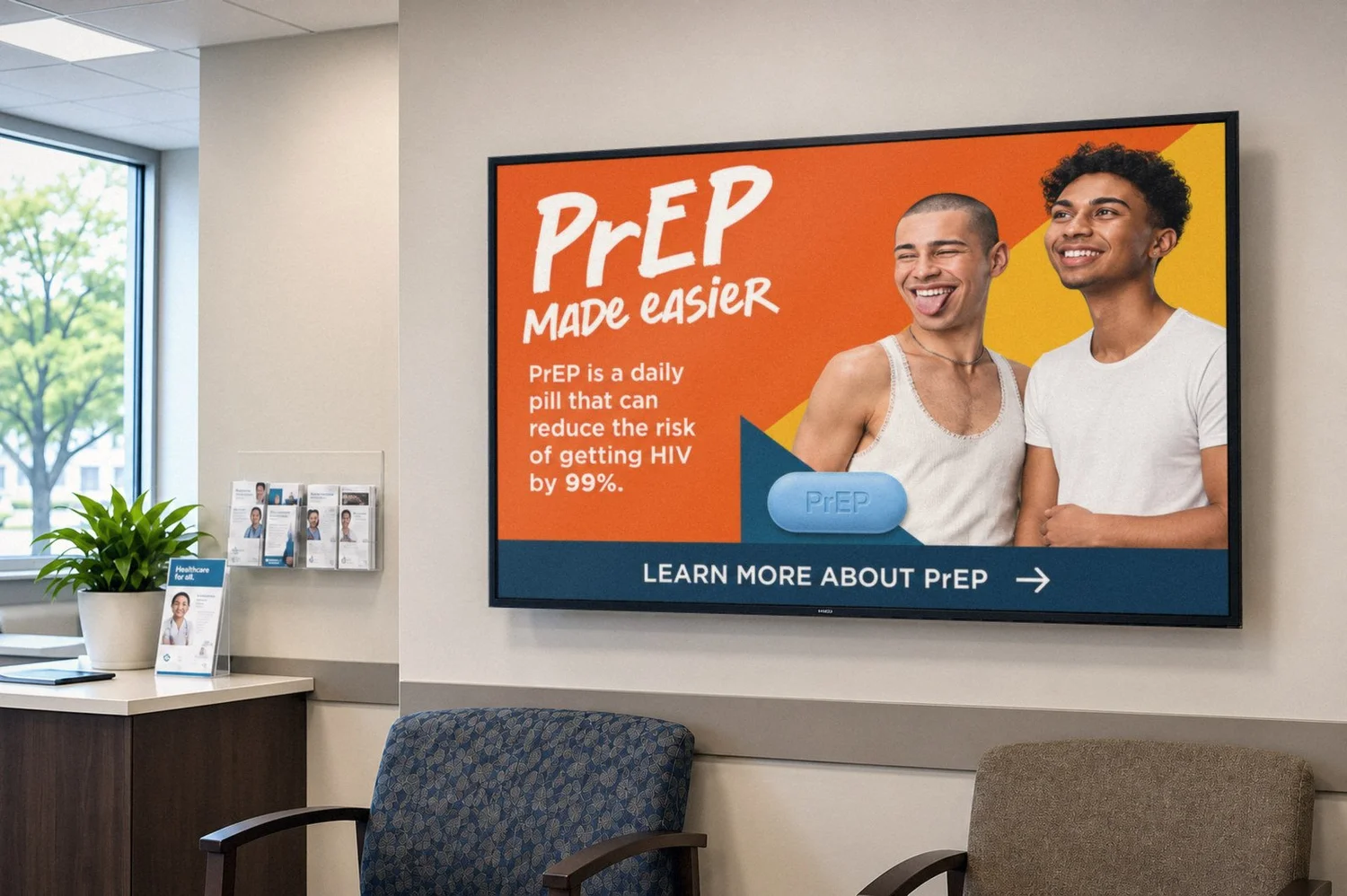
Primary Care Clinic Advertising: Vaccines, Screenings & PreventionThe checkup, made to count.
Primary care clinic advertising puts prevention messages in family medicine, internal medicine and general practice offices, where patients come for annual checkups, vaccines and follow-up visits. Primary care clinics were part of the healthcare venue mix in PlaceBased Media’s SAMHSA naloxone education and fentanyl awareness campaign.
- 500,000+ locations
- AAM-audited delivery
- English, Spanish + 15 more languages
- Fully managed
Why primary care reaches almost everyone.
of U.S. adults had a visit with a doctor or other health care professional in the past 12 months (2025).
Source: CDC National Center for Health Statistics, “FastStats: Physician Office Visits.”of U.S. children had a visit with a doctor or other health care professional in the past 12 months (2025).
Source: CDC National Center for Health Statistics, “FastStats: Physician Office Visits.”of the 1.0 billion physician office visits in the U.S. were made to primary care physicians (2019).
Source: CDC National Center for Health Statistics, “FastStats: Physician Office Visits.”What Primary Care Campaigns Promote
| Topic | Who it reaches | Message ideas |
|---|---|---|
| Vaccination | Adults, parents and older patients | Flu, COVID-19 and routine vaccines, where to get vaccinated, questions for the clinician |
| Cancer and preventive screening | Adults due for screening | Which screenings to ask about at the next visit, how to schedule one |
| Chronic disease prevention | Patients managing blood pressure, diabetes or weight | Lifestyle programs, self-management resources, community support |
| Tobacco and vaping cessation | Adults and teens who smoke or vape | Quit resources, talking with the care team |
| Coverage and enrollment | Uninsured and underinsured patients | Medicaid and marketplace enrollment, renewal reminders |
| Overdose prevention | Patients and families | Naloxone basics, where to get it, safe medication storage and disposal |
How Often Patients Sit in a Doctor’s Office
320.7 visits per 100 people
Americans made 1.0 billion physician office visits in 2019, about 320.7 visits for every 100 people. (CDC NCHS, NAMCS)
Half go to primary care
50.3% of those physician office visits were made to primary care physicians, the doctors patients see for checkups, prevention and ongoing care. (CDC NCHS, NAMCS)
Community primary care
HRSA-funded health centers, which deliver primary care in underserved areas, served more than 32.7 million people in 2025. (HRSA BPHC)
National background figures from federal sources, not PlaceBased campaign results.
One Relationship, Many Visits
Nearly 85% of adults saw a doctor or other health care professional in the past year (CDC NCHS), and primary care is where most of that care is coordinated. Patients return for checkups, follow-ups and refills, so a message seen in the waiting room can be raised again in the exam room.
Campaigns in primary care usually line up with three points in the patient relationship:
The annual visit
wellness exams and physicals are when patients review vaccines and screenings, so reminders land right before the conversation.
Managing a condition
people with high blood pressure, diabetes or asthma return on a regular schedule, which gives a message repeat exposure.
Referral and next steps
when a clinician refers a patient for a screening or program, take-home materials help the next step happen.
Who Waits in a Primary Care Clinic
- Adults of every agefrom young adults establishing care to older patients with regular follow-ups.
- Parents and caregiversbringing children and teens for well-child visits, sports physicals and school forms, or accompanying older relatives.
- Patients with ongoing conditionswho see the same clinic several times a year.
- Clinicians and front-desk teamsphysicians, nurse practitioners, medical assistants and office staff in break areas.
Who Advertises in Primary Care
- 01State and local health departmentsvaccination, screening and tobacco cessation campaigns that point patients back to their own clinician.
- 02Federal health programsprevention and overdose education, like the SAMHSA naloxone campaign.
- 03Health plans and Medicaid programsenrollment, renewal and preventive benefit reminders.
- 04Nonprofits and patient groupschronic disease programs, caregiver support and community resources.
Seasons of the Primary Care Year
Primary care messaging can run all year, with natural peaks for fall vaccination, back-to-school physicals in late summer and National Immunization Awareness Month in August. Plan print as flights and change creative between them. In clinics that have digital displays, creative can rotate through the seasons without reprinting.
Primary Care Clinic Formats
Most primary care clinics carry posters, wallboards and brochure and take-one displays. Some clinics also offer waiting room digital displays, waiting-room TV, HCP lounge placements and Mobile POC, so the mix depends on the facility.
Exam-room and waiting-room posters and wallboards (patient- and family-facing)
prevention reminders at eye level in the exam room and lobby, available at most locations.
Brochure and take-one displays (patient- and family-facing)
screening guides, vaccine schedules and enrollment information patients carry home, available at most locations.
Waiting room digital displays (patient- and family-facing, at select clinics)
rotating seasonal messages, with rotation by market or language.
Waiting-room TV (patient- and family-facing, at select clinics)
health and wellness programming with ad placements for the time between check-in and the exam room.
HCP lounge placements (staff-facing, at select clinics)
posters and screens in staff lounges and break rooms that reach physicians, nurse practitioners and medical assistants.
Mobile POC (at select clinics)
privacy-safe, geofenced mobile ads that carry the clinic message beyond the visit, with no sensitive health data.
Each clinic’s formats are listed in your plan. Compare every point-of-care advertising channel on the main point-of-care page.
Creative That Supports the Visit
- Point to the clinicianMessages like “Ask your doctor about...” support the visit instead of competing with it.
- One action per pieceA single next step, such as scheduling a screening or getting a flu shot, is easier to remember after the appointment.
- Your review processCreative is reviewed by your own medical, communications and legal teams. PlaceBased does not write or add health claims.
- Match the languages of the clinicRun English, Spanish or other language versions where the patient population calls for them.
See our guide to healthcare marketing compliance and our look at doctor’s office and clinic media in 2026.
Targeting and Reporting
Pick primary care clinics by state, DMA, county or ZIP code, and layer in community health centers to reach underserved neighborhoods or urgent care centers for walk-in patients.
Reporting covers proof of posting with time-stamped, geo-tagged photos, delivery by geography and language, and optional QR code and URL tracking, with delivery audited by the Alliance for Audited Media (AAM).
Other Healthcare Venues
Primary care is one of several healthcare settings in the SAMHSA campaign. Pair it with specialty offices on the point-of-care advertising page or with substance abuse treatment center advertising for overdose prevention work.
Primary Care Clinic Advertising FAQs
01What is primary care clinic advertising?
Primary care clinic advertising places health messages in family medicine, internal medicine and general practice offices. Formats depend on the specific clinic: posters, wallboards and brochure and take-one displays run at most locations, while waiting room digital displays, waiting-room TV, HCP lounge placements and Mobile POC are available at select clinics.
02Why advertise in primary care instead of a specialty office?
Primary care reaches the broadest patient base. In 2025, 84.7% of adults and 94.7% of children saw a doctor or other health care professional, and about half of physician office visits go to primary care physicians, according to CDC NCHS.
03Which messages fit a primary care waiting room?
Vaccination, cancer and preventive screening, chronic disease prevention, tobacco cessation, coverage and enrollment, and overdose prevention are the most common.
04Can primary care campaigns run in Spanish and other languages?
Yes. Creative can run in English, Spanish and 15 more languages, chosen by market and by clinic.
05Does the clinician endorse the advertiser?
No. Placements sit in the clinic environment and encourage patients to talk with their own clinician. They are not an endorsement by the clinic or its staff.
06When is the best time for a primary care campaign?
Fall vaccination season, the back-to-school weeks in late summer and National Immunization Awareness Month in August are common peaks, and prevention messages can run year-round.
07Has PlaceBased run campaigns in primary care clinics?
Yes. Primary care clinics were in the healthcare venue list of our SAMHSA naloxone education and fentanyl awareness campaign.
Pair it with
Community health centers
Primary care for underserved communities.
Explore health centers →Point of care
Specialty waiting rooms, exam rooms and HCP lounges.
Explore point of care →Urgent care
Walk-in care for injuries and illnesses.
Explore urgent care →Pharmacies
Counter, shelf and screen, at pickup.
Explore pharmacies →Public health
Campaigns for health departments and nonprofits.
Explore public health →See every media solution.
All media solutions →Building a prevention campaign? Read how to run vaccine awareness advertising, see our public health media planning guide, or browse every OOH and DOOH media solution.
Let's talk.
Share the prevention message, the patients you want to reach and your markets. We’ll send back primary care clinics in those areas, the formats each one offers and a realistic plan for your budget.