
Community Health Center Advertising: Multilingual Outreach for FamiliesHealth messages in the neighborhood clinic.
Community health center advertising brings public health messages into the clinics that families use for medical, dental and behavioral health care, often in the languages spoken at home. PlaceBased Media included community health centers among the healthcare venues of its SAMHSA naloxone education and fentanyl awareness campaign. Looking specifically at federally qualified health centers and look-alikes? See FQHC advertising.
- 500,000+ locations
- AAM-audited delivery
- English, Spanish + 15 more languages
- Fully managed
A national network of neighborhood care.
people were served by HRSA-funded health centers in 2025.
Source: HRSA Bureau of Primary Health Care, “About the Health Center Program.”service sites are run by about 1,400 HRSA-funded health centers, in every U.S. state, territory and D.C.
Source: HRSA Bureau of Primary Health Care, “About the Health Center Program.”of health center patients were best served in a language other than English in 2025, about 8.8 million people.
Source: HRSA, Uniform Data System (UDS), 2025 National Health Center Program awardee data.Message Themes for Community Health Centers
| Topic | Who it reaches | Message ideas |
|---|---|---|
| Family and child health | Parents and caregivers | Well-child visits, childhood vaccines, WIC and nutrition programs |
| Dental health | Children and adults | Dental checkups and cleanings, oral health tips for kids |
| Mental health and crisis support | Teens, adults and families | 988 Suicide & Crisis Lifeline, where to find counseling |
| Healthy aging | Older adults and caregivers | Medicare information, fall prevention, vaccines for older adults |
| Language access | Patients who prefer languages other than English | In-language health information, interpreter services |
| Overdose prevention | Patients, families and neighbors | Naloxone education, fentanyl awareness, local resources |
Who Community Health Centers Serve
A diverse patient base
63.70% of health center patients identified as a racial or ethnic minority in 2025, and 39.26% identified as Hispanic or Latino. (HRSA UDS 2025)
Families with children
Children made up 28.60% of health center patients in 2025, and adults 65 and over made up 12.79%. (HRSA UDS 2025)
More than medical care
21.27% of health center patients received dental services and 9.40% received mental health services in 2025. (HRSA UDS 2025)
Figures describe HRSA Health Center Program awardees nationally. They are background data, not PlaceBased campaign results.
Whole-Family Care Under One Roof
Health centers have served communities for more than 60 years and offer services ranging from primary and dental care to behavioral health (HRSA). A parent at a child’s appointment may also be a patient, a caregiver for a grandparent and a neighbor who shares information.
That shared, multigenerational visit creates three openings for a public health message:
While the family waits
parents, children and older relatives often sit together, so one message can reach several generations at once.
Across departments
the same health center may provide medical, dental and behavioral health care, which gives a campaign more than one waiting area.
Back into the community
take-home materials travel to the kitchen table, the workplace and the neighbors who never visit the center.
Inside a Community Health Center Lobby
- Parents and childrenat well-child, school and vaccine visits.
- Patients who prefer another languageincluding Spanish speakers and many other language communities.
- Older adults and caregiversmanaging ongoing conditions and Medicare questions.
- Outreach workers, clinicians and staffwho also share information with the community beyond the clinic walls.
Who Runs Campaigns in Health Centers
- 01State and county health departmentsimmunization, maternal and child health and chronic disease programs.
- 02Federal agenciesnational prevention campaigns such as the SAMHSA naloxone campaign.
- 03Medicaid programs and health plansenrollment, renewal and benefits awareness for families.
- 04Community nonprofitsfood access, housing, language services and caregiver support.
Timing Your Health Center Campaign
Health center messages work any month, and many campaigns build flights around National Health Center Week in August, back-to-school vaccines and the fall respiratory season. For print, schedule flights with a fresh creative change between each one. Where a center has digital displays, messages can rotate through the year with no reprinting.
Community Health Center Formats
At most community health centers, campaigns use posters, wallboards and brochure and take-one displays. Waiting room digital displays, waiting-room TV, HCP lounge placements and Mobile POC are offered at select centers, depending on the facility.
Exam-room and waiting-room posters and wallboards (patient- and family-facing)
family-friendly, in-language prevention messages in lobbies and exam rooms, at most locations.
Brochure and take-one displays (patient- and family-facing)
bilingual cards and flyers that families take home and share with neighbors, at most locations.
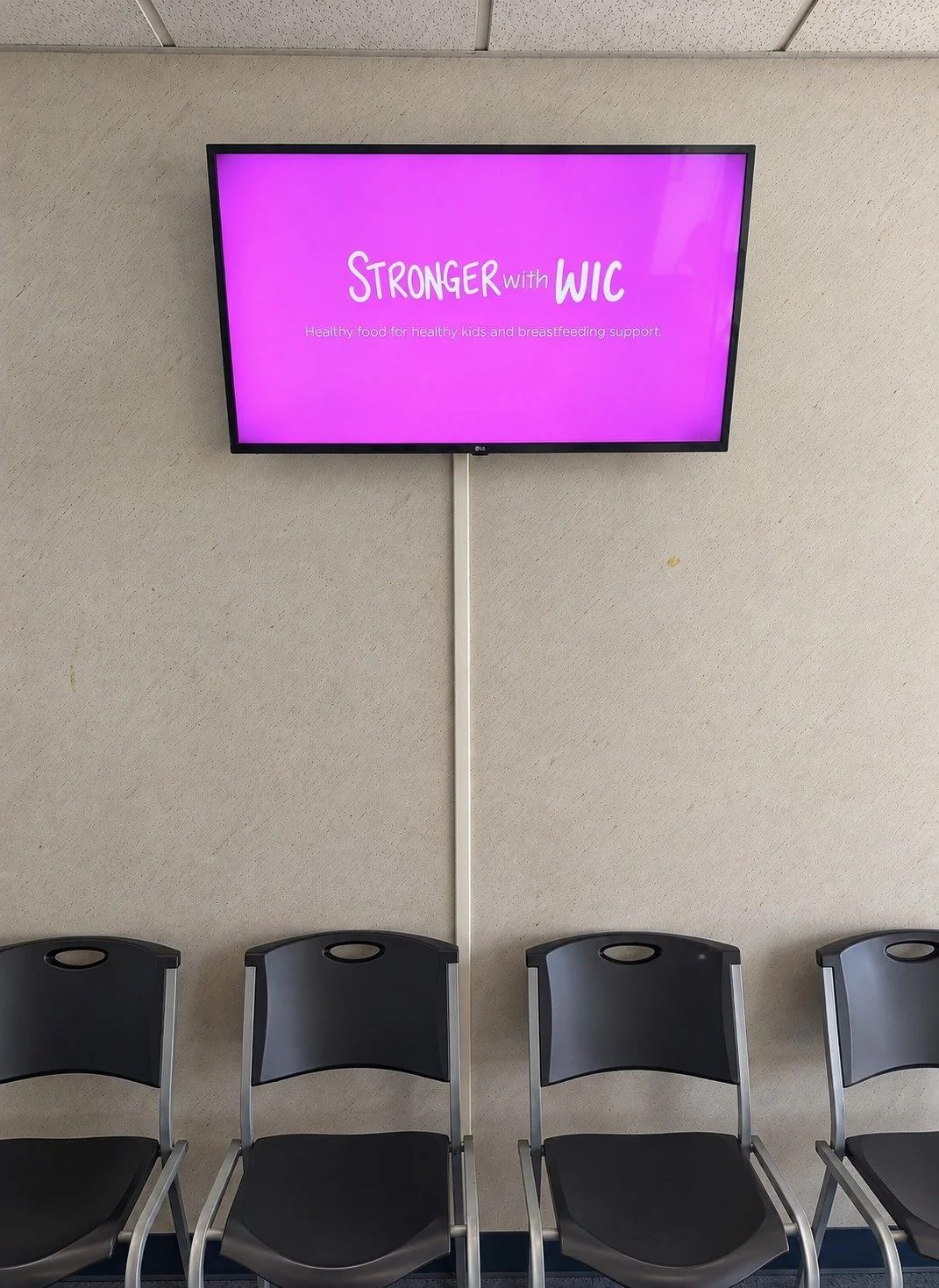
Waiting room digital displays (patient- and family-facing, at select centers)
rotating community health messages, with rotation by market or language.
Waiting-room TV (patient- and family-facing, at select centers)
health and wellness programming with ad placements for families waiting together.
HCP lounge placements (staff-facing, at select centers)
posters and screens in staff lounges and break rooms for clinicians, community health workers and staff.
Mobile POC (at select centers)
privacy-safe, geofenced extensions of the in-center message, using no sensitive health data.
Your plan shows which formats each health center offers. Browse every format on the point-of-care advertising page.
Creative for Many Languages
- Plan the languages firstMatch creative to the languages your target centers serve, from Spanish to Vietnamese, Haitian Creole and more.
- Culturally grounded imagerySettings and illustrations that look like the community build trust faster than generic stock scenes.
- Simple, practical next stepsA short URL or a QR code gives families an easy action to take after the visit.
- Your own reviewYour team approves all creative and claims. PlaceBased does not write or add health claims.
Read about community health promotion and Hispanic marketing for more ideas.
Where It Runs and How It’s Measured
Target health centers by state, DMA, county or ZIP code and by language, then extend into the neighborhood with community centers, laundromats and multicultural media.
Measurement includes AAM-audited delivery, proof of posting with time-stamped, geo-tagged photos, delivery reports by geography and language, and optional QR code and URL tracking.
More Healthcare Settings for Your Plan
Health centers are one of many healthcare venues in the SAMHSA campaign. For the funding designation and sliding fee audience, see FQHC advertising. For overdose prevention, add substance abuse treatment centers, and for specialty offices, see point-of-care advertising.
Community Health Center Advertising FAQs
01What is community health center advertising?
It is the placement of health messages in community health centers, the neighborhood clinics that provide medical, dental and behavioral health care. Formats depend on the specific center. Posters, wallboards and brochure and take-one displays are at most locations, and select centers also offer waiting room digital displays, waiting-room TV, HCP lounge placements and Mobile POC.
02How many people use community health centers?
HRSA reports that health centers served more than 32.7 million people in 2025, through more than 16,600 service sites run by about 1,400 health centers.
03Can I run creative in languages other than English?
Yes, and it is often essential. In 2025, 26.97% of health center patients were best served in a language other than English. Campaigns can run in English, Spanish and 15 more languages.
04Is a community health center the same as an FQHC?
Many community health centers are Federally Qualified Health Centers, but the terms are not identical. Our FQHC advertising page covers the federal designation, look-alikes and sliding fee patients.
05What topics work best in health centers?
Family and child health, dental health, mental health and crisis support, healthy aging, language access and overdose prevention are common themes.
06Which organizations advertise in health centers?
State and county health departments, federal agencies, Medicaid programs and health plans, and community nonprofits.
07When should a health center campaign run?
Any time of year. National Health Center Week in August, back-to-school vaccine season and the fall respiratory season are popular flight dates.
Pair it with
FQHCs
Sliding fee clinics with federal designation.
Explore FQHCs →Primary care
Family medicine and internal medicine offices.
Explore primary care →Behavioral health
Outpatient mental health clinics.
Explore behavioral health →Community centers
Rec centers, gyms and youth sports.
Explore community centers →Laundromats
Long, unhurried visits close to home.
Explore laundromats →See every media solution.
All media solutions →Reaching families on Medicaid? See our Medicaid audience page and WIC enrollment guide, or plan Spanish-language outreach with our Hispanic audience page.
Let's talk.
Tell us the communities, languages and message you have in mind. We’ll map community health centers in your markets, list the formats at each one and give you a straight answer on what your budget will cover.