
Orthopedic Point-of-Care Advertising: Reach Patients at the Treatment DecisionAt the treatment decision.
Orthopedic point-of-care advertising places patient-education messages in orthopedic practices, where patients with joint pain, osteoarthritis, osteoporosis, back pain and sports injuries talk with a surgeon or specialist about what to do next. PlaceBased Media runs fully managed campaigns across 3,500+ orthopedic offices for pharmaceutical, medical device and consumer health brands, health systems and public health agencies. Two consecutive AAM audits verified 113.3% and 111% of guaranteed distribution.
- 3,500+ orthopedic offices
- AAM-audited delivery
- English, Spanish + 15 more languages
- Fully managed
Why the exam room is worth it.
Orthopedic surgeons see 30 million office visits a year; knee symptoms alone drive 18.7 million visits.
Source: CDC National Center for Health Statistics, “National Ambulatory Medical Care Survey: 2016 National Summary Tables,” 2016.The average medical visit keeps patients in the clinic for 84 minutes, but only about 20 of those minutes are face-to-face with the physician.
Source: Ray KN, Chari AV, Engberg J, et al. (American Journal of Managed Care), “Opportunity Costs of Ambulatory Medical Care in the United States,” 2015.72% of office visits end with a medication provided or prescribed.
Source: CDC National Center for Health Statistics, “National Ambulatory Medical Care Survey: 2019 National Summary Tables,” 2019 data (pub. 2023).Where Treatment Options Get Discussed
Most patients arrive at an orthopedic office after weeks or months of pain, often referred by a primary care doctor. The visit is where the options get laid out: activity changes and physical therapy, medication, injections, bracing, or surgery and recovery. Patients often move through several of these steps over a series of visits, so the same people may see a campaign more than once.
Orthopedic patients are typically the decision makers for their own care. Adult children and spouses often come along, especially for older patients and before surgery, and they help with transportation, recovery at home and follow-up appointments. Point-of-care messages give both the patient and the companion something concrete to ask the specialist about.
The Scale of Musculoskeletal Conditions
Osteoarthritis
about 33 million U.S. adults have osteoarthritis, the most common type of arthritis (CDC).
Osteoporosis
12.6% of U.S. adults aged 50 and over had osteoporosis in 2017–2018, including 19.6% of women in that age group (CDC, National Center for Health Statistics).
National background figures, not PlaceBased campaign results.
Three Patient Groups, Three Different Messages
| Patient group | Common conditions | Patient-education topics |
|---|---|---|
| Older adults | Osteoarthritis of the knee and hip, osteoporosis, fractures | Joint pain management options, bone density screening, fall prevention, joint replacement preparation |
| Active adults and athletes | Sports injuries, tendon and ligament injuries, overuse injuries | Injury recovery, return to activity, bracing and supports |
| Surgical and post-surgical patients | Joint replacement, spine and sports-medicine surgery | Pre-surgery preparation, pain management and medication safety, rehabilitation, blood clot awareness |
Because these groups use different offices and different visit types, we can weight a plan toward sports-medicine practices, joint-replacement practices or general orthopedics depending on your audience.
Who Advertises in Orthopedic Offices
- 01Pharmaceutical brandsosteoarthritis pain, osteoporosis and bone health, inflammatory joint conditions and post-surgical pain education.
- 02Medical device and orthobiologic companiesjoint replacement, bracing, injection therapies and surgical technology education.
- 03Consumer health and OTC brandstopical and oral pain relief, joint supplements, braces and supports, mobility aids.
- 04Health systems and surgery centersjoint replacement programs, physical therapy and sports-medicine services.
- 05Public health agencies and nonprofitsfalls prevention, bone health, opioid safety and physical activity.
Orthopedic POC Formats
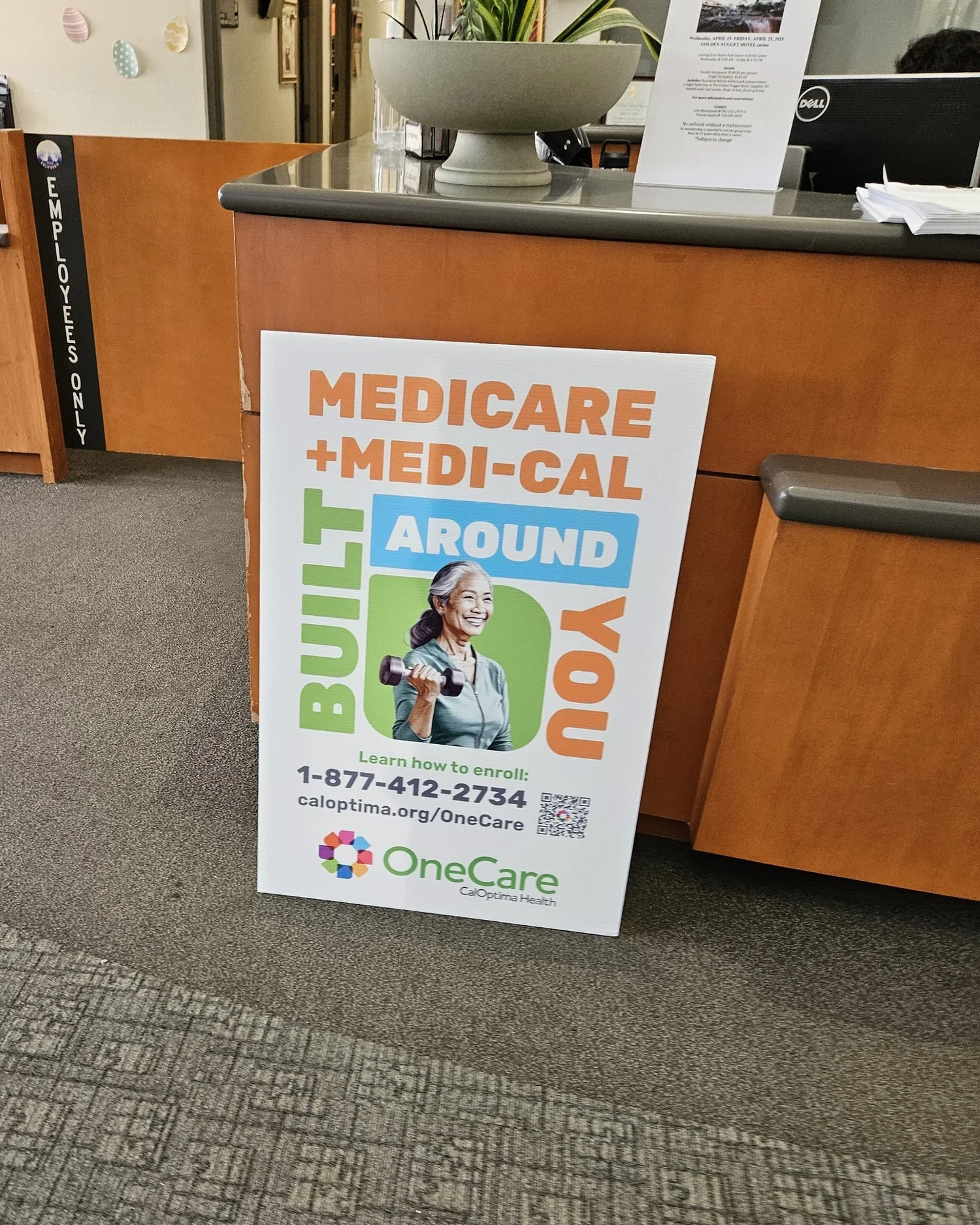
Exam room and waiting room posters, wallboards and take-one displays are core orthopedic formats. Digital screens add rotating messages in the offices that have them.
| Who it reaches | Format | Best for |
|---|---|---|
| Patients | Exam room posters and wallboards | "Questions to ask your surgeon" prompts and condition-specific education before the specialist arrives |
| Patients and companions | Waiting room posters and wallboards | Condition education and treatment-option overviews |
| Patients and companions | Brochure and take-one displays | Surgery preparation checklists, recovery guides and home-exercise resources |
| Patients and companions | Waiting room digital screens, where available | Rotating condition education and service information |
| Orthopedic surgeons, PAs, nurses and staff (HCP-facing) | Posters and displays in HCP lounges and break rooms | Disease-state and device education, clinical resources and patient-support program information for the care team |
Formats vary by network and office, and not every office has a screen. Your plan lists exactly what's available in each office. See all point-of-care channels and formats.
Targeting
- By practice typegeneral orthopedics, or a mix weighted toward sports medicine or joint replacement where available.
- By geographystate, DMA, county or ZIP code.
- By audienceareas with older populations (see aging population), or counties with higher arthritis prevalence using public data.
- By languageEnglish, Spanish and 15 more languages, assigned by office.
- Beyond the officereinforce the message at pharmacies and in senior centers.
Compliance-Friendly Creative
Orthopedic offices often carry both drug and device messaging, so we keep the review process simple:
Your MLR process governs the creative
Drug and device creative goes through your own medical, legal and regulatory review. PlaceBased doesn't write, edit or add product claims.
Fair balance supported
Formats can carry fair balance, Important Safety Information or device safety information when your team requires it.
Unbranded education fits
Many campaigns explain a condition and the range of options, and point patients to their specialist.
No patient data
Targeting is by location, specialty and geography, never by individual health information.
Read our guide to healthcare marketing compliance.
Measurement and Proof of Performance
- AAM-audited deliveryTwo consecutive AAM audits verified 113.3% and 111% of guaranteed distribution on our point-of-care program. Read the AAM Media Matters feature.
- Office-level proof of postingwith time-stamped, geo-tagged photos.
- Delivery reportingby ZIP code, county, DMA and language.
- Response trackingwith QR codes, short URLs and UTM tags, for example to a recovery guide or a service-line landing page.
For Public Health Organizations
Orthopedic offices reach older adults and their families at the moment bones and joints are top of mind. Health departments and nonprofits use them for falls prevention, osteoporosis and bone density screening, safe use and disposal of prescription pain medication, naloxone awareness after surgery, and physical activity programs for people with arthritis. Our Public Health Media Planning Guide covers budgets and timelines, and our public health advertising page shows how orthopedic offices fit a wider plan. For a related example, see our SAMHSA-funded naloxone education campaign.
More Point-of-Care Specialties
Orthopedics pairs well with dermatology (3,000+ offices) for inflammatory conditions that affect both skin and joints, and with OB/GYN (6,000+ offices) for bone health education in midlife.
- Pediatrics: 7,500+ offices
- Cardiology: 2,500+ offices
- Gastroenterology: 2,500+ offices
- Oncology: 2,000+ offices
- Neurology: 2,000+ offices
- Endocrinology: 1,500+ offices
- Pulmonology: 1,000+ offices
Orthopedic Point-of-Care Advertising FAQs
01What is orthopedic point-of-care advertising?
Orthopedic point-of-care advertising places patient-education messages in orthopedic practices, including exam room and waiting room posters, wallboards, brochure and take-one displays, digital screens where offices have them, and HCP lounge displays. It reaches patients with joint, bone and muscle conditions while they wait for and talk with an orthopedic specialist.
02Who sees ads in orthopedic offices?
Older adults with osteoarthritis or osteoporosis, active adults and athletes with sports injuries, patients preparing for or recovering from surgery, and the family members who come with them. HCP lounge formats reach orthopedic surgeons, physician assistants, nurses and office staff.
03Do all orthopedic offices have digital screens?
No. Formats vary by network and office. Many orthopedic offices run print and static formats, such as exam room and waiting room posters, wallboards and brochure displays, and some also have digital screens. Your plan lists the formats available in each office.
04Can medical device companies advertise in orthopedic offices?
Yes. Device and orthobiologic companies use orthopedic offices for patient education about joint replacement, bracing and other treatment options. Creative goes through the company's own regulatory review, and formats can carry device safety information.
05What conditions do orthopedic campaigns usually cover?
Common topics include knee and hip osteoarthritis, osteoporosis and fracture prevention, back and neck pain, sports injuries, joint replacement and post-surgical recovery.
06Can pharmaceutical brands run branded creative in orthopedic offices?
Yes, when it has been approved through the brand's own medical, legal and regulatory (MLR) review. Formats can carry fair balance and Important Safety Information. PlaceBased doesn't write or change product claims.
07How many orthopedic offices are in the PlaceBased network?
PlaceBased Media's point-of-care network includes 3,500+ orthopedic offices. Your plan lists the specific offices in your target markets before you commit.
08Can I target orthopedic offices by DMA or ZIP code?
Yes. You can choose orthopedic offices by state, DMA, county or ZIP code, and weight plans toward areas with older populations or higher arthritis rates using public data.
Pair it with
Pediatric offices
7,500+ pediatric offices.
Explore pediatric offices →Pharmacies
Counter, shelf and screen, at pickup.
Explore pharmacies →Community centers
Rec centers, gyms and youth sports.
Explore community centers →Dermatology offices
3,000+ dermatology offices.
Explore dermatology offices →Point of care
Waiting rooms, exam rooms and HCP lounges.
Explore point of care →See every media solution.
All media solutions →Planning a campaign? Start with our public health advertising overview, compare DOOH advertising screens, or browse every OOH and DOOH media solution. See every specialty on our point-of-care advertising page.
Let's talk.
Tell us which patients you need to reach and where they are in their treatment. We'll come back with an orthopedic office list for your markets, the formats in each office and an honest read on what your budget can do.