

Tourism & Destination Media Planning Guide - 2027Be there for the whole trip.
Tourism media works best when it follows the traveler. Reach people in their home and feeder markets while they're dreaming and planning. Stay visible along the drive, at airports, gas stations and rest stops, while they're in the market. Then guide spending once they arrive, at hotels, bars and restaurants, grocery stores, and urban panels. Place-based out-of-home (OOH) and digital out-of-home (DOOH) can cover all three stages, by market, corridor, season, and language, with verified delivery.
- 500,000+ locations
- AAM-audited delivery
- English, Spanish + 15 more languages
- Fully managed
OOH & DOOH Advertising Strategies for DMOs, State Tourism Offices, Attractions, and Hospitality Brands
Visitors decide in more places than a screen.
Search, social, and streaming can put a destination on someone's list. But many travel decisions happen on the move: which exit to take, which attraction to add, where to eat tonight, whether to stay one more night.
Travel is also a very large, mostly domestic business. U.S. travel spending is forecast to reach $1.37 trillion in 2026, and domestic travel makes up 87% of it (U.S. Travel Association, with Tourism Economics). U.S. Travel also expects travelers to shift toward shorter, lower-cost trips, including regional and drive markets, as costs rise (U.S. Travel Association).
And travelers notice OOH. In a 2025 study by the Out of Home Advertising Association of America (OAAA) and The Harris Poll, two-thirds of adults who saw travel-related OOH ads said those ads influence where they go, what they do, and where they stay. More than half said they had added a destination to their bucket list after seeing it on OOH (OAAA).
This guide gives destination marketing organizations (DMOs) and convention and visitors bureaus (CVBs), state tourism offices, attractions, resorts, hospitality brands, and their agencies a practical framework for planning around the traveler journey, feeder markets, seasons, venues, language, budget, and measurement.
Common Tourism Advertising Objectives
Destination Awareness
Put the destination on the list in priority feeder markets before trips are booked.
Visitation and Overnight Stays
Turn day-trippers into overnight guests and short stays into longer ones.
Shoulder-Season and Off-Peak Demand
Fill hotel rooms and attractions when demand softens.
Events and Openings
Promote festivals, sports events, new attractions, and seasonal programs on a fixed date.
In-Destination Spending
Steer visitors who are already in town toward restaurants, attractions, shopping, and experiences.
Multicultural and International Visitors
Welcome Hispanic, multicultural, and international travelers in their language.
Plan Around the Traveler Journey
| Stage | Where the Traveler Is | Media Role | Place-Based Examples |
|---|---|---|---|
| Dreaming and planning | At home, in feeder markets | Inspire and get on the list | Urban panels, grocery stores, bars and restaurants, gas stations in feeder DMAs |
| In-market (on the way) | On highways, at airports | Reinforce the choice and set up the visit | Gas stations and c-stores on travel corridors, rest stops, airports |
| In-destination | In town, at the hotel | Drive spending, repeat visits, and longer stays | Hotels, bars and restaurants, grocery, gas stations, urban panels |
Planning principle: Don't put the whole budget at the destination. Feeder markets create the trip; travel corridors and in-destination venues shape what happens on it.
Drive Markets and Fly Markets
Drive Markets
Most leisure trips are road trips. For the 2026 Independence Day period, AAA projected a record 72.2 million travelers, 61.4 million of them by car, or 85% (AAA). For Thanksgiving 2025, AAA projected 81.8 million travelers, with at least 73 million, nearly 90%, going by car (AAA).
Map feeder DMAs
by visitor origin data, then by drive time. See our post on drive-market tourism advertising.
Own the corridor
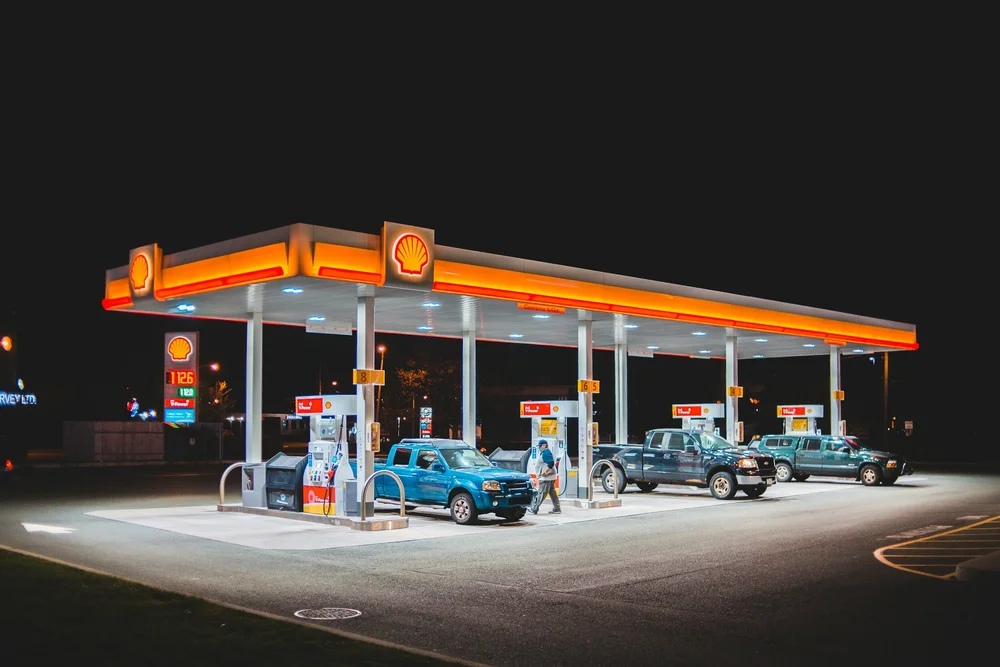
Gas stations, convenience stores, truck stops, and rest stops along the main routes reach travelers while they're making stop-and-route decisions.
Go beyond the metro
Smaller cities and rural areas in a feeder region can be cost-effective sources of visitors. See rural advertising.
Fly Markets
Air travel keeps growing. The Transportation Security Administration (TSA) screened a record 906.7 million passengers in 2025, and eight of its ten busiest days on record fell that year (TSA).
- Airports work at both endsPlacements in origin airports can inspire a trip; placements in the arrival airport greet visitors as they land.
- Airport audiences pay attentionIn the OAAA/Harris Poll study, 69% of flyers said they notice OOH ads in airports, and 87% of those who notice them take action, most often by looking up a brand or product online (OAAA).
- Pick fly markets by nonstop serviceand visitor origin data, not population alone.
International Visitors
International visits fell 5.5% in 2025 to 68.3 million, driven mostly by fewer visits from Canada, and are forecast to grow 3.4% to 70.6 million in 2026, helped by the World Cup (U.S. Travel Association). For destinations near the border or on major international routes, in-language creative at arrival airports and in-destination venues can welcome those visitors back.
Why Place-Based Media Works for Tourism
Reaches Travelers on the Move
Travel corridors, rest stops, and airports reach people while they're traveling, not only while they're scrolling.
Repeat Exposure in Feeder Markets
People return to the same gas station, grocery store, and neighborhood restaurant every week, so the destination stays top of mind until the trip is booked.
Geographic Precision
Plan by designated market area (DMA), ZIP code, travel corridor, and venue instead of buying a whole market.
In-Destination Influence
Once visitors arrive, hotels, restaurants, and urban panels can steer them toward what to do next.
Static + Digital Flexibility
Static keeps the brand visible all season. Digital rotates events, offers, and languages.
How to Plan a Tourism OOH & DOOH Campaign
Define the objective
awareness, overnight stays, shoulder-season demand, an event, or in-destination spending.
Map the journey
split the plan across feeder markets, travel corridors and airports, and the destination.
Prioritize geography
rank feeder DMAs by visitor origin data, drive time, and nonstop air service.
Select the right venues
match venues to each stage of the journey.
Plan language early
decide which feeder markets and venues need Spanish, bilingual, or other in-language creative.
Time it to the season
start before the booking window, not when the season starts.
Plan measurement early
set up comparison markets, QR codes, offer codes, and visitor data before launch.
Best OOH & DOOH Venues for Tourism Advertising
| Venue Type | Journey Stage | Why It Matters |
|---|---|---|
| Gas stations and convenience stores | Feeder markets, corridors, in-destination | 29,000+ gas stations in our network, with pump-top, in-store, and gas station TV options (formats vary by location). Nationally there are 151,975 convenience stores, 122,620 of them selling fuel, and they sell an estimated 80% of the fuel U.S. consumers buy (NACS). |
| Rest stops | Travel corridors | Reaches drivers during a break in the trip, when they're planning the next stop. |
| Truck stops | Drive markets, interstate corridors | Reaches road-trippers and RV travelers where they fuel up, eat, and take a break on the interstate. |
| Airports | Fly markets (origin and arrival) | Inspires trips in origin markets and welcomes visitors on arrival. |
| Hotels | In-destination | Reaches guests where they plan their day and decide whether to stay another night. |
| Bars and restaurants | Feeder markets, in-destination | High-dwell social time for adults 21+, at home and on the trip. |
| Grocery stores | Feeder markets, in-destination | Weekly household reach at home, plus visitors stocking up for rentals and campsites. |
| Urban panels | Feeder metros, in-destination | Eye-level static and digital panels in downtowns, entertainment districts, and near transit. |
| Multicultural venues | Feeder markets | Neighborhood businesses and ethnic retail in multicultural feeder communities. |
| Colleges | Feeder markets | Students planning spring break, weekend trips, and family visits. |
| Mobile extension | All stages | QR codes and location-based mobile ads carry the same message to the phone. |
In-Destination Reach
Getting visitors to come is only half the job. Once they arrive, the goal is more spending, more nights, and a reason to return.
Hotels
guests plan their next day in the lobby and the room. Promote attractions, dining districts, and events nearby.
Bars and restaurants
visitors decide where to go next over a meal. Good for nightlife, events, and attractions.
Grocery stores
visitors in vacation rentals, campgrounds, and lake or beach towns shop for supplies.
Gas stations, convenience stores, and truck stops
visitors fill up before day trips, so point them to the next stop or attraction.
Urban panels
street-level wayfinding toward districts, venues, and events.
Hotels are the most common place to stay: 60% of adults planning leisure trips in 2025 said they would stay in a hotel (OAAA).
Seasonality and Shoulder-Season Planning
| Window | Why It Matters | Planning Approach |
|---|---|---|
| Peak season | Demand is already high, and so is competition for visitors' time. | Shift weight to in-destination spending and longer stays. |
| Pre-season booking window | Many trips are chosen weeks or months ahead. | Start feeder-market media before the season opens. |
| Shoulder seasons (spring and fall) | Rooms and attractions have capacity, and prices may be lower. | Lead with events, value, and fewer crowds in close-in drive markets. |
| Holidays and long weekends | Record road travel, as AAA's holiday forecasts show. | Own the corridors and gas stations in the weeks before. |
| Events and festivals | Fixed dates and a clear reason to visit. | 4–8 weeks of feeder-market media, plus in-destination wayfinding. |
| Always-on | Travelers plan year-round. | Keep a baseline in top feeder markets between bursts. |
Shoulder-season tip: Close-in drive markets respond best to short-notice, value-led messages. Use DOOH for offers that change week to week.

Multicultural and Spanish-Language Travelers
The U.S. Hispanic population reached 70.1 million in 2025, 21% of the country, with a median age of 31.1 (U.S. Census Bureau).
- Plan for groups and familiesfamily-sized itineraries, multigenerational attractions, and events.
- Choose language by placeassign Spanish, bilingual, or English creative by feeder market, ZIP code, or venue. See Hispanic advertising.
- Reach people in their neighborhoodsneighborhood grocers, convenience stores, barbershops and salons, laundromats, and community centers in multicultural feeder communities. See multicultural OOH advertising.
- Go beyond Spanishwe produce creative in English, Spanish, and 15 more languages, which can matter for international visitors at arrival airports and hotels too.
- Adapt, don't just translateshow real families and real experiences, and make the welcome clear.
Targeting: Feeder Market, Corridor, Language, and Venue
Feeder market (DMA)
where visitors come from today and where you want to grow.
Corridor
the highways and airports between those markets and the destination.
Language
which feeder communities and venues need in-language creative.
Venue
places the audience visits often enough to see the message more than once.
OOH and DOOH CPM benchmarks for tourism
Industry CPM Benchmarks
Solomon Partners' 2025 cost per thousand impressions (CPM) comparison, published by OAAA, estimates (OAAA):
| Media Type | Illustrative CPM |
|---|---|
| OOH bulletins | $3–$10 |
| OOH posters | $3–$13 |
| Digital place-based | $7–$16 |
| Transit shelters | $2–$8 |
| Social media | $2–$8 |
| Digital display | $5–$6 |
| Radio | $4–$8 |
| Digital video | $11–$13 |
| Streaming | $23–$34 |
| Broadcast TV, primetime | $45–$49 |
Why CPM alone can be misleading: For tourism, reaching the right feeder market at the right point in the booking window, and the right traveler on the right corridor, can matter more than the lowest cost per thousand.
How Long Should a Tourism Campaign Run?
| Campaign Type | Planning Approach | Primary Consideration |
|---|---|---|
| Event or festival | Approximately 4–8 weeks before the date | Start in feeder markets; add in-destination media close to the date. |
| Seasonal push | Approximately 6–12+ weeks, starting before the season | Cover the booking window, not just the season. |
| Shoulder-season demand | Short, flexible bursts | Use DOOH so offers can change. |
| Brand and destination awareness | Longer or always-on | Travelers plan year-round. |
| In-destination spending | Through the visitor season | Keep a steady presence where visitors stay, eat, and fuel up. |
Tourism OOH Creative Best Practices
Lead with one reason to go
a place, an event, a season, or an experience.
Keep the hero line to seven words or fewer
so it reads in seconds.
Show the experience
not just the logo: people, places, and the feeling of being there.
Use one clear action
scan, visit, or book, with a QR code or vanity URL for tracking.
Design for the environment
a hotel lobby or airport gate allows more detail than a gas pump or roadside panel.
Keep dates and offers current
and rotate seasonal and event creative on digital.
How to Measure a Tourism OOH Campaign
| Metric | What It Helps Measure |
|---|---|
| Impressions and location count | Delivery and footprint by market and corridor |
| Proof of performance | Time-stamped, geo-tagged photos and reports showing placements ran |
| Lodging and tax data | Hotel occupancy, lodging tax, or booking trends, where your organization has access |
| QR codes and offer codes | Response by venue, market, language, or creative |
| Website traffic and branded search | Lift in visits to your site and searches for the destination from campaign markets |
| Brand lift or awareness | For larger campaigns, research on awareness, consideration, or intent to visit |
Not every visit can be directly attributed to OOH. Separate media-delivery metrics from visitor outcomes, and set up comparison markets before launch.
Tourism OOH Planning Checklist
- Is the primary objective clear?
- Which feeder markets matter most, and why?
- Is the plan split across feeder markets, corridors, and the destination?
- Which venues fit each stage of the journey?
- Does the campaign need Spanish or other in-language creative?
- Does the flight start before the booking window?
- Is each feeder market funded before adding more?
- Static, digital, or both?
- Are comparison markets, QR codes, and offer codes set up?
- Is there enough lead time for seasonal and event dates?
About PlaceBased Media
PlaceBased Media helps destinations, attractions, hospitality brands, and their agencies reach travelers through out-of-home and place-based media. Many media companies specialize in impressions. We specialize in impact. Tourism plans can combine static OOH, digital OOH, gas stations and convenience stores, truck stops, rest stops, airports, hotels, bars and restaurants, grocery, urban panels, multicultural venues, and mobile, all as a fully managed service from our Minneapolis base. For more on strategy, see The Complete Guide to Tourism Marketing.
Planning a Tourism Campaign?
Tell us your destination, feeder markets, season, and goals. We'll come back with a journey-based plan, a location list, and an honest read on what your budget can do.
Independent Verification. Greater Accountability.
PlaceBased Media uses independent auditing and proof-of-performance practices to strengthen accountability. AAM recently featured our approach to verified delivery and transparency.
Frequently Asked Questions
01What is a typical CPM for place-based media?
Industry estimates put digital place-based media at about $7–$16 per thousand impressions and OOH posters at about $3–$13. Weigh CPM alongside feeder-market fit, timing, language, and frequency.
02Which venues work best for tourism advertising?
Gas stations and convenience stores, rest stops, and airports reach travelers on the way. Hotels, bars and restaurants, grocery stores, and urban panels reach them in the destination and in their home markets.
03Should we focus on drive markets or fly markets?
Most destinations need both, weighted by where visitors come from. Most holiday travelers drive, so drive markets are often the foundation, with airports added for nonstop fly markets.
04How do we reach visitors once they arrive?
Use hotels, bars and restaurants, grocery stores, gas stations, and urban panels in and around the destination to promote attractions, dining, events, and longer stays.
05When should tourism campaigns start?
Start before the booking window, not when the season opens. Events usually need about 4–8 weeks of feeder-market media, and seasonal pushes often run 6–12 weeks or more.
06Can place-based media help in the shoulder season?
Yes. Short, flexible DOOH bursts in close-in drive markets can promote events, value, and fewer crowds when rooms and attractions have capacity.
07Can campaigns run in Spanish and other languages?
Yes. We produce creative in English, Spanish, and 15 more languages, assigned by feeder market, ZIP code, or venue, or rotated on digital screens.
08How do we measure results?
Combine proof of performance with lodging or booking trends, QR and offer codes, website traffic, and branded search, comparing campaign markets with similar markets without media.
09Do you work with agencies?
Yes. We work directly with destinations and brands or alongside your agency of record.
Pair it with
Gas stations
Pump toppers, gas station TV and c-store screens.
Explore gas stations →Bars & restaurants
Screens, mirror clings, table tents and coasters.
Explore bars & restaurants →Grocery stores
Entrance, aisle, cart and checkout.
Explore grocery stores →Urban panels
Eye-level street displays in dense neighborhoods.
Explore urban panels →Multicultural
In-language, in-culture, in-neighborhood.
Explore multicultural →See every media solution.
All media solutions →Planning a campaign? Start with our public health advertising overview, compare DOOH advertising screens, or browse every OOH and DOOH media solution.