Drive-Market Tourism Advertising: How to Reach Visitors Within a 4-Hour Drive

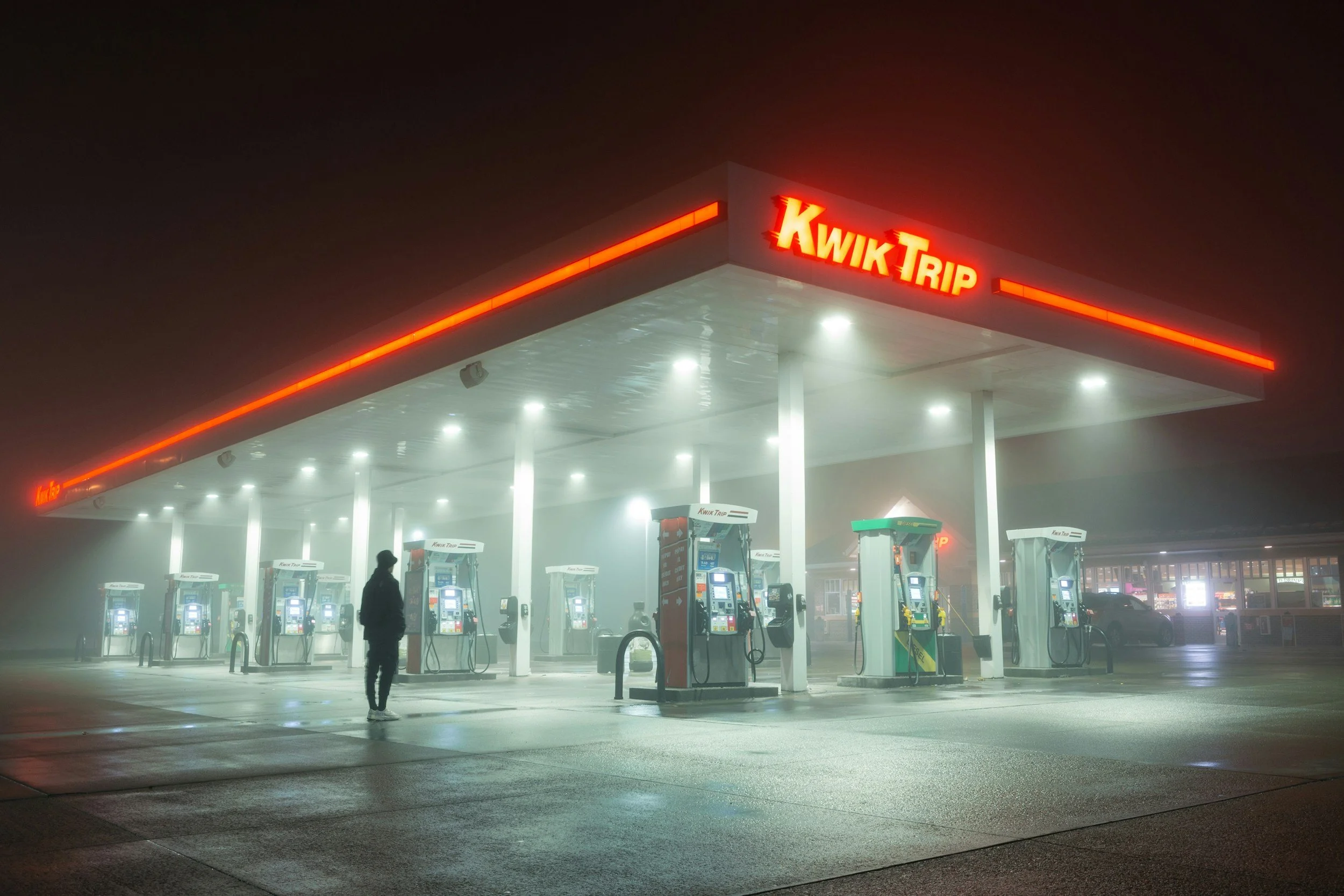
Drive-market tourism advertising targets the population within a four-to-six-hour drive of a destination — the single most valuable audience for most state, county, and city tourism offices. These visitors convert at higher rates, stay longer, and spend more in-state per trip than long-haul travelers. The most effective way to reach them is place-based out-of-home (OOH) advertising at gas stations, convenience stores, and travel plazas, where the audience is literally already in travel mode.
Why Drive Markets Outperform Long-Haul Markets
Drive-market campaigns consistently beat long-haul out-of-state campaigns on the metrics tourism offices care about most:
Higher conversion. A short drive is a low-friction decision. There's no airfare to price, no flight to book, no vacation days to negotiate — so awareness turns into an actual trip more often.
Longer length of stay relative to cost. Drive visitors arrive with their own vehicle and tend to explore more of the surrounding area, spreading spend across multiple local businesses.
More in-state spending per visitor. Drive visitors put more of their trip budget into lodging, dining, fuel, attractions, and retail inside your borders — the spending tourism offices are funded to generate.
Repeat visitation. A destination within driving distance becomes a habit, not a once-in-a-lifetime trip, which compounds the return on every awareness dollar.
For nearly every public-sector tourism program, that combination makes the drive market the first geography to fund — before any long-haul feeder-market or national effort.
Why Gas Stations, C-Stores, and Travel Plazas Work
The strength of drive-market advertising is context. Gas stations, convenience stores, travel plazas, and rest-area-adjacent venues reach drive-market audiences at the exact moments travel decisions form: fueling up for the weekend, grabbing coffee on the way out of town, stopping mid-route, or making an impulse decision about the next destination. It's one of the only media environments where the audience is, by definition, already traveling.
| Venue | Why It Works for Drive Markets | Formats |
|---|---|---|
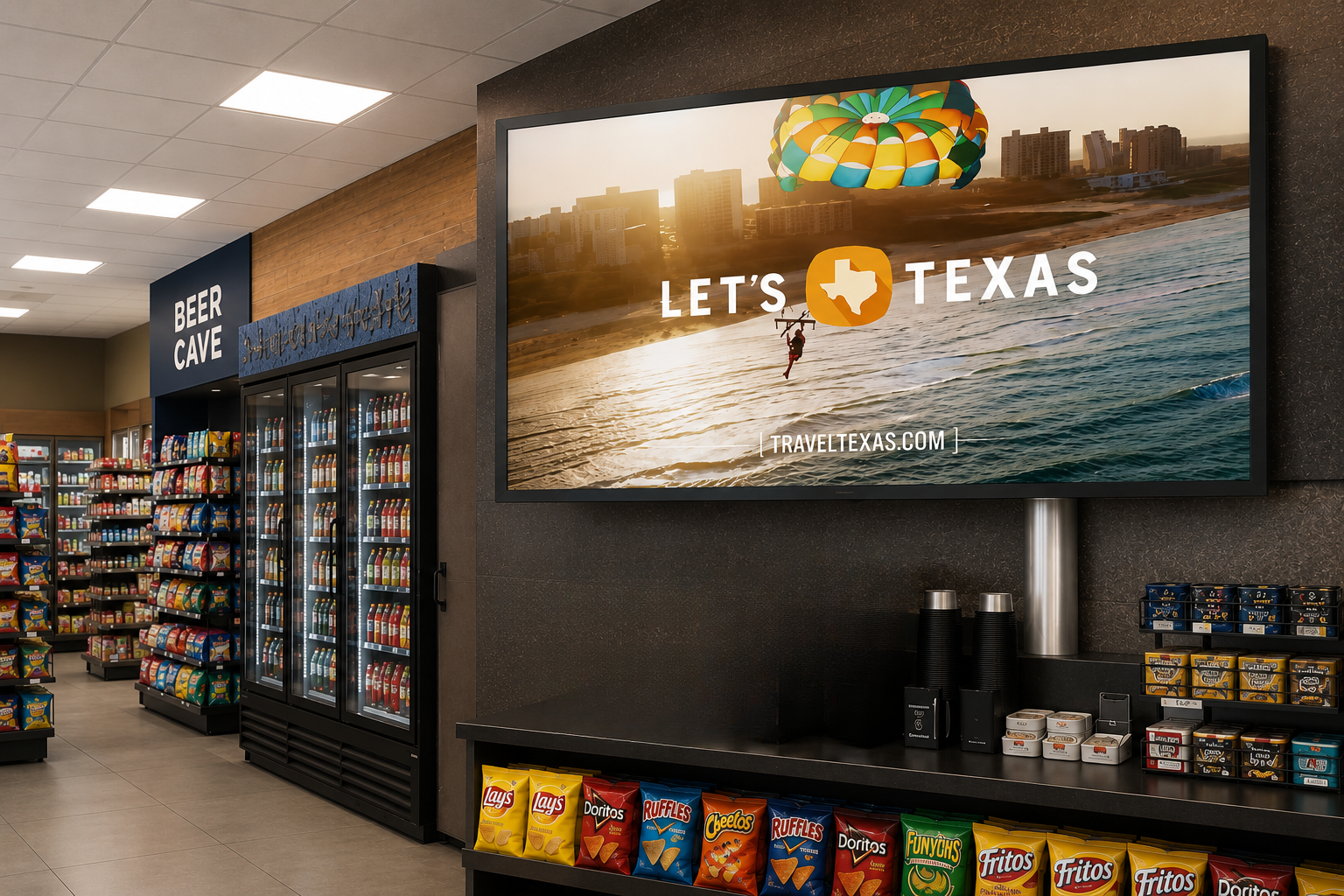
| Gas Stations (major brands) | Captive 3–8 min dwell during fill-up; reaches travelers actively traveling; targetable by exit, highway corridor, or drive-radius from the destination | Pump-top displays, pump toppers, indoor posters, digital screens, window clings |
| Convenience Stores | Daily foot traffic; reaches both local residents (in-state campaigns) and through-travelers (out-of-state); ideal for impulse trip messaging | Counter displays, cooler clings, window posters, register-area placements, digital screens |
| Travel Plazas & Highway Stops | Pure travel-context audience; over-indexes with families, retirees, and road-trippers in extended-dwell environments | Posters, digital displays, restroom posters, food-court signage |
| Highway-Adjacent Restaurants | Reaches drive-market families and groups during meal stops; high family-decision-maker reach | Table tents, posters, restroom posters, kid-menu placements |
The dwell-time advantage matters more than it first appears. A roadside billboard gets two to five seconds of attention at highway speed; a pump-top screen gets three to eight minutes with a captive viewer standing still. That's the difference between brand impression and message delivery.
How to Build a Drive-Market Campaign
Map your drive radius. Start with the four-to-six-hour ring around your destination and identify the population centers inside it. These are your priority origin markets.
Target the corridors, not just the cities. Place media along the specific highways and exits travelers use to reach you, so you catch them on the route — not only at home.
Match the venue to the trip moment. Gas stations and travel plazas for in-transit and impulse messaging; convenience stores for both local residents and through-travelers; highway restaurants for family decision-makers.
Time it to the season. Drive-market family and summer programs typically plan February–May and execute May–August.
Build in measurement from day one. Use unique QR codes and vanity URLs per corridor or venue type so you can attribute visitor-guide requests and site visits back to specific drive markets.
Measuring Drive-Market Campaigns for Public-Sector Accountability
Because tourism dollars are public dollars, drive-market campaigns have to produce evidence, not just impressions. Place-based OOH supports the documentation public boards, legislators, and member properties expect:
Venue-level proof of posting — time-stamped, geo-tagged photos at each gas station, c-store, and plaza, suitable for public-records requests.
QR and vanity-URL tracking — coded by drive market so you can see which corridors drive the most visitor-guide requests and partner referrals.
Impression reporting — broken down by ZIP, county, drive radius, and venue type, with documented methodology.
Third-party audited delivery — independent AAM verification that placements ran where and when the contract specified.
Frequently Asked Questions
What is a drive market in tourism? A drive market is the area whose residents can reach a destination by car in a single trip, usually within a four-to-six-hour radius. It's the highest-value audience for most tourism offices because these visitors convert more easily, stay longer relative to cost, and spend more inside the destination.
Why is drive-market advertising better than targeting out-of-state visitors? Drive visitors face less friction — no airfare or flights to plan — so awareness converts to actual trips at a higher rate. They also tend to spend more in-state per visit and return more often, making drive markets the most cost-efficient geography for most programs.
What's the best place to advertise to drive-market travelers? Gas stations, convenience stores, and travel plazas, because they reach travelers at the moment a trip decision is forming and offer minutes of captive dwell time rather than the few seconds a billboard gets.
How do you measure a drive-market tourism campaign? Through venue-level proof of posting, QR codes and vanity URLs coded by corridor or market, impression reporting broken down by drive radius and venue type, and third-party audited delivery verification.
Part of The Complete Guide to Tourism Marketing. Sources: OAAA (March 2026), OAAA/Harris Poll (2024), U.S. Travel Association, AAA, Alliance for Audited Media.