The Complete Guide to Tourism Marketing
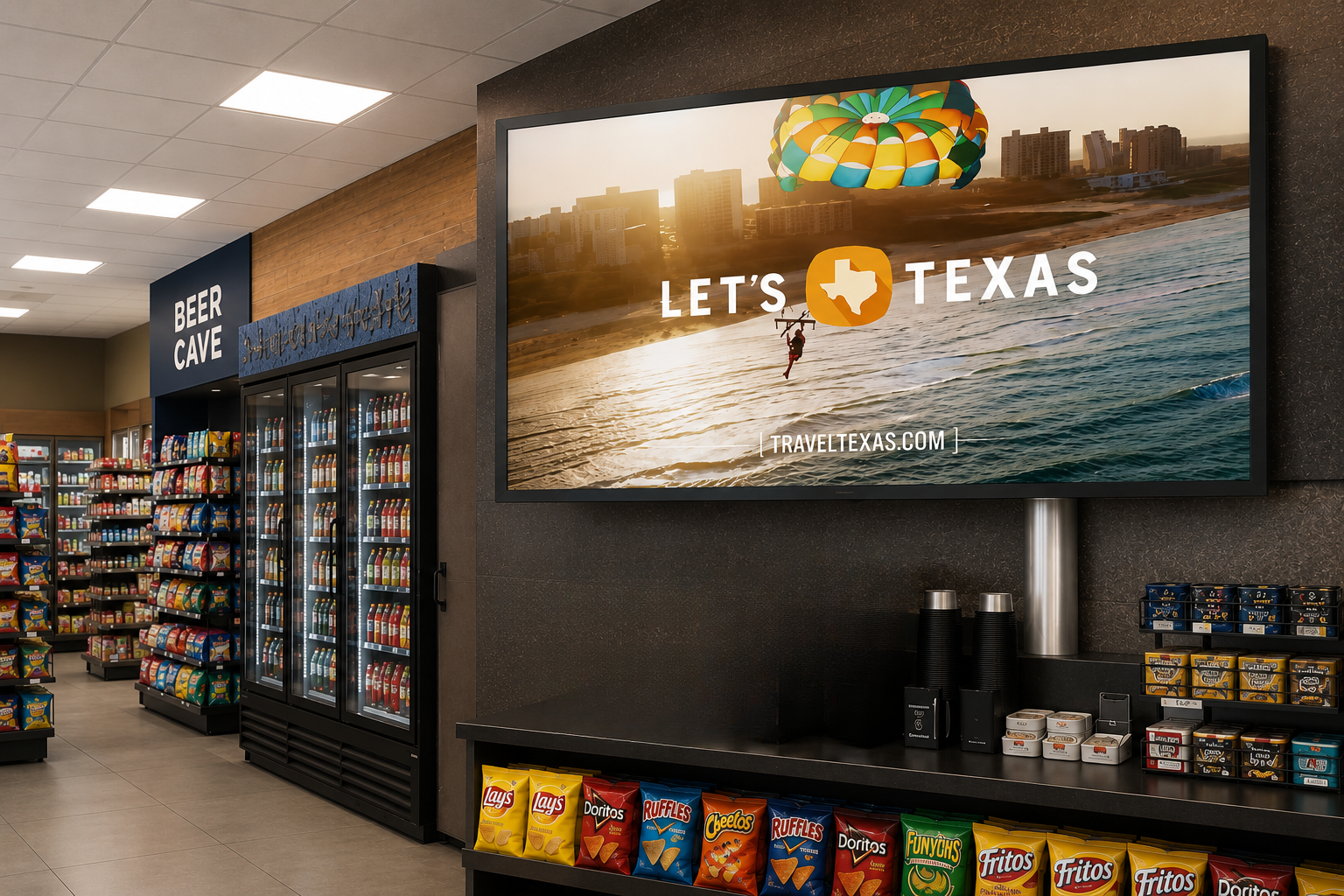
Place-Based Advertising That Drives Visitation
Last updated: June 2026
Tourism marketing is how state, county, and city tourism offices and DMOs attract visitors, drive in-state spending, and support local businesses. The most accountable channel for public-sector tourism is place-based out-of-home (OOH) advertising, which targets specific geographies — drive markets, feeder DMAs, and travelers already on a trip — and delivers third-party audited proof that public dollars were spent where they were promised.
What Is Tourism Marketing?
Tourism marketing is the practice of promoting a destination — a state, county, city, or region — to potential visitors in order to drive visitation, extend length of stay, and increase visitor spending. For public-sector tourism offices, it carries a second job most marketing doesn't: every dollar is funded by transient occupancy taxes, hotel/motel taxes, sales tax allocations, or general fund appropriations, and every dollar is scrutinized by legislators, commissions, councils, tourism boards, and the member properties whose taxes fund the program.
That makes tourism marketing distinct from ordinary brand advertising. It must deliver measurable visitor spend, support local businesses, and remain defensible to stakeholders who weren't in the marketing meeting — taxpayers, oversight bodies, and the public. The channels that win in this environment are the ones that produce evidence: physical proof a placement existed, geographic data showing where it ran, and independent verification that delivery matched the contract.
Tourism marketing vs. tourism advertising vs. tourism promotions — these terms overlap heavily. Tourism marketing is the broad discipline (strategy, audience, channel mix, measurement). Tourism advertising is the paid-media execution within it. Tourism promotions usually refers to specific campaigns or offers — a shoulder-season push, a “discover your own state” effort, a co-op campaign with member properties. This guide covers all three.

Why Place-Based OOH Works for Tourism Marketing
Travel decisions are high-consideration, emotionally driven, and made across long planning windows in real-world environments — not in three-second scroll moments. Place-based OOH lives where those decisions actually happen: at the gas station before a weekend trip, in the hotel lobby during the current vacation, at the gym in January when summer planning begins, and at the coffee shop where group-trip conversations happen. That contextual fit is why travel consistently ranks among the top OOH spending categories.
For public-sector programs specifically, place-based OOH delivers six things public dollars demand:
• Geographic precision — target by drive-time radius, feeder DMA, ZIP cluster, or single county, ideal for both out-of-state visitation and in-state “explore your own state” campaigns.
• Audit-ready verification — third-party AAM-audited delivery with venue-level proof of posting, time-stamped photos, and documented impression methodology.
• Brand-safe environments — sidesteps the misinformation and platform-policy concerns that make digital channels hard to defend to public boards.
• Procurement-friendly structure — clear CPMs, defined deliverables, scalable budgets, transparent invoicing.
• Co-op and pass-through compatibility — works with member-property co-op programs, regional DMO alliances, and federal/state pass-through funds.
• Public-records readiness — documentation structured for FOIA, sunshine-law, and open-meeting requirements.
Tourism Program Types and Recommended Venue Mix
Most tourism offices run several program types in parallel in a single fiscal year — a brand-level umbrella campaign, a seasonal beach push, a fall foliage program, an outdoor-rec partnership, and an in-state “explore” effort. The venue mix should rotate with the program, not stay static.
| Tourism Program | Recommended Venue Mix | Audience & Why It Works |
|---|---|---|
| State Tourism (Brand-Level) | Gas stations + c-stores + DMVs + community centers + grocery | Reaches in-state residents and drive-market visitors during everyday routines; ideal for “discover [your state]” and shoulder-season programs |
| Beach Destinations | Bars + gyms + grocery + colleges (in feeder DMAs) | Groups, friend-trip planners, and spring-break audiences in peak-window planning environments |
| Luxury Resorts & High-End Travel | Boutique fitness + affluent coffee shops + private clubs + luxury hotel networks | Concentrated reach against high-income leisure audience in environments aligned with brand position |
| Outdoor Recreation & State/National Parks | C-stores + climbing gyms + recreation centers + outdoor retailers | Direct-intent audience in environments where active travelers already engage with their hobby |
| Cultural & Heritage Tourism | Coffee shops + museums + colleges + universities | Culture-engaged, education-oriented travelers including academic, retiree, and group-tour audiences |
| Family Tourism | Grocery + rec centers + pediatric & POC waiting rooms + family restaurants | Reaches the family decision-making unit during weekly routines; multi-stakeholder receptivity |
| Wellness & Spa Tourism | Yoga + Pilates + spas + upscale cafés | Wellness-oriented travelers in venues that mirror the destination promise — relaxation, self-care, escape |
| Casino & Gaming Tourism | Bars + gas stations + hotel networks + entertainment venues | Drive-market visitors and entertainment-seekers in 21+ environments; high conversion for weekend trips |
| Cruise Departures (Port Cities) | Bars + grocery + gyms + hotels + restaurants | Couples, friend groups, and retirees in extended cruise-planning windows (4–12 months out) |
| New Route / Air Service Awareness | Urban coffee shops + colleges + co-working + office buildings + upscale bars | Drives route awareness in feeder DMAs for new nonstop service and underutilized routes — reaches urban professionals and students where they plan travel |
Geographic Targeting Strategy: The Three Plays Every Tourism Office Needs
1. Driver Markets — Gas Stations, C-Stores, and Travel Plazas
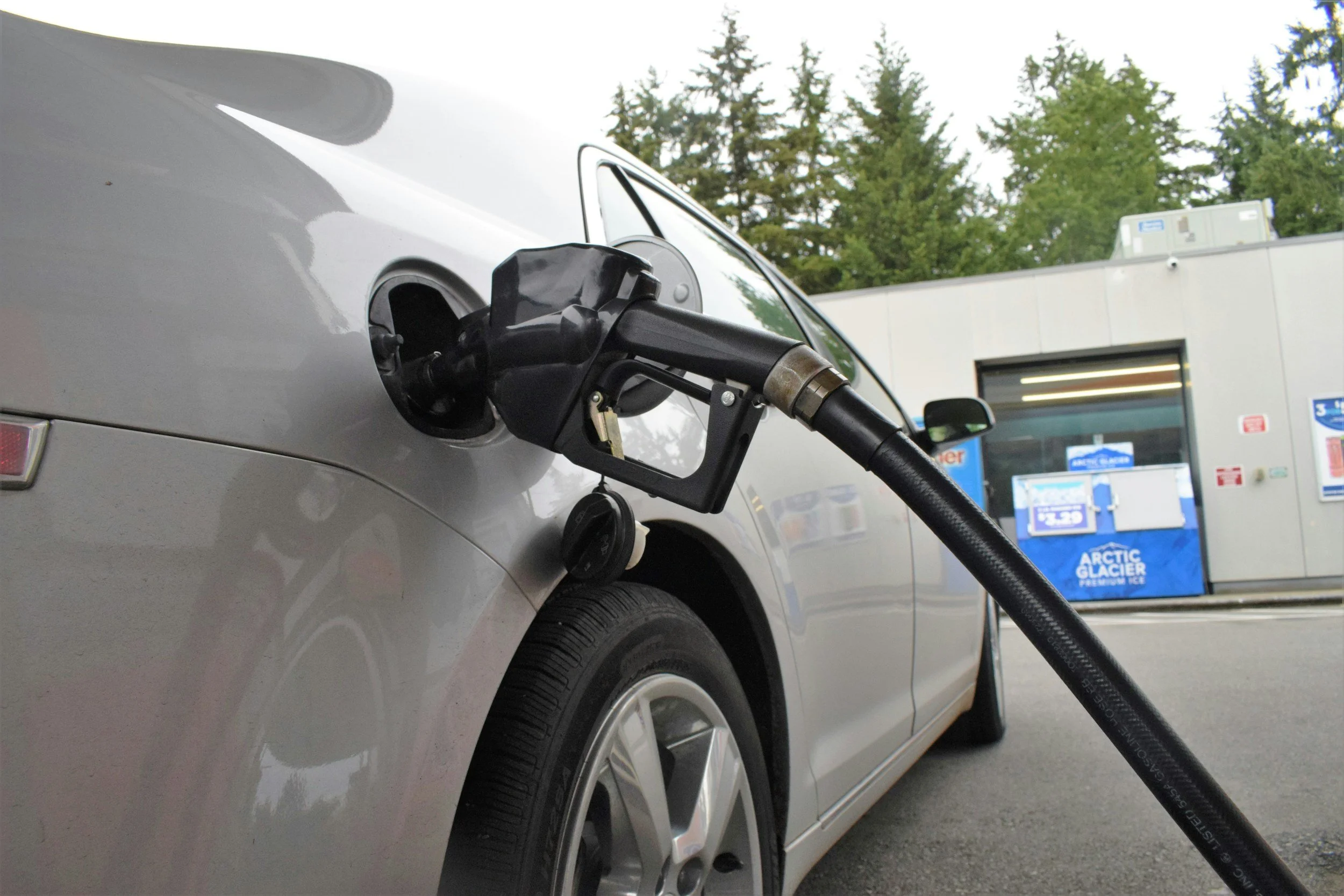
Roughly 80% of U.S. domestic leisure travel involves a personal vehicle, and the strongest visitor source for most tourism offices is the population within a four-to-six-hour drive. Drive-market campaigns convert at a higher rate, generate longer stays, and produce more in-state spending per visitor than long-haul markets — making them the single most important geography for nearly every public-sector tourism program.
Gas stations, convenience stores, and travel plazas reach drive-market audiences at the exact moments travel decisions form: fueling up for the weekend, grabbing coffee on the way out of town, stopping mid-route. It's one of the only media environments where the audience is literally already in travel mode.
2. Out-of-State Feeder Markets — Urban Venues in Priority DMAs
For longer-haul visitation, feeder-market campaigns concentrate impressions in priority DMAs through the urban environments where high-affinity audiences live, work, and plan: urban coffee shops, office buildings, co-working spaces, upscale bars and restaurants, and college campuses. This builds repeat-exposure frequency across the consideration window — a cost-efficient alternative to national digital or broadcast. It's especially effective for a tourism office targeting a distant metro (a Carolina office targeting Chicago, a Colorado office targeting Dallas).
3. Cross-Destination Targeting — Reaching Travelers Already in Trip Mode
One of the most underused plays in tourism marketing is reaching travelers while they're already on a trip somewhere else. A visitor staying at a Florida hotel is emotionally ready to talk about their next vacation. Place-based OOH in hotels — lobby screens, elevator displays, key-card sleeves, in-room collateral — captures that audience during the most aspirational moment of all. This unlocks state-to-state visitation, shoulder-season capture, regional tourism alliances, conference/convention extension, and cruise pre/post stays.
Bonus: In-State Visitation — “Explore Your Own State” Campaigns
In-state campaigns drive resident travel and grow spend at underutilized destinations. They require a different venue mix — the audience is reached through everyday routines, not travel-context environments: DMVs and government service centers (15–60 min captive dwell), community centers and libraries, grocery stores, and local coffee shops.
Seasonal Tourism Marketing Calendar
| Campaign Type | Planning Window | Execution Window | Best Venue Focus |
|---|---|---|---|
| Spring Break & Summer Beach | Nov–Feb | Feb–Jun | Gyms, colleges, bars, drive-market c-stores |
| Summer Family / Drive-Market | Feb–May | May–Aug | Gas stations, grocery, family restaurants, rec centers |
| Fall Foliage / Heritage | Apr–Jul | Aug–Oct | Coffee shops, museums, upscale cafés, hotels |
| Ski & Winter Outdoor | Jul–Oct | Oct–Feb | Outdoor retailers, coffee shops, gyms, c-stores |
| Holiday Travel | May–Aug | Oct–Dec | Grocery, hotels, urban coffee shops, c-stores |
| Shoulder Season / “Explore” | Year-round | Year-round | DMVs, community centers, grocery, in-state coffee shops |
| Air-Service / Route Launches | 60–120 days pre-launch | Launch – 90 days post | Urban coffee shops, colleges, co-working, office buildings |
Place-Based OOH vs. Traditional and Digital Media
| Metric | Place-Based OOH | Roadside Billboard | Digital / Social Media |
|---|---|---|---|
| Dwell Time | 5–10 min (gas & c-stores), 20–90 min (hotels), 15–45 min (community) | 2–5 seconds | 1–3 seconds |
| Geographic Precision | Venue-, ZIP-, county-, DMA-, or drive-radius level | Limited to roadway location | Algorithm-driven, often imprecise |
| Ad Blocking | Not possible | Not possible | 47% use ad blockers |
| Environment Trust | Very high (travel-context, community, lifestyle) | Moderate | Low (ad fatigue, brand-safety concerns) |
| Daily Frequency | Multiple exposures per visit | 1–2 passes | Algorithm-dependent |
| Audit-Ready Reporting | Third-party AAM-audited delivery | Counts-based | Platform-reported |
| Consumer Favorability | 73% favorable (OAAA/Harris Poll) | ~25–30% | ~15–20% |
The Industry Data Behind Tourism OOH
• $9.46B — record U.S. OOH revenue in 2025, up 3.6% year over year, the industry's 19th consecutive quarter of growth (OAAA, March 2026).
• 10.5% — DOOH year-over-year growth in 2025, now 36.3% of total OOH revenue. Travel, Tourism, Hotels & Resorts consistently ranks among the top OOH categories.
• 73% of consumers view DOOH ads favorably — vs. 50% for TV and 48% for social (Harris Poll/OAAA).
• 76% of DOOH viewers took action after seeing an ad; 51% of those who noticed a directional DOOH ad visited the business, and 93% of those completed the desired action (Harris Poll, 2024).
• $1.3T+ — annual direct spending by the U.S. travel and tourism industry, supporting 15M+ jobs and a top-three employer in roughly 40 states (U.S. Travel Association).
For tourism programs, those action metrics translate directly into website visits, partner referrals, vanity-URL conversions, and visitor-guide requests — the metrics tourism offices already report to their boards.
Measuring Tourism Marketing for Public-Sector Accountability
Public tourism offices report to boards, member properties, legislators, commissioners, councils, and the public. Reporting must be visual, transparent, and built to withstand scrutiny:
• Venue-level proof of posting — time-stamped, geo-tagged photos at each location, suitable for public-records requests.
• QR code & vanity-URL tracking — unique codes per venue type, drive market, or feeder DMA.
• Impression reporting — methodology notes, venue counts, flight dates, and breakdowns by ZIP, county, drive radius, DMA, venue type, and language.
• Attribution — UTM tagging and short codes tied to visitor-guide downloads, partner referrals, and conversion goals.
• Delivery heat maps — board-ready geographic breakdowns of placement density.
• Audit & compliance — AAM-audited delivery and wrap reports formatted for board, legislative, and member-property reporting.
• Lift-study compatibility — data structured to feed third-party visitor-lift and economic-impact studies.
Frequently Asked Questions
What is tourism marketing?
Tourism marketing is the practice of promoting a destination to potential visitors to drive visitation, extend length of stay, and increase visitor spending. For public-sector tourism offices, it must also be measurable and defensible to the boards, legislators, and taxpayers who fund it.
What's the difference between tourism marketing, advertising, and promotions?
Tourism marketing is the broad discipline (strategy, audience, channels, measurement). Tourism advertising is the paid-media execution within it. Tourism promotions are specific campaigns or offers, such as a shoulder-season push or a co-op campaign with member properties.
What's the best channel for tourism marketing?
For public-sector tourism, place-based OOH is uniquely suited because it combines geographic precision, high environment trust, and third-party audited reporting — the three metrics public dollars demand. Drive-market venues, hotels, and community venues each serve a distinct play.
How do you target out-of-state visitors?
Concentrate impressions in priority feeder DMAs using urban venues — coffee shops, offices, co-working, upscale bars, and college campuses — to build repeat-exposure frequency across the trip-planning window.
How is tourism marketing measured?
Through venue-level proof of posting, QR/vanity-URL tracking, impression reporting with documented methodology, UTM attribution, delivery heat maps, AAM audit documentation, and lift-study-compatible data.
Sources: OAAA (March 2026), OAAA/Harris Poll (2024), U.S. Travel Association, AAA, Alliance for Audited Media, EMARKETER.