Youth Mental Health Awareness Campaign Case Study125 locations. 95 contracted.
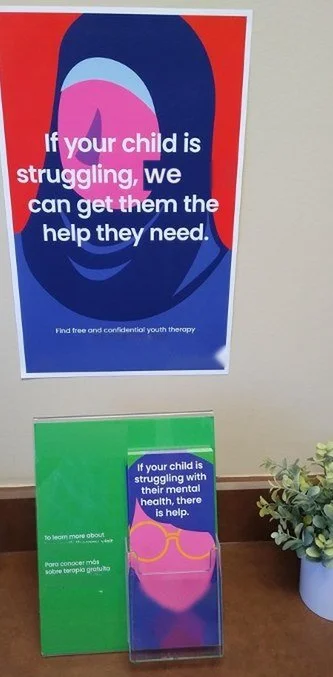
A State Health Department ran a youth mental health awareness campaign with PlaceBased Media in high schools, colleges and universities, and community centers, on posters, digital screens, counter mats and window graphics. It was contracted for 95 locations and delivered 125, about 132% of the contracted footprint.
- 500,000+ locations
- AAM-audited delivery
- English, Spanish + 15 more languages
- Fully managed

At a Glance
A State Health Department ran a youth mental health awareness campaign with PlaceBased Media across high schools, community centers, and colleges and universities. Messaging ran on posters, digital screens, counter mats, and window graphics. The campaign was contracted for 95 locations and delivered 125, adding 30 bonus locations, about 132% of the contracted footprint, as added value.
| Client | A State Health Department |
|---|---|
| Focus | Youth mental health awareness |
| Venues | High schools · Community centers · Colleges and universities |
| Formats | Posters · Digital screens · Counter mats · Window graphics |
| Contracted | 95 locations |
| Delivered | 125 locations (30 bonus, about 132% of contracted) |
Reaching Young People Where They Learn and Gather
Youth mental health messaging has to reach young people in the places that are part of their everyday routine: the school hallway, the campus student center, and the community center after school. It also has to reach the parents, coaches, teachers, and friends who are often the first to notice that someone is struggling.
PlaceBased Media partnered with a State Health Department to deliver a youth mental health awareness campaign in exactly those settings. Like our 988 Suicide & Crisis Lifeline Awareness Campaign, this campaign put mental health messaging inside trusted community environments instead of relying on broad media alone.
Why Youth Mental Health Needs Attention (Industry Context)
The figures below are national industry context from public health research. They are not results from this campaign.
About 1 in 3 U.S. high school students (33%)
reported persistent feelings of sadness or hopelessness in the past year in 2025. That's down from 40% in 2023 but still higher than in 2015 (CDC Youth Risk Behavior Survey).
15.4% of adolescents ages 12 to 17, about 3.8 million young people
had a major depressive episode in the past year in 2024 (SAMHSA, 2024 National Survey on Drug Use and Health).
37% of college students
reported moderate to severe depressive symptoms, and 11% reported seriously considering suicide in the past year, in the 2024–2025 Healthy Minds Study of more than 84,000 students at 135 colleges and universities (University of Michigan School of Public Health).
Recent numbers are improving, which is a reason to keep prevention and awareness messaging in front of young people, not to pull back.
The Challenge
Young people are hard to reach with traditional public health advertising. The campaign needed to:
- Put youth mental health messaging in front of teens and young adults in the places they spend their days.
- Reach high school students, college students, and young people in their communities, not just one age group.
- Show up in trusted settings, where messages about mental health feel supportive rather than like an ad.
- Reach the adults around young people, including parents, teachers, coaches, and staff.
- Use more than one format so the message was seen repeatedly across the day.
The Solution
PlaceBased Media built a youth-focused, fully managed place-based media plan across three venue types where young people learn, connect, and spend free time.
Campaign placements included:
Messaging was deployed in four formats:
- Posters
- Digital screens (DOOH)
- Counter mats
- Window graphics
Using several formats in the same venues meant young people could see the message more than once: on a poster in the hallway, on a screen in a common area, on a counter mat where they wait, and on a window graphic as they walk in.
Results
The campaign was contracted for 95 locations and delivered 125. That's 30 bonus locations, about 132% of the contracted footprint, provided as added value. The State Health Department's message reached more schools, campuses, and community centers than the plan called for.
Highlights included:
- 125 locations delivered against 95 contracted.
- 30 bonus locations added as added value.
- Coverage across high schools, colleges and universities, and community centers.
- Four formats working together: posters, digital screens, counter mats, and window graphics.
Why Place-Based Media Works for Youth Mental Health Campaigns
Young people move through a predictable set of places every week: school, campus, and community spaces. Place-based media puts the message in those places, in front of the young person and the adults around them, at moments when they're open to it.
Unlike a social media ad that gets scrolled past, a poster in the hallway or a screen in the student union stays in place and is seen again and again. That repeated exposure in a trusted setting helps make mental health a normal thing to talk about, which is the point of an awareness campaign.
Place-based media also works alongside the channels health departments already use, including digital, social, radio, and school outreach, and it reaches young people who may not see those other channels.
Explore more ways to reach this audience on our Teens & Youth audience page and our Public Health advertising page, or browse more campaigns in our Case Studies library.
Why Public Health Agencies Choose PlaceBased Media
- 500,000+ locations
- Alliance for Audited Media (AAM)-auditeddelivery
- Creative in English, Spanish + 15 more languages
- Fully managedfrom planning and placement to proof of performance
- Based in Minneapolis
From youth mental health and suicide prevention to vaping prevention, overdose awareness, and vaccination campaigns, we help state and local agencies put public health messages where people live, learn, and gather.
Frequently Asked Questions
01How many locations did the youth mental health campaign reach?
The campaign was contracted for 95 locations and delivered 125, including 30 bonus locations provided as added value. That's about 132% of the contracted footprint, across high schools, colleges and universities, and community centers.
02Which venues and formats did the State Health Department use?
The campaign ran in high schools, colleges and universities, and community centers. Messaging appeared on posters, digital screens, counter mats, and window graphics, so young people could see it several times in the places they spend their day.
03Why use place-based media for a youth mental health campaign?
Place-based media reaches teens and young adults in trusted, everyday settings like school hallways, campus common areas, and community centers. The message stays in place and is seen repeatedly, and it also reaches the parents, teachers, and staff around young people.
04Can PlaceBased Media run a youth mental health campaign in my state?
Yes. PlaceBased Media has a network of 500,000+ locations, with AAM-audited delivery, creative in English, Spanish, and 15 more languages, and fully managed campaigns.
Pair it with
High schools
Hallways, cafeterias and gyms, school-approved.
Explore high schools →Colleges
Unions, residence halls, dining and rec centers.
Explore colleges →Community centers
Rec centers, gyms and youth sports.
Explore community centers →Mobile
QR, geo-targeting and social to extend OOH.
Explore mobile →Public health
Campaigns for health departments and nonprofits.
Explore public health →See every media solution.
All media solutions →Planning a campaign? Start with our public health advertising overview, compare DOOH advertising screens, or browse every OOH and DOOH media solution. Reaching students? See college student advertising.
Let's talk.
Planning a youth mental health, suicide prevention, or behavioral health awareness campaign? We'll help you choose the right schools, campuses, and community venues for your audience and budget. If you or someone you know is struggling, call or text 988 to reach the 988 Suicide & Crisis Lifeline.