988 Suicide & Crisis Lifeline Awareness Campaign Case Study

Reaching Communities with Mental Health Resources Through Place-Based Media
Increasing awareness of the 988 Suicide & Crisis Lifeline requires more than broad media exposure—it requires reaching people where they live, work, study, and seek care.
PlaceBased Media partnered with a statewide public health initiative to deploy a comprehensive place-based media campaign designed to increase awareness of the 988 Suicide & Crisis Lifeline and connect individuals with immediate mental health resources. Similar to our SAMHSA Naloxone & Fentanyl Awareness Campaign Case Study (https://placebased.media/case-studies/samhsa-naloxone-education-amp-fentanyl-awareness-campaign), this campaign focused on delivering life-saving messaging in trusted community settings where people are most likely to engage.
The campaign strategically reached adults, young adults, veterans, and underserved populations across healthcare, education, community, and neighborhood environments throughout the state.
The Challenge
Mental health crises often occur outside traditional healthcare settings. The campaign needed to:
Increase awareness of the 988 Suicide & Crisis Lifeline.
Reach individuals before or during a mental health crisis.
Deliver messaging in trusted community environments.
Extend beyond traditional billboards and digital advertising.
Provide statewide coverage while maintaining strong local visibility.
Reduce stigma surrounding mental health and encourage help-seeking behavior.
The Solution
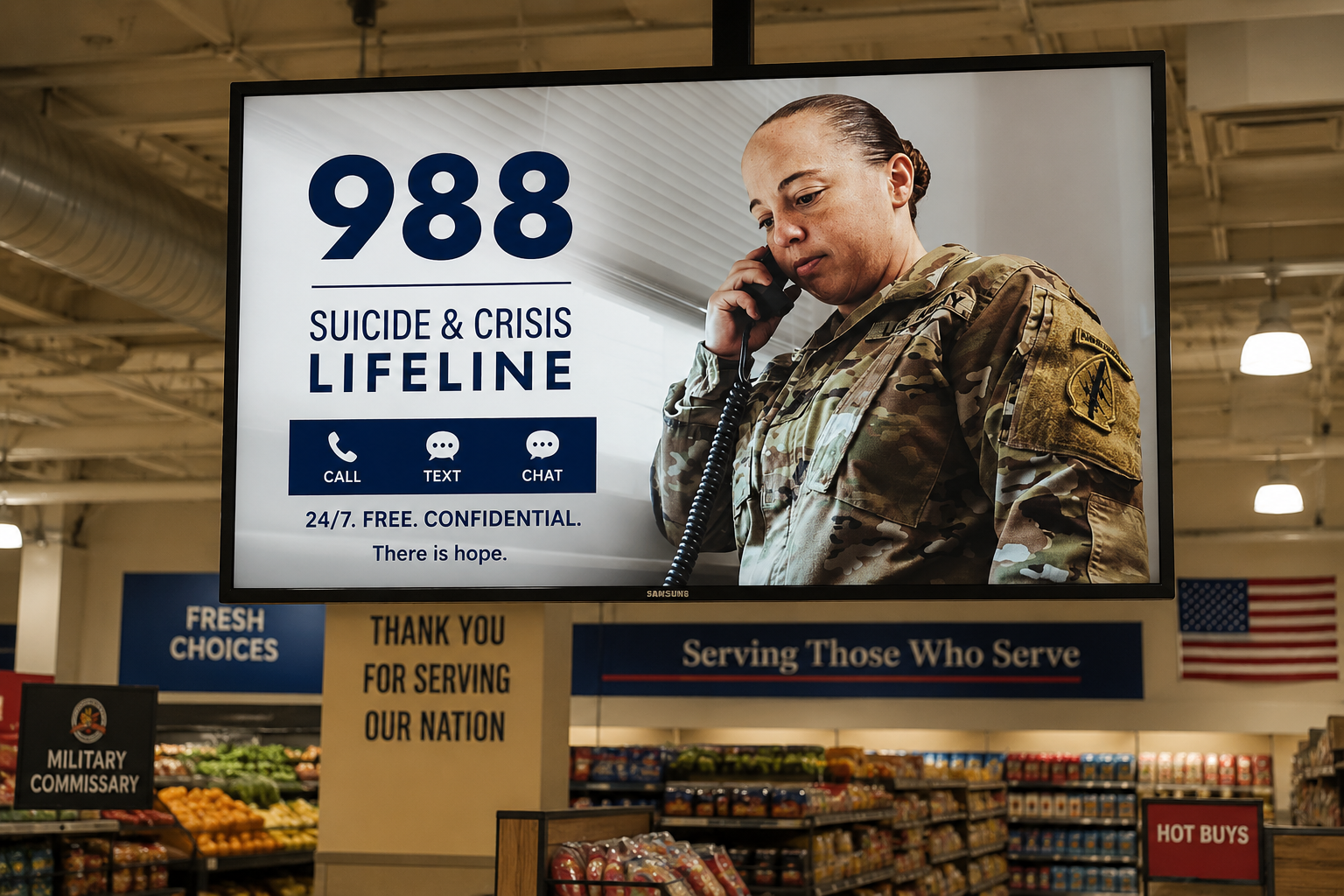
PlaceBased Media developed a statewide media strategy utilizing a diverse network of community venues selected to maximize reach among priority audiences.
Campaign placements included:
LGBTQ+ Venues
Community health centers
Veteran Services Organizations/ VA Clinics
Behavioral health clinics
Family practice and primary care offices
Colleges and universities
Community centers
Libraries
Veteran organizations
Pharmacies
Local businesses and neighborhood gathering places
Messaging was deployed using multiple high-impact media formats, including:
Posters
Digital displays (DOOH)
Counter displays
Tabletop signage
Window clings
Educational take-one materials
This multi-format strategy reinforced the campaign message through repeated exposure in environments where individuals naturally spend time and where mental health conversations are increasingly taking place.
Campaign Objectives
The campaign was designed to help communities:
Increase awareness of the 988 Suicide & Crisis Lifeline.
Encourage individuals to seek help earlier.
Reduce stigma surrounding mental health.
Reach family members, caregivers, and friends who may recognize warning signs.
Connect residents with crisis intervention and behavioral health resources.
Deliver consistent statewide messaging while maintaining local community relevance.
Results
The campaign delivered millions of targeted impressions across hundreds of community locations throughout the state, along with a lift in 988 Lifeline calls.
Highlights included:
Statewide community coverage across urban and rural markets.
High-frequency exposure among priority audiences.
Strong visibility within healthcare and behavioral health environments.
Expanded reach through colleges, libraries, veteran organizations, and community centers.
Multiple message touchpoints through both static and digital media formats.
By placing mental health resources in trusted community environments, the campaign helped normalize conversations around mental health while increasing awareness of the 988 Suicide & Crisis Lifeline.
Why Place-Based Media Works for Mental Health Campaigns
Mental health messaging is most effective when it reaches people in everyday environments—not just online.
Place-based media allows organizations to connect with individuals in locations where they are already seeking healthcare, education, social support, or community services. This approach increases message relevance while providing repeated exposure that builds awareness and encourages action.
Whether promoting the 988 Suicide & Crisis Lifeline, suicide prevention resources, behavioral health programs, or community support services, place-based media provides scalable, measurable outreach that complements digital advertising, television, radio, and social media campaigns.
Browse additional public health campaigns in our Case Studies library:
https://placebased.media/case-studies
Why Public Health Agencies Choose PlaceBased Media
PlaceBased Media partners with:
State health departments
County behavioral health agencies
Public health organizations
Nonprofit organizations
Healthcare systems
Universities
Community coalitions
Our nationwide network reaches audiences through healthcare, education, retail, community, and lifestyle environments that traditional advertising often misses.
From mental health awareness and overdose prevention to youth vaping prevention, vaccination campaigns, and chronic disease education, our campaigns help organizations deliver trusted public health messaging where it matters most.
Verified Campaign Delivery Builds Greater Trust
PlaceBased Media uses independent auditing and proof-of-performance practices to strengthen campaign accountability. The Alliance for Audited Media recently featured our approach to verified media delivery, transparency and advertiser trust.
The feature also highlights an independently audited PlaceBased program that achieved a 113% delivery rate.
Read the AAM Media Matters FeatureRelated Case Studies & Resources
Explore additional examples of how PlaceBased Media helps public health agencies deliver measurable community outreach campaigns.
SAMHSA Naloxone & Fentanyl Awareness Campaign
https://placebased.media/case-studies/samhsa-naloxone-education-amp-fentanyl-awareness-campaign
Learn how PlaceBased Media supported a statewide overdose prevention initiative by reaching priority audiences across healthcare facilities, colleges, and community venues with naloxone and fentanyl awareness messaging.
Browse All Case Studies
https://placebased.media/case-studies
Explore additional campaigns covering mental health, substance use prevention, youth vaping, tobacco prevention, vaccination, and other public health initiatives.
Public Health Media Intelligence Center
Read the latest insights, campaign strategies, funding opportunities, and best practices for public health outreach and place-based media.
Ready to Launch Your Next Public Health Campaign?
Whether you're promoting the 988 Suicide & Crisis Lifeline, suicide prevention resources, behavioral health services, overdose prevention, or another public health initiative, PlaceBased Media helps organizations reach communities through trusted, high-impact environments across the country.
Contact PlaceBased Media to learn how our nationwide place-based media network can support your next public health awareness campaign.