Youth 988 Awareness Campaign: Reaching Teens Through Schools & Community Media
Helping Students Access Mental Health Support Through Trusted Community Environments
When someone experiences a mental health or substance use crisis, knowing where to turn can save a life. Increasing awareness of the 988 Suicide & Crisis Lifeline requires more than traditional advertising—it requires reaching people in the trusted community environments they visit every day.

PlaceBased Media partnered with a statewide public health initiative to deploy a strategic place-based media campaign designed to increase awareness of the 988 Suicide & Crisis Lifeline. By delivering messaging across healthcare facilities, colleges and universities, community centers, libraries, pharmacies, LGBTQ+ venues, and Veteran Service Organizations, the campaign connected individuals, families, and caregivers with life-saving crisis resources.
This case study demonstrates how targeted place-based media can expand the reach of mental health awareness campaigns, reinforce critical public health messaging through repeated exposure, and help state agencies, healthcare organizations, and nonprofit partners increase awareness of the 988 Suicide & Crisis Lifeline.
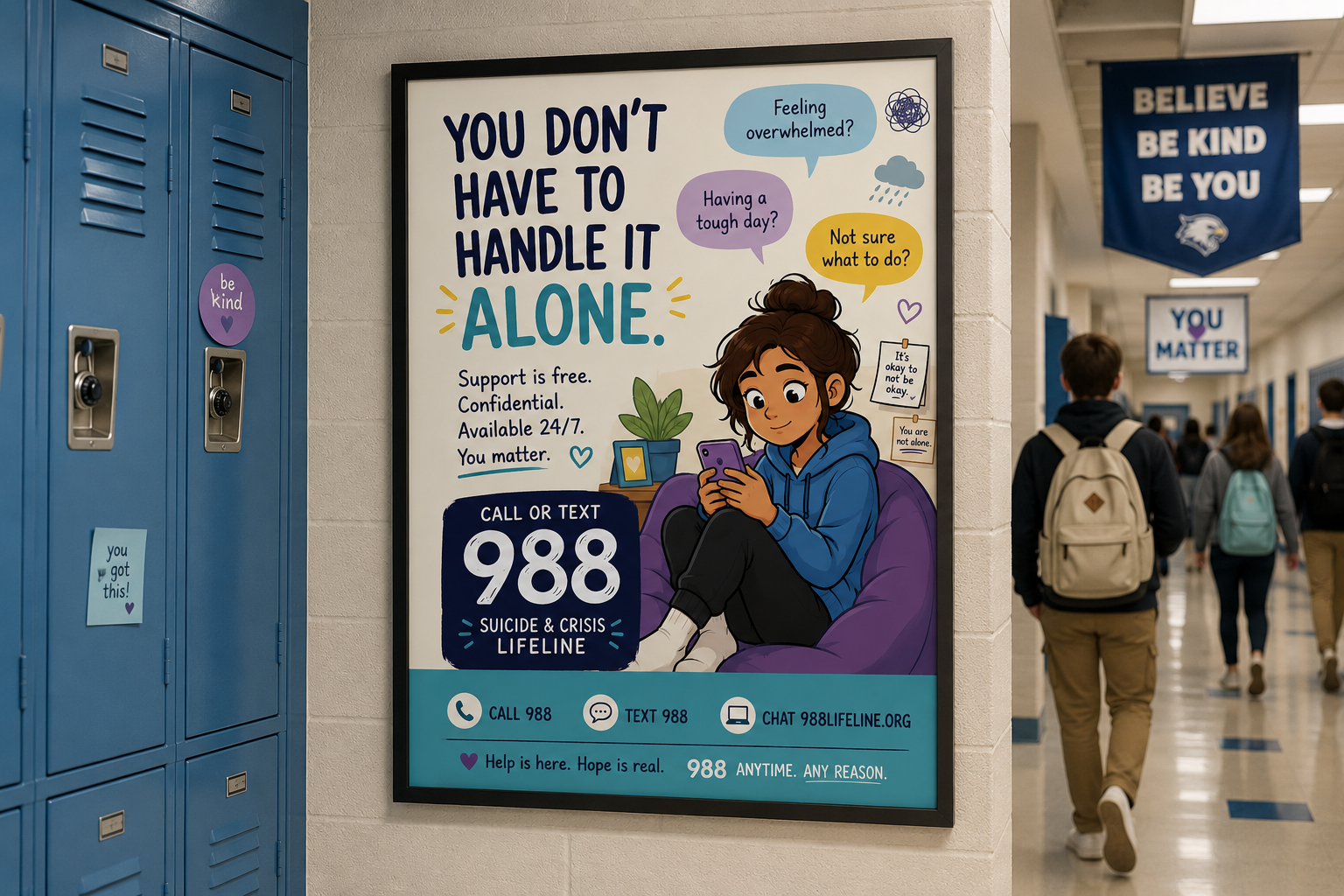
Youth-focused 988 awareness poster displayed in a high school hallway, helping connect students with confidential mental health and crisis support where they learn every day.
Campaign Snapshot
Industry
Public Health
Campaign Focus
Youth Mental Health Awareness, 988 Lifeline
Audience
Teenagers, High School Students, College Students, Young Adults, Parents, Educators
Media
Posters
Digital Displays
Table Tents
Venues
High Schools
Colleges & Universities
Community Centers
Libraries
Healthcare Facilities
Coffee Shops
Behavioral Health Clinics
Geography
Statewide
Duration
Multi-Month
The Challenge
Although the 988 Suicide & Crisis Lifeline is available nationwide, many teenagers and young adults remain unaware that confidential mental health and crisis support is only three digits away.
Traditional advertising often fails to consistently reach youth in trusted settings where conversations about mental health naturally occur. Public health agencies needed a youth mental health campaign capable of reaching students before a crisis, while reinforcing awareness through repeated exposure across schools and community environments.
Strategy
Rather than relying solely on social media or traditional advertising, the campaign focused on trusted youth environments where students spend time every day.
Messaging was strategically deployed throughout high schools, colleges, libraries, healthcare facilities, behavioral health clinics, and community centers to normalize conversations around mental health and encourage students to remember 988 whenever they or someone they know needs immediate emotional support.
By integrating messaging into educational and community spaces, the campaign created frequent, non-disruptive reminders that strengthened message recall while supporting broader youth suicide prevention and behavioral health awareness initiatives.
Example Campaign Creative
.Every Youth 988 Awareness Campaign is customized to the sponsoring organization, audience, and community.
For school-based environments, approachable, student-friendly creative can improve engagement while maintaining the seriousness of the message. Illustrated campaigns often perform well in schools, colleges, and youth-serving organizations because they reduce stigma and encourage students to seek help without fear or embarrassment.
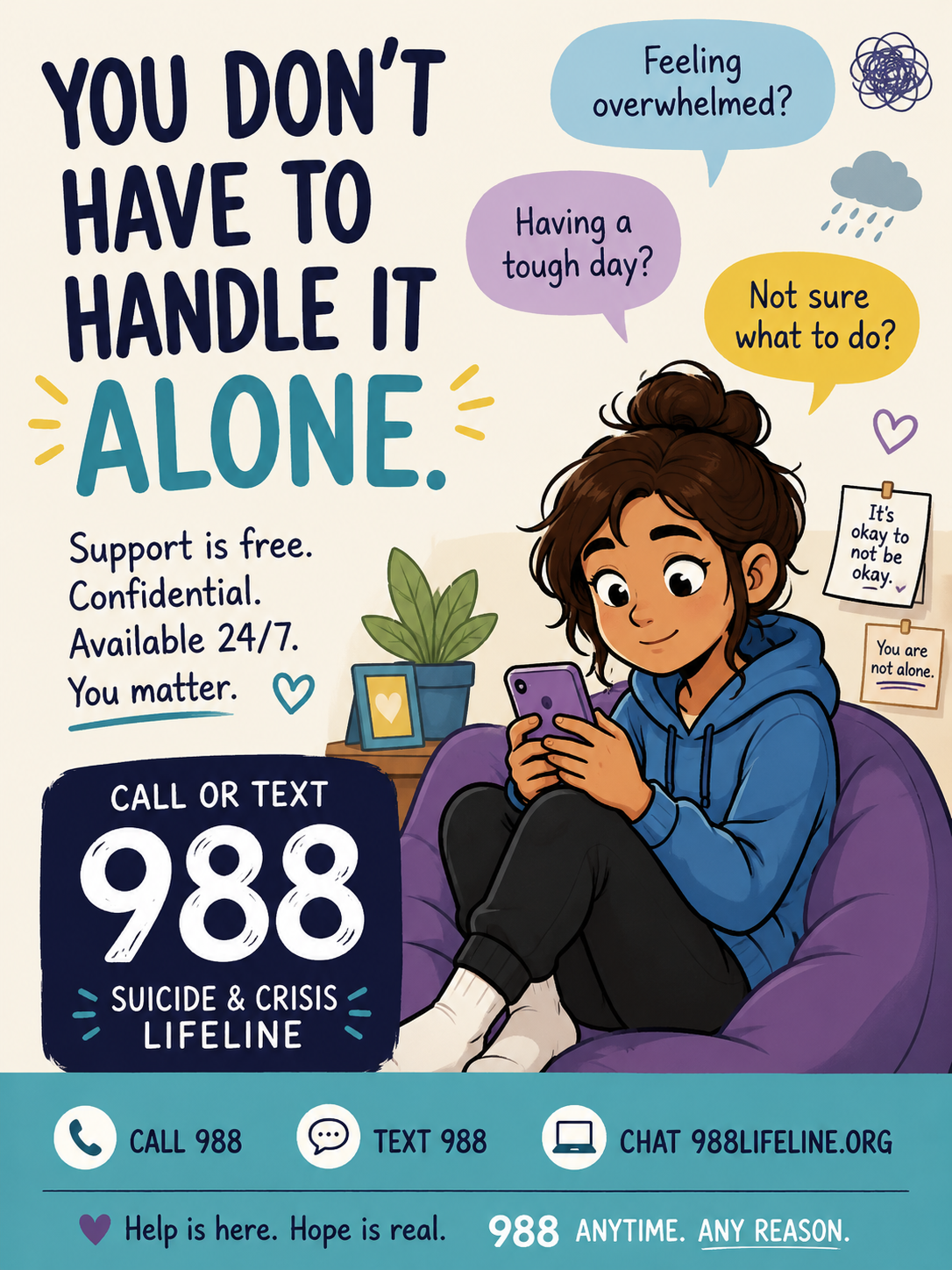
Youth-focused concept artwork promoting the 988 Suicide & Crisis Lifeline across schools, colleges, and community organizations.
Media Strategy
The campaign utilized multiple trusted environments to maximize repeated exposure among youth and young adults.
Primary placements included:
High Schools
Colleges & Universities
Community Centers
Libraries
Behavioral Health Clinics
Healthcare Waiting Areas
Coffee Shops
This integrated place-based advertising strategy allowed mental health messaging to become part of students' everyday environments rather than competing for attention in crowded digital channels.
Execution
The campaign was deployed across hundreds of community locations using a combination of static and digital media placements.
Every installation was supported through proof-of-performance reporting, installation verification, and ongoing quality assurance to ensure consistent campaign delivery throughout the statewide initiative.
Results
The campaign successfully expanded awareness of the 988 Suicide & Crisis Lifeline by delivering repeated visibility in trusted youth environments.
Key outcomes included:
Statewide deployment
Hundreds of schools and community locations
Multiple youth-focused venue categories
Millions of projected impressions
Installation verification
Comprehensive reporting
By combining school-based advertising, community outreach, and place-based media, the campaign increased opportunities for students, parents, educators, and young adults to become familiar with 988 before they or someone they know experienced a mental health crisis.
Why It Worked
Young people are more likely to engage with mental health messaging when it appears in familiar, trusted environments rather than interruptive advertising channels.
By placing educational messaging inside schools, colleges, healthcare facilities, libraries, and community organizations, the campaign normalized conversations around mental health while reinforcing awareness throughout students' daily lives.
For public health agencies seeking to improve youth mental health awareness, student wellness, school mental health outreach, and youth suicide prevention, place-based media provides a measurable, community-centered strategy that reaches young people where support matters most.