
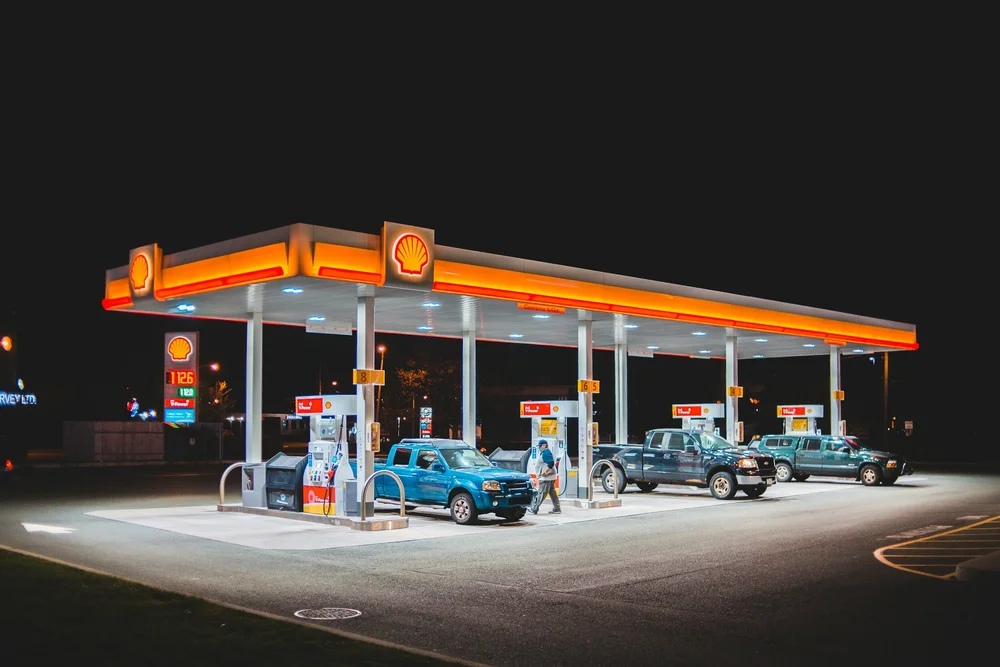
Advertising to Drivers and Commuters: Reach People Behind the WheelReach people behind the wheel.
A billboard gets a few seconds at highway speed. A message at the gas pump gets the driver while the car is parked and the engine is off. Place-based media reaches drivers and commuters during the stops built into every trip: fueling up, grabbing coffee, resting at a truck stop, or waiting at a downtown corner.
- 500,000+ locations
- AAM-audited delivery
- English, Spanish + 15 more languages
- Fully managed
The stakes are real. 39,254 people died in motor vehicle traffic crashes on U.S. roads in 2024, and traffic crashes are the leading cause of death for people ages 15 to 24 (NHTSA).
PlaceBased helps state departments of transportation, highway safety offices, law enforcement partners, tourism offices, public health agencies, advertising agencies, and brands reach drivers in the places they stop. Our gas station TV network alone runs across more than 29,000 fuel retail locations.
Every driver stops for fuel.
A record 64% of drivers who fill up also go inside the store.
Source: NACS (NACS Magazine), “Shopper Behavior Revealed: From the Pump to the Store,” 2025.The average vehicle fills up every seven days — and 80% of fill-ups happen at a convenience store.
Source: NACS (NACS Magazine), “Shopper Behavior Revealed: From the Pump to the Store,” 2025.Why Place-Based Media Works for Drivers
Drivers are stopped and looking
At the pump and in the store, drivers have a few minutes and few distractions.
Frequent, habitual visits
People fuel up and stop at the same convenience stores again and again, which builds frequency naturally.
Right message, right moment
An impaired driving message at a bar or c-store on a Friday night is closer to the decision than a TV spot.
Local by design
Target the corridors, counties, and ZIP codes where crashes happen.
Where We Reach Drivers and Commuters
| Environment | Formats | Best for |
|---|---|---|
| Gas stations and convenience stores | Pump toppers, gas station TV (29,000+ fuel retail locations), in-store digital, window clings, counter mats, restroom mirror clings, take-ones | Statewide traffic safety, enforcement periods, local and regional brands |
| Truck stops and travel plazas | Pump toppers, in-store posters, restroom placements | Commercial drivers, long-haul safety, CDL recruitment, rural corridors |
| Bars and restaurants | Restroom posters, mirror clings, table tents, coasters, in-venue screens | Impaired driving prevention and safe rides home |
| Urban panels | Street-level panels in dense neighborhoods | Pedestrian and bike safety, commuter messaging |
| Mobile | Privacy-safe geofenced extensions | Reinforcing in-venue messages after the stop |
Traffic Safety and Driver Campaigns We Support
Departments of transportation and highway safety offices
- Impaired driving prevention, including alcohol and cannabis
- Seat belt use
- Distracted driving
- Speeding
- Pedestrian and bicycle safety
- Work zone safety
- Motorcycle safety
- Drowsy driving
- Move-over laws
- Anti-littering and roadside cleanup
Other buyers
- Tourism offices reaching drive-market visitors
- Workforce and CDL recruitment
- Public health campaigns for on-the-go audiences
- Automotive services, QSR, CPG, and retail brands
For campaign ideas, see Public Safety Messaging That Saves Lives, impaired driving prevention campaign ideas, and Click It or Ticket campaign ideas.
Time It to Enforcement and Seasonality
Traffic safety campaigns work best when paid media runs alongside national and state enforcement periods, holidays, and seasonal risks. Plan flights around the mobilizations your office supports. Digital formats let you rotate creative by daypart or week without reprinting.
Built for Public Accountability
Highway safety and DOT budgets are public dollars, and they need proof. Delivery is audited by the Alliance for Audited Media (AAM). Driver campaigns include:
- Venue-level proof of posting with time-stamped, geo-tagged photos at each location
- Location lists and delivery breakdowns by county, ZIP code, and venue type
- Response tracking with QR codes and vanity URLs
- Documentation that holds up to grant reporting and public-records requests
See how a regional transportation organization used place-based media in our anti-littering awareness case study.
Fully Managed, Start to Finish
We handle planning, venue selection, creative, production, installation, and reporting, in English, Spanish, and additional languages where your audience needs them.
Driver and Commuter Advertising FAQs
01How do you reach drivers with place-based media?
By placing messages where drivers stop: gas pumps, convenience stores, truck stops, and bars and restaurants. Urban panels reach commuters and pedestrians on foot.
02Is gas station advertising effective for traffic safety campaigns?
Yes. Drivers are stopped, attentive, and visiting often, which makes the pump and c-store a natural fit for seat belt, impaired driving, and distracted driving messages. Our gas station TV network covers more than 29,000 fuel retail locations, so statewide and multi-state campaigns can scale.
03Can traffic safety campaigns target specific counties or corridors?
Yes. Campaigns can be targeted by state, DMA, county, ZIP code, or specific locations along priority corridors.
04Can campaigns run during enforcement periods?
Yes. Flights can be timed to national and state enforcement periods, holidays, and seasonal risks.
05How are driver campaigns measured?
With venue-level proof of posting, location and delivery reports, and response tracking. Our delivery has been independently verified by the Alliance for Audited Media.
Pair it with
Gas stations
Pump toppers, gas station TV and c-store screens.
Explore gas stations →Bars & restaurants
Screens, mirror clings, table tents and coasters.
Explore bars & restaurants →Urban panels
Eye-level street displays in dense neighborhoods.
Explore urban panels →Colleges
Unions, residence halls, dining and rec centers.
Explore colleges →Mobile
QR, geo-targeting and social to extend OOH.
Explore mobile →See every media solution.
All media solutions →Planning a campaign? Start with our public health advertising overview, compare DOOH advertising screens, or browse every OOH and DOOH media solution. Planning a mobilization? Read the traffic safety media planning guide.
Let's talk.
Tell us the behavior you need to change and where. We'll build a driver-focused plan around your corridors, timing, and budget.