What is Place-Based Advertising? The Complete Guide to Location-Based OOH Media
Last updated: October 2026
In 2025, out-of-home advertising revenue reached a record $9.46 billion in the U.S., the 19th consecutive quarter of growth for the category. Digital out-of-home accounted for 36.3% of that total and grew 10.5% year over year. Place-based media — the subset of OOH that sits inside specific physical venues rather than along the open road — grew 8.3% in the third quarter alone, outpacing the broader OOH market by more than two-to-one.
Those numbers matter because they describe a structural shift, not a cyclical bump. As digital ad fraud, ad blocking, and attention fragmentation have made the open web a harder place to buy attention, advertisers have moved budget toward the one media environment where the audience is physically present, the screen is unblockable, and the context of consumption is part of the message itself.
That environment is place-based advertising. This guide walks through what it is, how it differs from traditional out-of-home, the venues that define the category, how audience targeting and measurement actually work in 2026, what it costs, and how to plan a campaign that delivers. Whether you're a media planner exploring the channel for the first time, a public health agency trying to reach populations digital can't, a CMO building a 2026 media mix, or a brand marketer evaluating place-based against your other channels — this is the foundation.
What Is Place-Based Advertising?
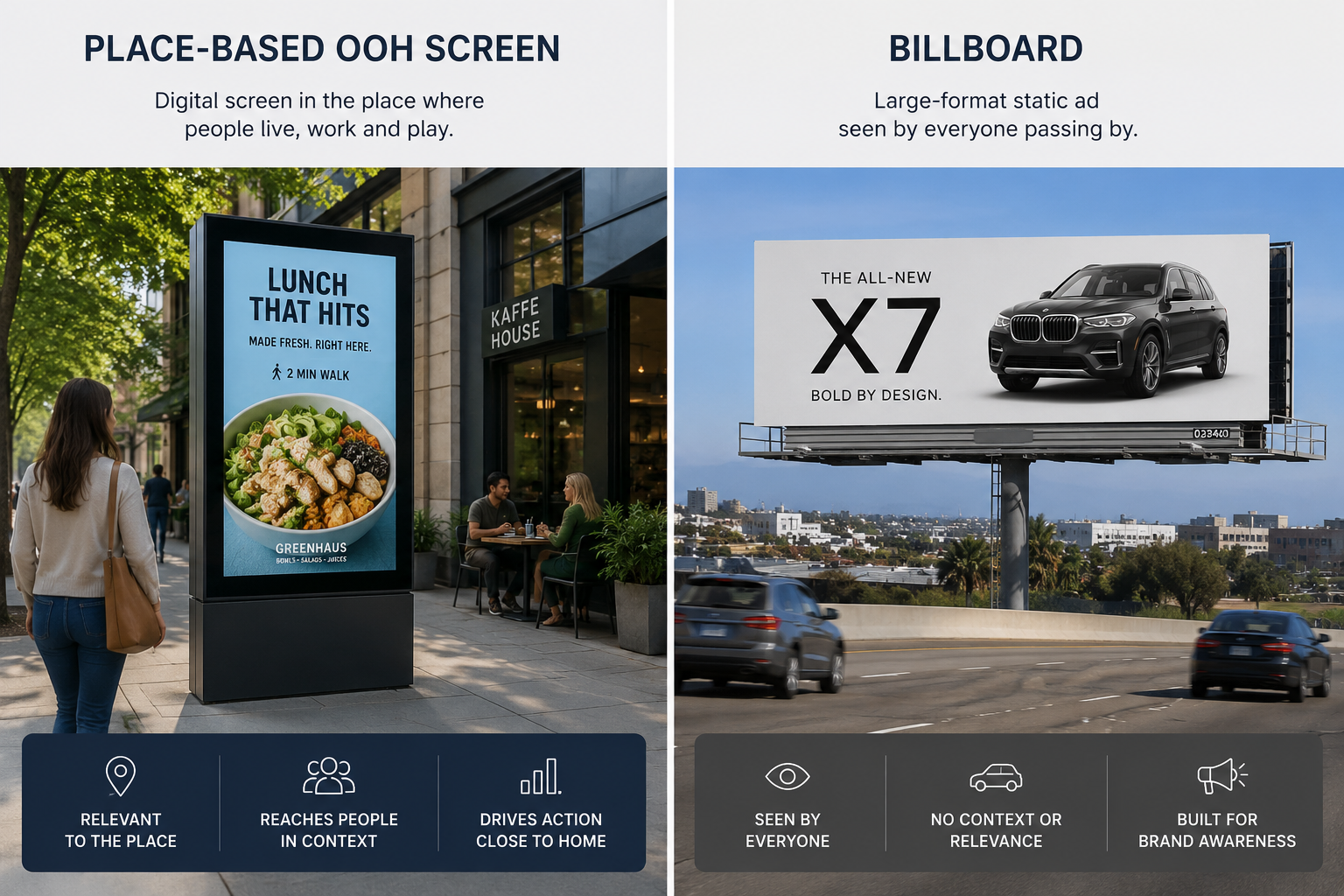
Place-based advertising is media placed inside specific physical venues where target audiences naturally gather — clinics, schools, bars and restaurants, gas stations, grocery stores, community centers, gyms, transit hubs, and dozens of other defined locations. Unlike traditional out-of-home advertising, which reaches mass audiences in motion (highway billboards, transit corridors), place-based media reaches defined audiences at moments of dwell time, in environments where the context of the venue reinforces the message. A point-of-care ad in a doctor's office reaches patients thinking about their health. A bar ad reaches adults thinking about drinking. A high school ad reaches teenagers in the environment where their peer behaviors actually form.
The Out of Home Advertising Association of America (OAAA) tracks place-based media as one of five formal OOH formats, alongside billboards, transit, street furniture, and cinema. Inside that classification, place-based has become the most diverse — and arguably the most strategically important — segment, because it's where the channel meets the specific audience the advertiser actually wants to reach.
For a broader overview of how this fits within the OOH category, our explainer on what OOH advertising is walks through the full landscape.
Place-Based OOH vs. Traditional OOH: What's the Difference?
The simplest way to understand place-based advertising is to compare it directly to the OOH formats it sits alongside:
Traditional billboards reach mass audiences in motion — drivers, commuters, pedestrians passing through high-traffic corridors. The advantage is sheer scale; a single bulletin can generate millions of impressions a month. The limitation is that the audience is undefined: a billboard on I-94 reaches everyone who drives I-94, with no way to target by demographics, behavior, or intent. Billboards still represent the majority of OOH spend — $6.72 billion of the $9.46 billion 2025 total — and remain a foundational mass-reach tool. But they aren't a precision tool.
Transit advertising reaches commuters inside the transit environment — bus interiors, subway platforms, rail cars, airports. Strong for urban and metro-area reach. Transit grew faster than any other OOH format in 2025, up 9.2% annually. But the audience is still defined by transit use rather than by the behavior the advertiser is trying to influence.
Street furniture — bus shelters, urban panels, kiosks — sits at the pedestrian-eye-level intersection of mass reach and contextual placement. It bridges the billboard-to-place-based gap. Our coverage of urban panels in OOH advertising walks through how this format works in practice.
Place-based advertising is fundamentally different from all three. The audience is defined by the venue, not by the route. A bar reaches drinkers. A pediatrician's office reaches parents of young children. A community college campus reaches adults pursuing workforce credentials. The placement isn't a route the audience happens to travel — it's a destination they've chosen to be at, which means context, attention, and behavioral relevance all stack in the advertiser's favor.
The trade-off is reach. A single billboard generates more raw impressions than a single place-based screen. But the impressions a place-based screen generates are more relevant, and for any campaign with a defined audience or a behavioral objective, relevance compounds faster than reach does.
For a deeper format-by-format comparison including digital, see our breakdown of DOOH versus traditional billboard advertising.
Why Place-Based Advertising Works: What the Research Says
Attention is the whole game, and out-of-home earns it. Three independent data points:
People notice it. 88% of consumers notice out-of-home advertising, and nearly 80% of those viewers take action after seeing it, according to research from the Out of Home Advertising Association of America (OAAA) and Morning Consult.
People rate digital place-based screens highly. In a 2024 OAAA and Harris Poll study, 73% of consumers viewed DOOH ads favorably — ahead of television (50%), social media (48%), online (37%), audio (32%), and print (31%). 76% of viewers took action after seeing a DOOH ad, from visiting a store to looking up the advertiser online.
People remember it. Solomon Partners' analysis of advertising effectiveness studies from 2017 to 2022 found that out-of-home produces higher ad recall than live and streaming TV, podcasts and radio, print, and online.
Noticing is the floor. Place-based adds what the rest of OOH can't: context. A message in a clinic waiting room or a high school hallway reaches the audience it was built for, in the setting where the behavior happens. That's what turns attention into action.
The Major Place-Based Venue Types
Place-based advertising isn't one channel — it's a category that contains a dozen distinct sub-channels, each with its own audience, dwell time, regulatory environment, and creative best practices. The major venue types in 2026:
Point-of-care (POC) media. Doctor's offices, pediatricians, OBGYNs, specialty clinics, urgent care, pharmacies. Audience: patients and caregivers, in the moment of healthcare decision-making. The category-defining venue for pharma, healthcare brand, and public health advertisers. Our point-of-care advertising service page and the broader guide to point-of-care advertising inventory cover the operational specifics.
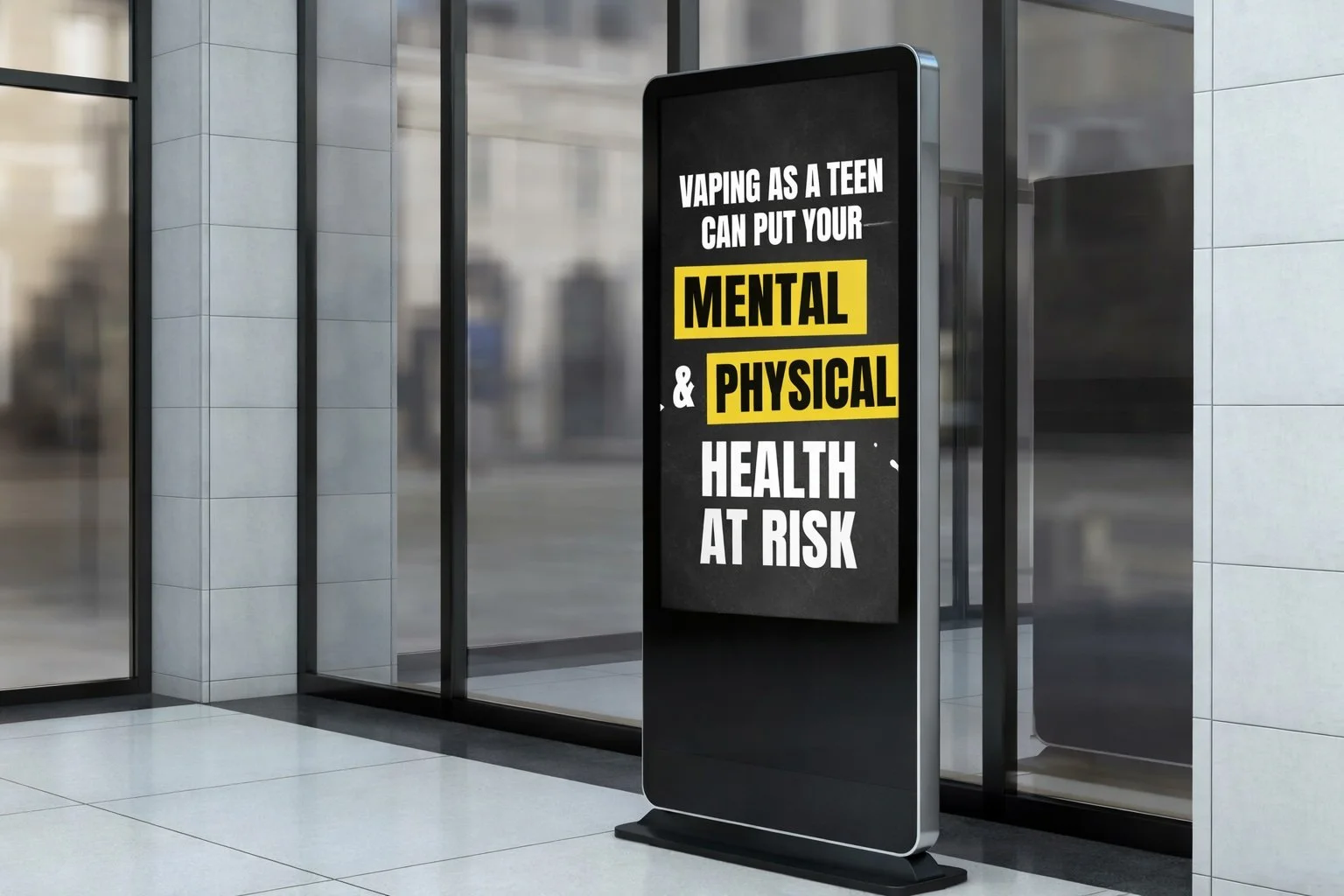
High schools. Hallways, cafeterias, athletic facilities, restrooms. Audience: 14- to 18-year-olds and the school staff around them. Highest-leverage venue for reaching Gen Z, for vaping and substance use prevention, and for college enrollment marketing. Covered in detail in our youth and teen advertising pillar.
Colleges and universities. Student unions, athletic facilities, residence halls, campus transit. Audience: 18- to 24-year-olds. The on-campus dwell-time profile is unmatched for reaching young adults. See our on-campus advertising guide.
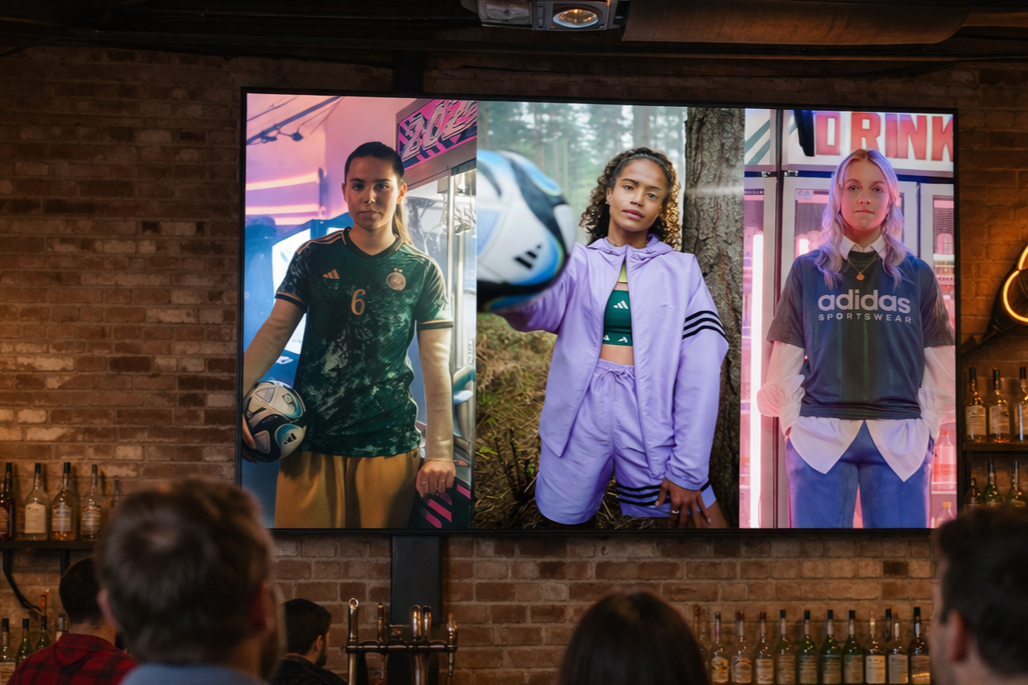
Bars and restaurants. Restroom panels, bar-top screens, hostess station media, table tents. Audience: adults 21+, often in social and decision-making moments. The defining venue for alcohol responsibility messaging, sports betting, gambling PSAs, and male-skewing brand advertisers. See our coverage of advertising in bars with indoor ads.
Gas stations and convenience stores. Pump-top screens, in-store media, exterior signage. Audience: drivers in the act of refueling, often during specific high-risk decision windows (weekend evenings, holiday driving periods). Strong venue for impaired-driving prevention, automotive, financial services, and quick-service.
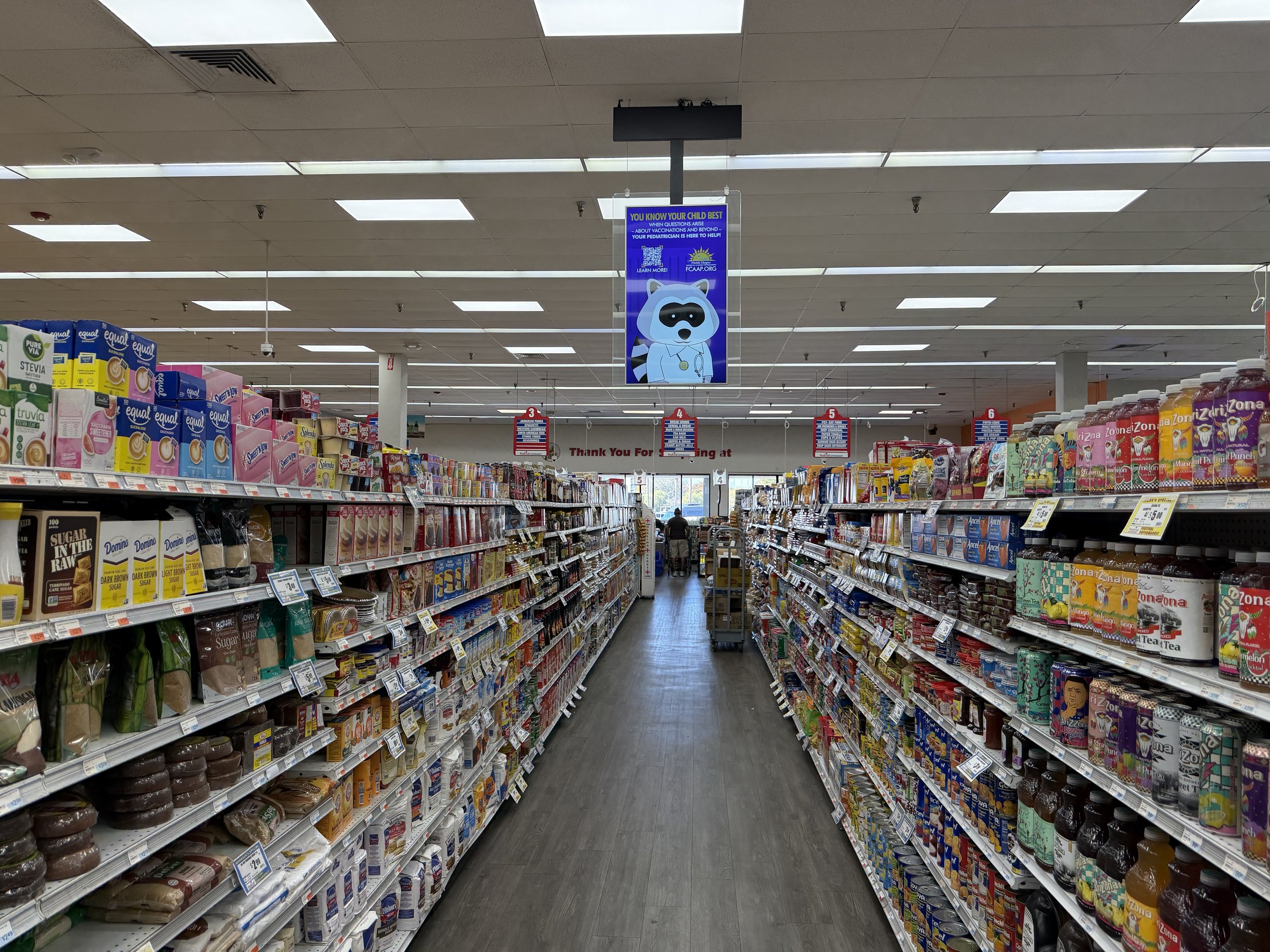
Grocery stores and supermarkets. Cart media, in-aisle displays, entrance/exit signage. Audience: household decision-makers, with heavy skew toward parents and adult women. The classic CPG venue. See our in-store media guide.
Community centers. Local rec centers, YMCAs, senior centers, faith-based community spaces. Audience: defined by the community the center serves — often hard-to-reach populations including seniors, immigrants, lower-income families, and rural residents. Critical infrastructure for public health and benefits-enrollment campaigns.
Truck stops. Diesel pumps, lounges, food courts. Audience: long-haul truckers and travelers. Niche but high-dwell, high-attention. Covered in our truck stop advertising deep-dive.
Multicultural venues. Hispanic-serving businesses, Black-owned barbershops, LGBTQ+ bars and clubs, ethnic grocery stores, tribal community spaces. Audience: defined by community and cultural context. The infrastructure for multicultural OOH advertising campaigns.
Urban panels. Street-level panels in dense urban environments. Bridges street furniture and place-based; covered in our urban panels guide.
Gyms and fitness centers. Locker rooms, equipment-mounted screens, lobby panels. Audience: health-conscious adults, with predictable visit frequency.
Transit dwell points. Train stations, airport gates, rideshare zones. Adjacent to transit but place-based in character because of the dwell-time profile.
The art of place-based media planning is matching the venue to the audience and the behavioral moment. For a fuller venue-by-venue ROI breakdown, our coverage of hyper-local marketing and local advertising strategies goes deeper.
How Audience Targeting Actually Works
The persistent misconception about place-based media is that it's a blunt instrument — "you just buy a venue." In 2026, that's no longer true. Modern place-based campaigns combine four targeting layers:
Venue-level targeting. The starting point. By choosing the venue category — pediatric clinics, community colleges, gay bars, rural gas stations — the campaign defines the audience before a single impression is served.
Geographic targeting. Within the venue category, campaigns can target specific DMAs, ZIP codes, or even individual addresses. A naloxone awareness campaign might run only at gas stations in the 20 ZIP codes with the highest overdose death rates. A WIC enrollment campaign might run only in census tracts with high eligible-but-not-enrolled populations.
Dayparting and seasonality. Programmatic DOOH systems can serve different creative at different times of day, days of the week, or seasons. A responsible-drinking PSA might amplify on Friday and Saturday nights at bars. A Medicare enrollment campaign might amplify during the annual enrollment window at senior centers.
Mobile audience extension. This is the layer most planners new to the category don't know exists. Modern DOOH providers capture mobile device IDs in venue, build audience segments, and use those segments to retarget on mobile and connected TV — turning a place-based impression into a closed-loop attribution event. See our coverage of location-based marketing for the operational details.
Layered, these four targeting modes give place-based campaigns precision that rivals digital while preserving the contextual and attention advantages of the physical environment.
Static vs. Digital (DOOH): Which Format Should You Use?
Place-based media exists in two creative formats: static (printed posters and panels) and digital (programmable screens, often called DOOH or pDOOH for "programmatic DOOH"). The right choice depends on the objective.
Static wins on cost-per-impression for sustained, single-message campaigns. The creative is locked for the flight, the cost per impression is lower than digital, and the message ages slowly. Best for: long-running brand awareness, evergreen public health messaging, and any campaign where creative agility is not a strategic priority.
Digital (DOOH) wins on flexibility, measurement, and message-rotation. Multiple advertisers share a screen, creative can be swapped in hours rather than weeks, dayparting and triggers (weather, sports scores, traffic) become available, and mobile audience extension is structurally easier. DOOH grew 10.5% in 2025 and now accounts for 36.3% of all OOH spend, the strongest growth trajectory in the category.
Most well-designed 2026 place-based campaigns use both: digital for the venues where flexibility is highest-value (urban panels, high-traffic POC environments, college campuses), static where dwell time is high and message stability is acceptable (restroom panels, school hallways, community centers). For a deeper format-and-platform comparison, our DOOH advertising ultimate guide is the canonical reference, alongside the DOOH service page.
CPM Benchmarks and Measurement
The most common buyer-side question about place-based media is what it costs. The honest answer is that CPMs vary by a factor of 10 or more across venue types — a community center poster might run $5 CPM, while a premium high-frequency screen in a major-market specialty clinic might run $50 CPM or higher. The variables that drive cost:
Venue category and audience desirability. Pediatric clinics command higher CPMs than community centers because the audience precision is higher.
Market. Top-10 DMAs are more expensive than smaller markets, with the spread typically 2x to 3x.
Format. Digital screens generally price higher per impression than static panels, though the gap is closing as DOOH inventory expands.
Verification. Audited inventory (AAM, Geopath) prices higher than unaudited, because procurement and grant-funded buyers increasingly require third-party verification.
For a working CPM calculation tool, our CPM calculator handles the arithmetic. For the discipline of campaign reporting, our breakdown of campaign reporting in DOOH walks through the metrics serious media planners now expect.
Measurement. The 2026 standard for place-based measurement combines:
Audited delivery. Third-party verification of impressions served, increasingly required for government, healthcare, and grant-funded campaigns. Our coverage of place-based compliance audits walks through what AAM verification looks like in practice.
Audience measurement. Geopath, Vistar, MFour, and similar providers measure audience composition and frequency at the venue level.
Mobile attribution. Device-ID capture in venue, audience segment building, and conversion measurement against control groups.
Outcome data. Where it exists — sales lift, foot-traffic lift, helpline call volume, prescription lift, enrollment volume — closes the loop on whether the campaign actually moved the metric that mattered.
The campaigns that get refunded are the ones that bake measurement in from day one. The campaigns that don't are the ones that try to bolt it on after the flight is over.
How to Plan a Place-Based Campaign: A 5-Step Framework
The repeatable pattern across campaigns that perform:
Step 1: Define the audience by behavior, not by demographic. "Adults 25–54" is not an audience. "Adults at risk of opioid overdose in the 30 highest-burden ZIP codes" is an audience. "Parents of children under 5 in WIC-eligible households" is an audience. The tighter the behavioral definition, the cleaner the venue selection downstream.
Step 2: Match venues to the audience and the behavioral moment. This is where place-based earns its premium over generic OOH. The bar reaches the drinker at the moment of decision. The pediatric clinic reaches the parent at the moment of healthcare attention. The community college reaches the adult learner at the moment of credential pursuit. Make the venue choice as deliberate as the message.
Step 3: Build the message hierarchy for the venue context. Place-based creative is read in seconds, in the periphery of attention, in environments where the audience is doing something else. The message hierarchy should be: brand recognition → single clear behavioral ask → one frictionless next action (a phone number, a website, a QR code). Multi-message creative consistently underperforms in this environment.
Step 4: Plan frequency, not just reach. Behavior change requires sustained, repeated exposure. A 4-week flight at low frequency produces less measurable effect than a 12-week flight at higher frequency in fewer venues. Concentrate the buy.
Step 5: Design the measurement plan before the campaign launches. Decide in advance what outcome metric matters, how you'll measure it, and what the comparison or control will be. Campaigns measured after the fact almost never get the data that proves them.

The 2026 Landscape: Who Runs Place-Based Media
The place-based industry in 2026 is a mix of large national operators (with networks of thousands of screens across multiple venue categories), specialist operators (deep in a single category like point-of-care or college campus), and smaller regional players. For a current ranked landscape — including direct competitors — our annual top place-based OOH companies in the U.S. listicle is the canonical reference.
The trend lines worth tracking:
Consolidation among national operators, accelerated by programmatic DOOH ad-tech vendors that incentivize larger inventory pools.
Specialization in the long tail — operators going deep on niche audiences (tribal community media, LGBTQ+ venues, rural infrastructure, specialty healthcare verticals) where the major national operators lack inventory.
Compliance and verification differentiation. As government, healthcare, and grant-funded buyers tighten procurement standards, operators with audited inventory are increasingly winning RFPs that operators without it can't compete for.
Programmatic-direct hybrid buying. Most serious place-based buyers in 2026 use both programmatic DOOH and direct relationships, depending on whether the priority is flexibility (programmatic) or guaranteed inventory in a defined venue list (direct).
Where the Category Is Going
Three structural shifts are reshaping place-based advertising as 2026 unfolds:
Attention as the new currency. As digital attention measurement (Adelaide, TVision, Lumen) has matured, place-based and DOOH have consistently shown attention-per-impression metrics that rival or exceed digital. Expect more buyers to migrate budget on the basis of attention rather than raw reach.
The closing of the digital divide gap. Public health agencies, government enrollment programs, and equity-focused brands are increasingly recognizing that the audiences most affected by health disparities, benefits underutilization, and digital access gaps are systematically under-reached by digital-only campaigns. Place-based fills that gap. See our breakdown of how DOOH supports the social determinants of health.
Outcome-based pricing experiments. A small but growing share of place-based campaigns are now bought on outcome metrics (foot traffic, calls, enrollments) rather than on impressions. This is most mature in retail and healthcare; it's coming to public health and education marketing next.
Challenges and Limitations (and How to Plan Around Them)
Place-based isn't magic, and pretending otherwise doesn't help anyone buying it. Four limits worth planning around:
Privacy. Location data raises fair questions. Be transparent about what's collected and follow privacy rules. In healthcare settings, target by venue, medical specialty, and geography — never by individual patient health data.
Data accuracy. Location and audience data can be wrong or out of date, and bad data means mis-targeting and wasted spend. Work with reliable data providers and verify what they give you.
Overexposure. Frequency builds behavior change. Too many messages in one venue turns into wallpaper. Concentrate the buy, rotate creative, and keep one clear ask per placement.
Measurement standards. DOOH measurement has come a long way — impression multipliers, foot-traffic attribution, mobile-location matching — but the industry still lacks fully standardized metrics for apples-to-apples comparisons with digital and TV. The practical answer is independent verification. When the Alliance for Audited Media (AAM) audited our Physician Office Patient Education Program, it confirmed 113.3% of guaranteed distribution. Here's what that audit covered. Ask every place-based partner for the same kind of proof.
Frequently Asked Questions
What is place-based advertising in simple terms? Place-based advertising is media placed inside the specific physical venues where target audiences naturally gather — clinics, schools, bars, gas stations, community centers, gyms. It's a sub-category of out-of-home (OOH) advertising defined by where the audience is, rather than how they're traveling.
How is place-based advertising different from billboards? Billboards reach mass audiences in motion along high-traffic corridors. Place-based reaches defined audiences inside specific venues at moments of dwell time. The trade-off is reach (billboards higher) versus relevance and audience precision (place-based higher).
Where can you run place-based ads? The major venue categories include point-of-care clinics, high schools, colleges, bars and restaurants, gas stations, grocery stores, community centers, truck stops, gyms, urban panels, transit dwell points, and culturally-specific community venues. A well-designed campaign typically combines two to four venue categories matched to the audience.
Is place-based advertising effective? The evidence base across public health, pharma, education, and consumer-brand campaigns is now substantial. Place-based outperforms digital-only campaigns on attention-per-impression, on reach to under-digital populations, and — for the right audience-venue match — on outcome metrics like behavior change, foot traffic, and conversion lift.
How much does place-based advertising cost? CPMs range widely by venue category and market — from roughly $5 to $50+. Premium specialty-clinic and major-market urban inventory commands the highest CPMs; community center and rural inventory the lowest. The right benchmark is the CPM for the audience you're actually trying to reach, not the category average.
Can place-based advertising be measured like digital ads? Yes. The 2026 measurement stack combines audited delivery (AAM, Geopath), audience composition data (Geopath, Vistar, MFour), mobile attribution (device-ID capture and conversion lift studies), and outcome data where it exists. Increasingly, place-based attribution closes the loop the way digital attribution does.
Is place-based advertising worth it? For campaigns with a defined audience, a behavioral objective, or a digital-reach gap, yes. For pure mass-awareness campaigns with no audience precision needed, billboards usually cost less per raw impression. The right question isn't whether place-based is "worth it" — it's whether the campaign's audience and objective match what place-based is good at.
Common Mistakes
The failure modes that show up most often in place-based campaigns:
Choosing venues by what's available instead of by what fits the audience. The inventory broker pitches what they have to sell. The right plan starts with the audience and works back to the venue list.
Spreading the buy too thin. Twenty venues at low frequency produces less impact than five venues at high frequency. Concentrate.
Multi-message creative. Place-based environments support one clear ask. Stacking three messages into a single panel makes all three illegible.
Skipping verification. Unaudited inventory becomes a problem the moment a procurement officer or grant administrator asks for proof of delivery. The cost difference between audited and unaudited is small. The cost of having no proof is catastrophic.
Treating place-based as a replacement for digital. It isn't. It's a complement. The campaigns that perform best combine place-based (for attention, context, and reach to under-digital populations) with digital (for retargeting, frequency, and conversion).
No measurement plan at launch. A campaign without a measurement plan generates impressions. A campaign with a measurement plan generates evidence — and evidence is what gets the next campaign funded.
Key Takeaways
Place-based advertising is the subset of out-of-home that places media inside specific physical venues where target audiences naturally gather — defined by where the audience is, not how they're traveling.
The U.S. OOH market reached a record $9.46 billion in 2025, with place-based and DOOH the fastest-growing segments. The category has now grown for 19 consecutive quarters.
Place-based earns its premium over traditional OOH on audience precision, contextual relevance, attention-per-impression, and reach to populations digital-only campaigns systematically miss.
The major venue categories include point-of-care, high schools, colleges, bars, gas stations, grocery stores, community centers, truck stops, gyms, urban panels, transit dwell points, and culturally-specific venues. The art is matching venue to audience and behavioral moment.
Modern audience targeting combines venue-level selection, geographic targeting, dayparting, and mobile audience extension. The result rivals digital precision while preserving the attention advantages of the physical environment.
CPMs vary by a factor of 10 across venue types. The right benchmark is the cost-per-reach of your defined audience, not the category average.
Measurement is the discipline that separates campaigns that get refunded from campaigns that don't. Audited delivery, audience composition data, mobile attribution, and outcome metrics are the 2026 standard.
Ready to Plan Your Place-Based Campaign?
PlaceBased Media has helped public health agencies, pharma and healthcare brands, universities, federal contractors, advocacy organizations, and consumer brands run place-based campaigns across every major venue category in the U.S. — with the verification infrastructure, measurement framework, and venue network to deliver the audience you actually need to reach.