Substance Use Prevention Advertising: Place-Based OOH Strategies for Overdose, Tobacco, Cannabis & Opioid Campaigns
In 2024, U.S. drug overdose deaths fell 27% — the largest single-year decline ever recorded by the CDC. Provisional data through November 2025 shows the trend continuing, with overdose deaths down another 15.9% year-over-year and the absolute count dropping from a peak of roughly 114,000 to approximately 70,000. The CDC's own framing: "more than 81 lives saved every day."
That decline didn't happen by accident, and it didn't happen because the supply got safer — illicit fentanyl is still in the drug supply, and methamphetamine and cocaine deaths actually increased over the same period. The decline happened because a stack of public health interventions finally started compounding: expanded naloxone access, fentanyl test strip distribution, syringe service programs, medications for opioid use disorder, law enforcement disruption of fentanyl trafficking, and — the piece that doesn't get enough credit — sustained, multi-year prevention and harm reduction advertising in the physical environments where people who use drugs actually are.
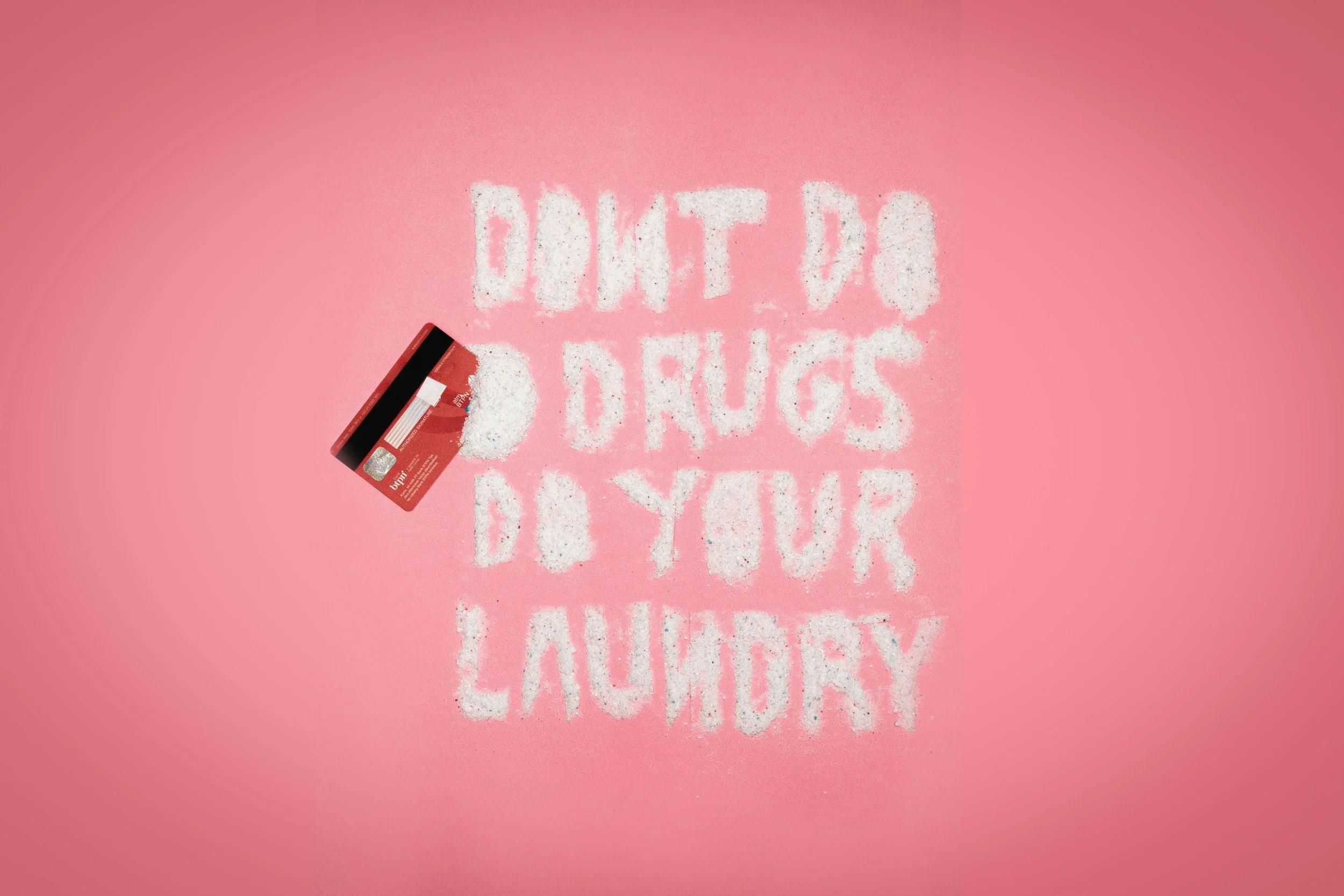
This is the inflection point that defines substance use prevention advertising in 2026. The campaigns that worked are the ones that combined evidence-based messaging with sustained media weight in the venues where the targeted behavior actually happens — clinics, schools, bars, gas stations, community centers, harm reduction sites. The campaigns that didn't work were the ones that lived only on social and digital, missing the populations with the highest disease burden and the lowest digital reach.
This guide walks through the full discipline. Where the crisis stands today. The difference between prevention, harm reduction, treatment, and recovery — and why each requires different creative, different venues, and different audiences. How place-based OOH performs against tobacco, vaping, opioids, fentanyl, cannabis, and alcohol. The venue strategy by substance. What the strongest national campaigns tell us about what's repeatable. And how to measure impact in a way that gets your campaign refunded.
If you're a state health department running an OD2A grant, a federal contractor working on a SAMHSA campaign, a tribal harm reduction organization, a youth prevention coalition, or an agency building a substance use campaign for a client — this is for you.
The Crisis by the Numbers
Substance use prevention advertising lives or dies on the credibility of the numbers behind it. Here's where the field stands as of early 2026, drawn from CDC's National Vital Statistics System and supporting public health surveillance:
Overdose deaths. Approximately 70,231 drug overdose deaths in the 12 months ending November 2025 — down from a peak of roughly 114,000 in 2022–2023. A 27% drop in 2024 alone, and continued declines through 2025. The decline is real, but the absolute number remains higher than any year before 2018.
The drugs driving the decline. Synthetic opioids (primarily illicit fentanyl) drove the entire decline. Fentanyl-involved deaths fell from roughly 76,000 in 2023 to approximately 48,000 in 2024. Stimulant deaths moved the other direction — methamphetamine deaths rose from about 29,400 to 37,100, and cocaine deaths increased by approximately 8,000.
The age picture. Ages 15 to 24 saw the largest decline of any age group — overdose death rates dropped 37%, from 13.5 to 8.5 per 100,000. This is partly the result of intensive school-based prevention work, expanded naloxone training in schools, and aggressive vaping prevention programming reducing nicotine pathways into other substances.
Tobacco and vaping. Adult cigarette smoking is at the lowest rate ever measured (roughly 11% as of the most recent National Health Interview Survey). Youth cigarette smoking is at 2%. But youth e-cigarette use, while down from its 2019 peak, remains a public health priority — and the role of place-based prevention work, including vaping prevention ad campaigns at schools, is well-documented.
Cannabis. Recreational cannabis is now legal in 24 states. The new prevention frontier is cannabis safe storage (especially around children), driving-while-impaired prevention, and youth cannabis prevention in legal markets where access has effectively become trivial. Our work on cannabis prevention and safe storage paid media and data-driven cannabis awareness covers the operational specifics.
The drivers of decline. Public health researchers attribute the overdose decline to four overlapping interventions: expanded naloxone access, harm reduction (fentanyl test strips, syringe service programs), improved access to medications for opioid use disorder, and disruption of fentanyl trafficking networks. Sustained prevention and harm reduction media has played a meaningful role across all four.
The takeaway: this is a fragile inflection point. The decline is real, but it's not finished, and it's not guaranteed to continue. Sustained funding for prevention and harm reduction advertising — particularly in place-based venues that reach the populations most affected — is what keeps the curve bending in the right direction.
The Four-Stage Continuum: Prevention, Harm Reduction, Treatment, Recovery
One of the most common failure modes in substance use advertising is treating "prevention" as a single discipline. It isn't. Effective campaigns are built around a four-stage continuum, and each stage requires fundamentally different creative, different venues, and different audiences.
Prevention. Stops use before it starts. Target audience: people not currently using, especially youth. Classic example: Truth Initiative's anti-tobacco and anti-vaping campaigns, which prevented an estimated 2.5 million young people from becoming smokers between 2015 and 2018, and prevented an estimated 1.3 million 15- to 24-year-olds from starting to vape between September 2021 and October 2022. Venues: high schools, college campuses, community centers, youth-oriented social environments.
Harm reduction. Reduces the consequences of use without requiring cessation. Target audience: people who are currently using and may not be ready or able to stop. Messages: carry naloxone, use fentanyl test strips, don't use alone, know the signs of overdose. Venues: bars, harm reduction centers, gas stations in high-burden ZIP codes, community health clinics, syringe service programs, urban panels in transit corridors. This is the discipline that has grown the most over the past five years and has the strongest emerging evidence base.
Treatment. Connects people with active substance use disorder to medication and care. Target audience: people ready to enter treatment. Messages: how to find buprenorphine, naltrexone, methadone, and counseling. Venues: clinics, pharmacies, emergency departments, jails and reentry facilities, community health centers.
Recovery. Supports sustained behavior change after treatment. Target audience: people in recovery and the support systems around them. Messages: peer support resources, recovery community organizations, family support, employment resources. Venues: community centers, faith-based organizations, recovery housing, employer environments.
Most well-funded campaigns blend at least two of these stages. A naloxone awareness campaign is harm reduction (carry it) and treatment (know how to find treatment if you reverse an overdose). A fentanyl awareness campaign is prevention (don't use unknown pills) and harm reduction (test what you do use). The discipline is matching message-to-stage and venue-to-audience.
For the broader public health planning frame, this fits inside, see our public health campaign advertising guide.
Why Place-Based OOH Works for Substance Use Prevention
Substance use is, more than almost any other public health behavior, a physically situated behavior. People use drugs in specific places, encounter drugs in specific places, are at risk of overdose in specific places, and seek help in specific places. That spatial specificity is the structural reason place-based OOH outperforms digital channels for this category.
Four factors make the channel uniquely suited to substance use prevention:
The audiences with the highest disease burden are the hardest to reach digitally. People with active substance use disorder are disproportionately housing-unstable, lower-income, less likely to have reliable broadband, and significantly more likely to use prepaid or shared devices. Digital-only campaigns systematically miss the populations the campaign most needs to reach. Physical venues — gas stations, bars, harm reduction sites, clinics, community centers — reach these populations in their actual environment.
Trust transfers from venue to message in this category more than any other. A naloxone awareness message at a syringe service program is credible to people who use drugs because the venue is credible to them. The same message on Instagram reads as another piece of public health noise. Trust is everything in substance use messaging because the audience has often been failed by, lied to, or stigmatized by health institutions before.
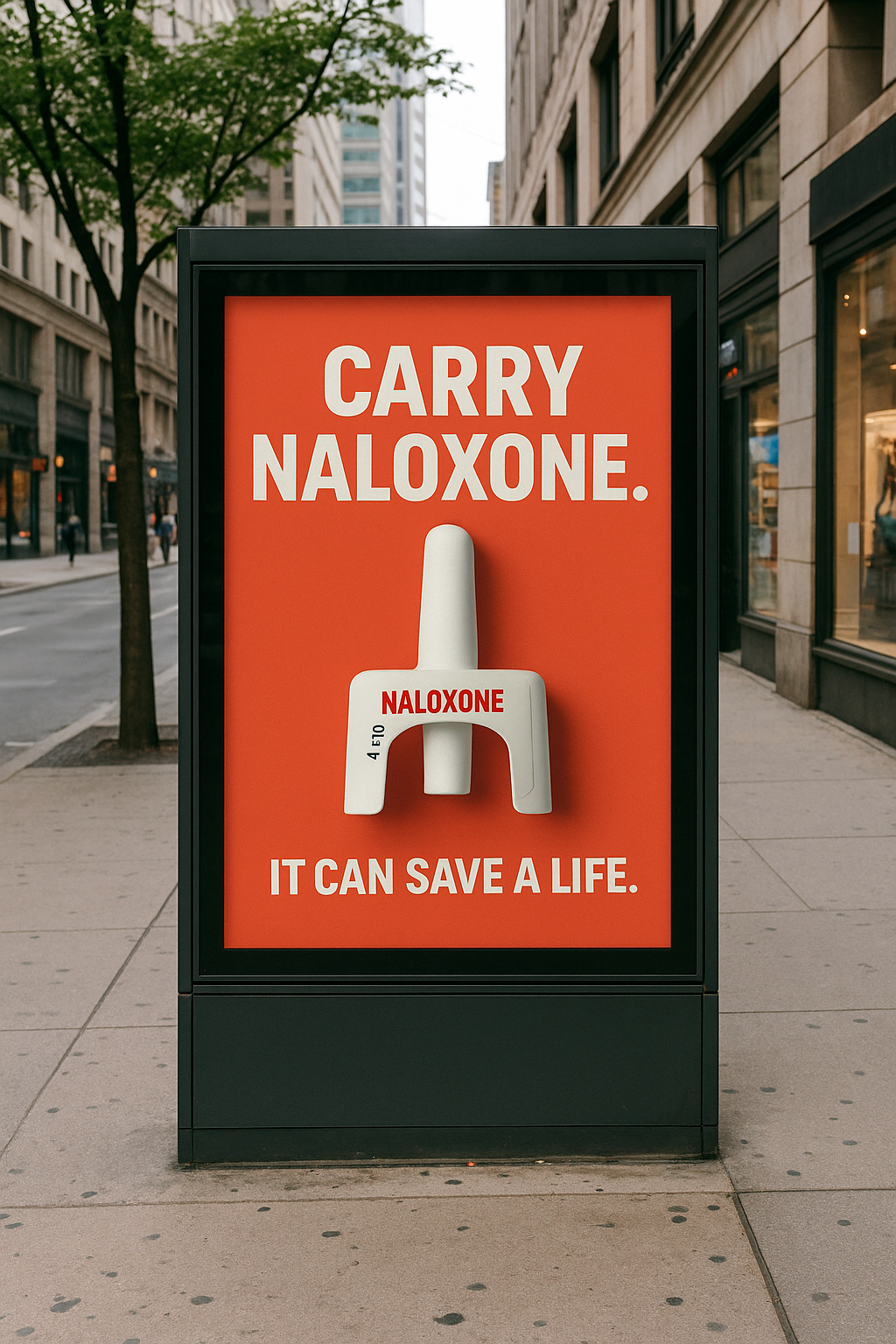
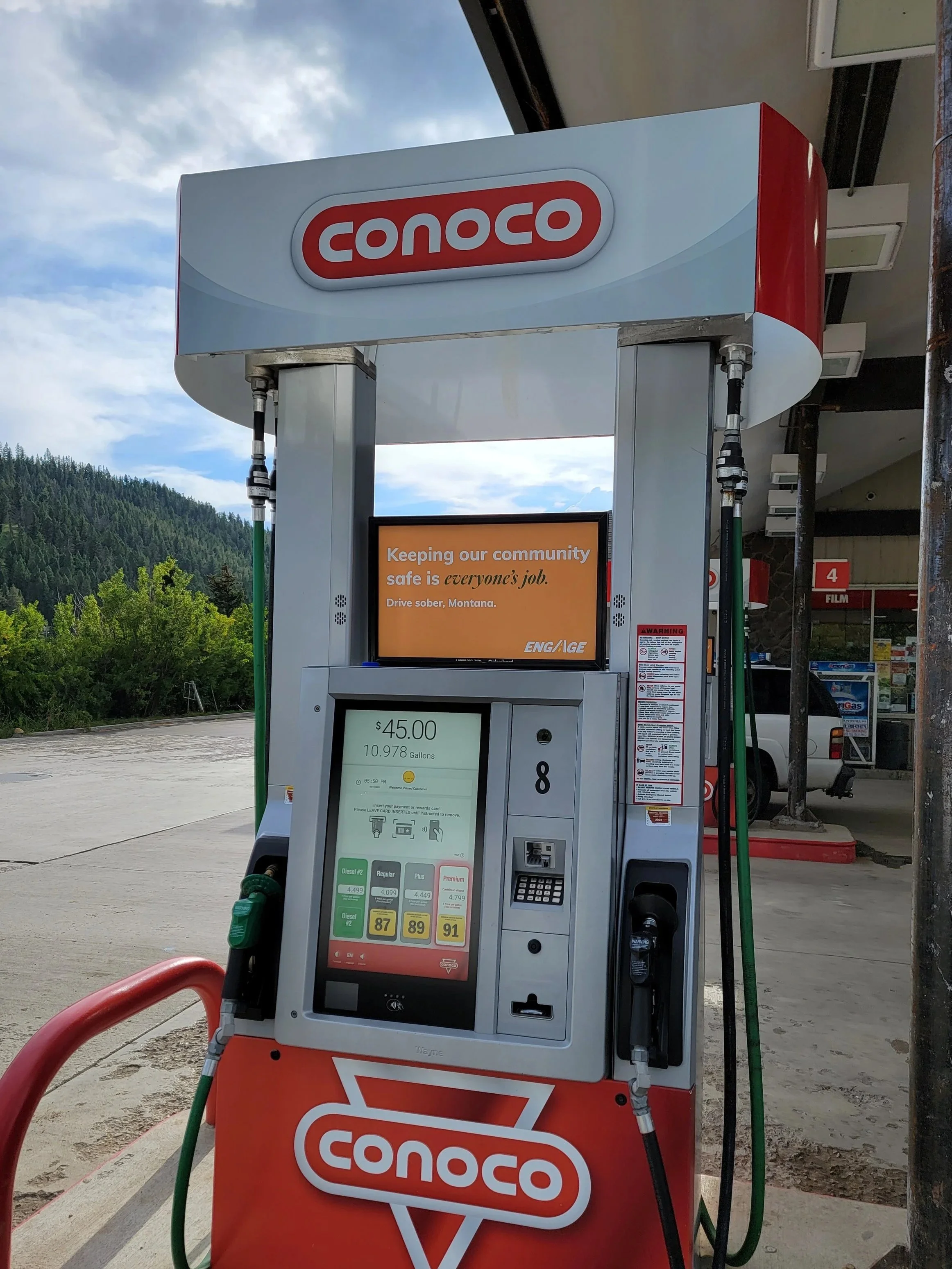
Contextual placement matches the moment of behavioral relevance. A fentanyl test strip message at a bar matters because the bar is a moment of behavioral risk. An impaired driving message at a gas station matters because the gas station is the moment before the drive. A naloxone access message at an OBGYN waiting room matters because pregnant and postpartum women are a critical at-risk population for overdose.
Frequency and dwell time compound. Behavior change in this category requires sustained, repeated exposure. The same person passing the same poster in the same clinic waiting room for six consecutive monthly appointments will, eventually, internalize the message in a way that no single digital impression can replicate. The dose-response evidence from the CDC's Tips From Former Smokers campaign — which produced 16.4 million quit attempts and an estimated 129,000 prevented early deaths — is built on exactly this frequency-and-dwell-time mechanism.
For the deeper case on why physical environments outperform digital for high-stakes public health work, our breakdown on DOOH and the social determinants of health maps out the populations and venues this matters for most.
Overdose & Fentanyl Prevention
Overdose prevention is the single highest-stakes use of substance use prevention advertising in 2026. The campaigns that have moved overdose mortality have shared a consistent set of characteristics, and they've consistently relied on place-based media as a foundational channel.
Naloxone Awareness
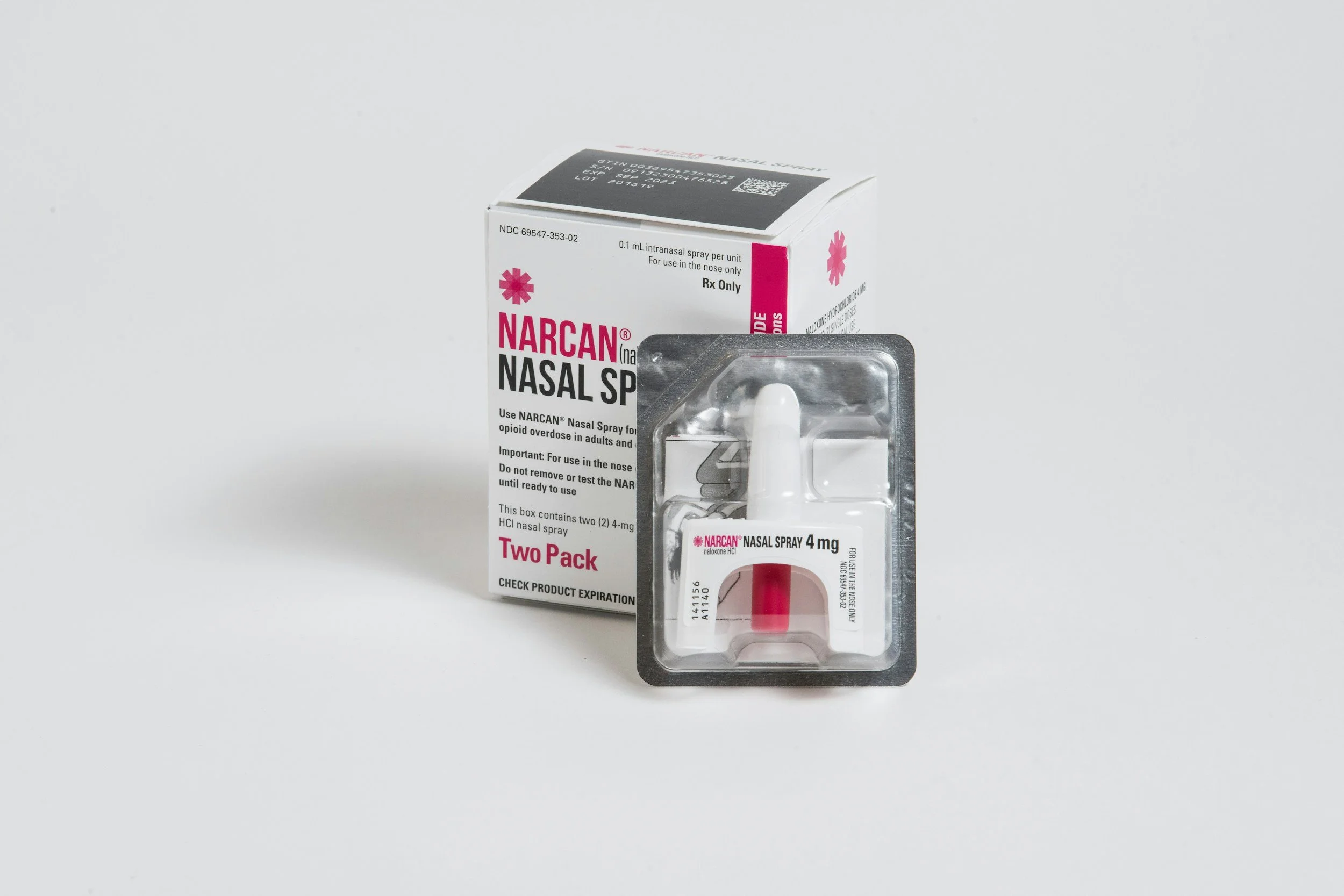
Naloxone (Narcan) is the opioid overdose reversal medication. It's now available without prescription in all 50 states and is increasingly distributed for free through state health departments, harm reduction organizations, and community pharmacies. The campaigns that have moved naloxone access — and there is now strong evidence that expanded naloxone access has been a meaningful driver of the overdose decline — have shared three traits: clear instruction on what naloxone is and how to use it, removal of friction in obtaining it, and reduction of stigma associated with carrying it.
For the foundational educational piece, our explainer on what naloxone is is the canonical resource. For campaign-level strategy, overdose prevention media strategy walks through the venue mix, message hierarchy, and frequency planning that the strongest state-level campaigns are using.
Fentanyl Awareness
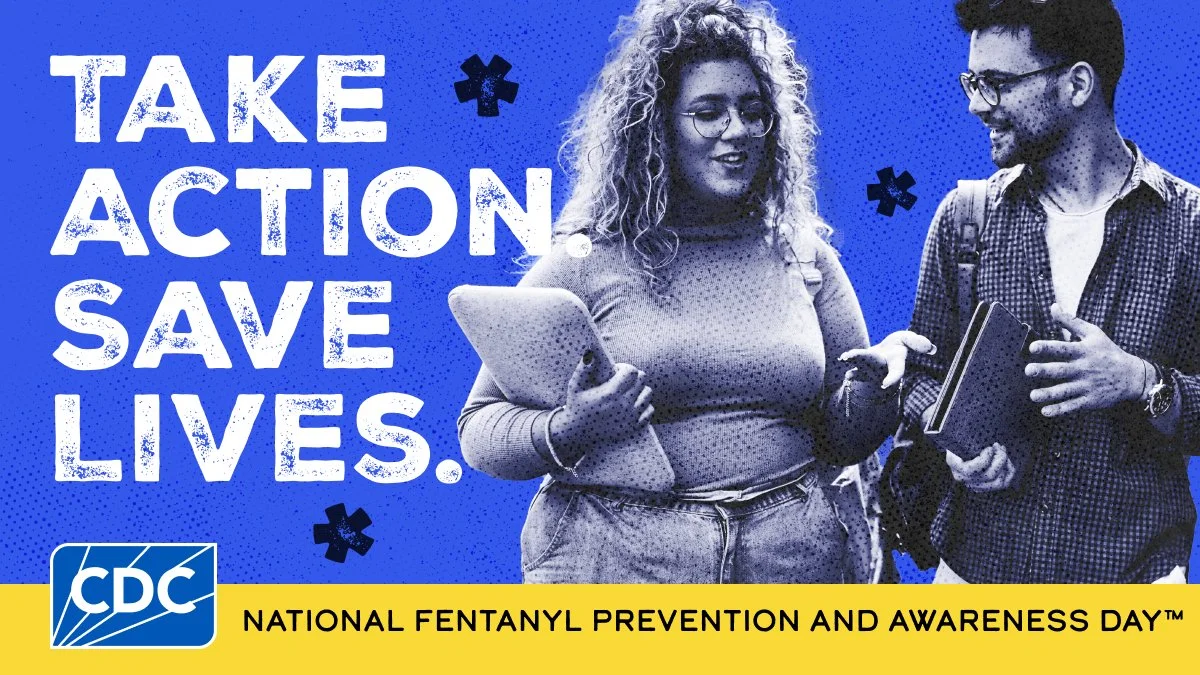
Fentanyl is now in a substantial share of the illicit drug supply, including counterfeit prescription pills sold online and through informal networks. The classic fentanyl awareness campaign — "one pill can kill" — has reached saturation in many markets, and the field has moved on to more nuanced messaging: testing strips, signs of overdose, what to do if someone overdoses, and how to talk to young people about counterfeit pills.
Fentanyl awareness campaigns work best when paired with naloxone access messaging, because the two interventions are mutually reinforcing. A campaign that tells someone to test their drugs but doesn't tell them how to respond to an overdose is incomplete; a campaign that tells someone to carry naloxone but doesn't tell them where to get it is incomplete.
Harm Reduction Site Promotion
Many states and counties have invested heavily in harm reduction sites — syringe services programs, drug checking services, naloxone distribution sites. These sites work only if people know they exist and feel safe accessing them. Place-based OOH in the surrounding ZIP codes — gas stations, convenience stores, community panels, transit — has become a standard tactic for driving site utilization.
Tobacco & Vaping Control
Tobacco control is the most mature subdiscipline within substance use prevention advertising, and it's the one with the strongest evidence base. The CDC's Tips From Former Smokers campaign and Truth Initiative's anti-tobacco work are the gold-standard case studies, and their results have been replicated at smaller scales by state health departments running matching cessation campaigns.
The numbers from the published public health campaign advertising guide bear repeating: Tips produced 16.4 million quit attempts between 2012 and 2018, prevented an estimated 129,000 early deaths, and saved an estimated $7.3 billion in smoking-related healthcare costs. The Truth campaign was responsible for an estimated 22% of the 1999–2002 decline in youth smoking and prevented an estimated 2.5 million young people from becoming smokers between 2015 and 2018.
The state-level tobacco control work — California Tobacco Control Program, Tobacco Free Florida, New York's Quit Now — has used place-based OOH consistently as part of an integrated channel mix. For an inventory of what's worked at the state and program level, see our roundup of 10 tobacco control advertising examples and our broader tobacco control marketing guide.
Vaping Prevention
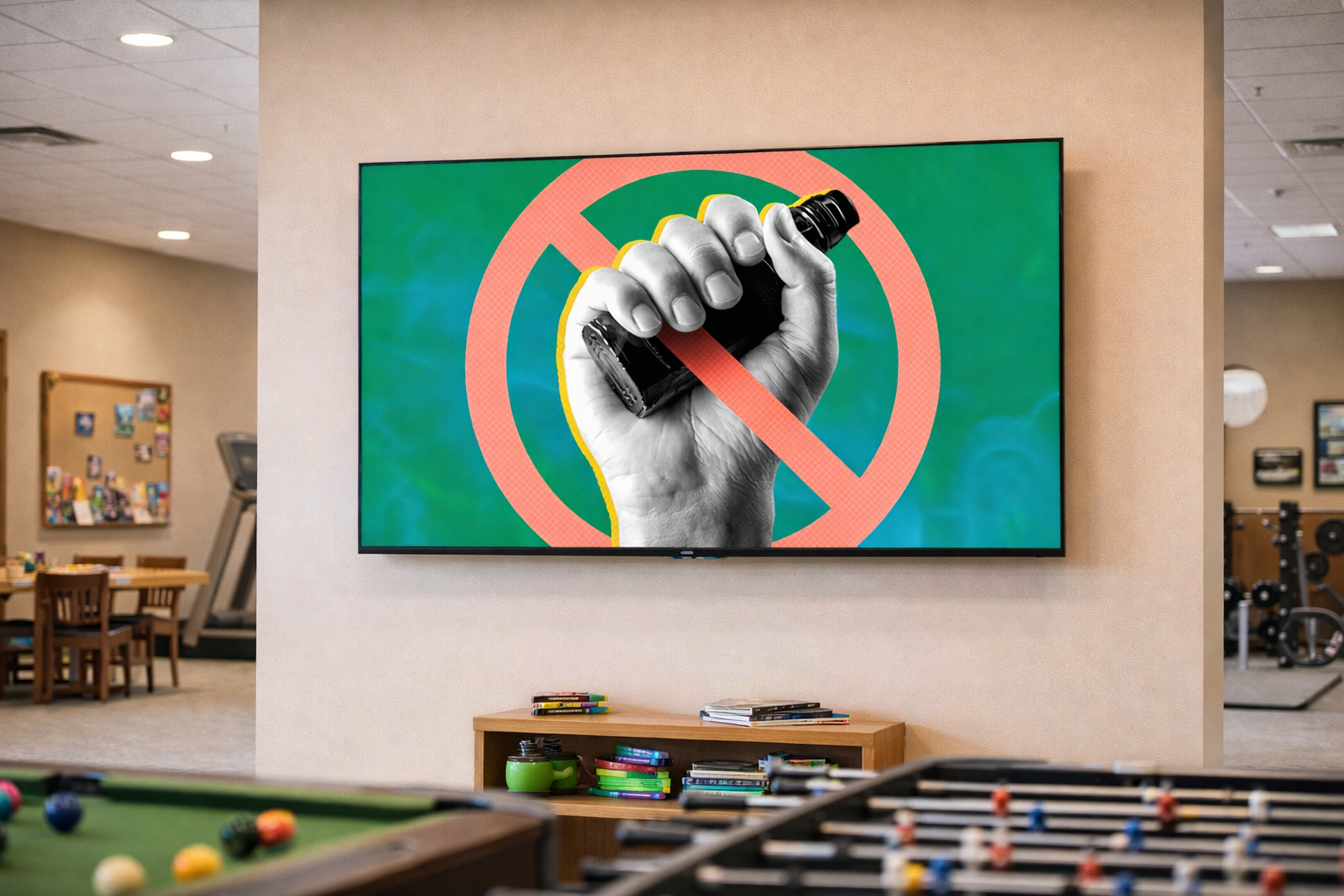
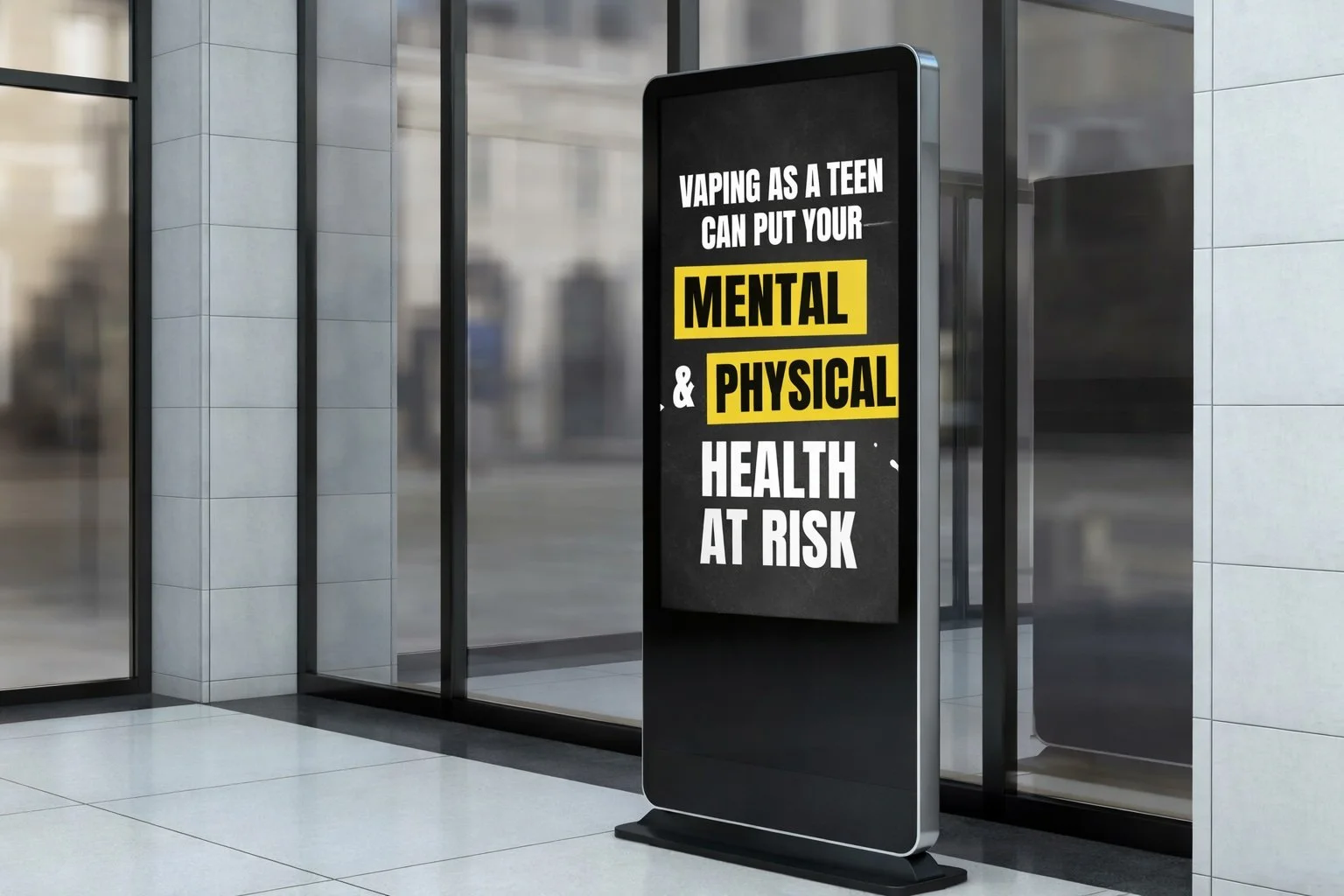
The vaping subdiscipline is younger but has produced its own benchmark case study. Truth Initiative's "It's Messing With Our Heads" anti-vaping campaign — running heavily in school environments alongside digital — prevented an estimated 1.3 million 15- to 24-year-olds from starting to vape between September 2021 and October 2022. School-based placement was central to the campaign's reach strategy, which is the canonical use case for vaping prevention ad campaigns at schools and a central reason youth and teen marketing crosses over so heavily with substance use prevention. For the broader Gen Z reach context, see our youth and teen advertising guide.
Cannabis Prevention & Safe Storage
Recreational cannabis legalization has fundamentally changed the cannabis prevention landscape. The classic "just say no" framing has limited utility in markets where cannabis is legal, regulated, and widely available. The new prevention frontier is built around three messages.
Safe storage. Edibles look like candy. Children, teens, and pets are exposed to cannabis edibles at higher rates in legal markets. Safe storage messaging — keep cannabis locked, keep it out of reach of children, treat it like alcohol — has become the most evidence-supported cannabis prevention angle in legal markets. Our cannabis safe storage promotions guide walks through the operational details.
Driving while impaired. Cannabis-impaired driving is now a measurable contributor to traffic fatalities in legal-cannabis states. Gas station, bar, and parking-lot DOOH placements during high-risk windows (weekend evenings, holiday weekends) have become a standard tactic.
Youth prevention. Cannabis use under age 25 is associated with measurable cognitive and mental health risks. Youth cannabis prevention in legal markets — high schools, colleges, community centers — has become a substantial subdiscipline. The data-driven approach we cover in data-driven cannabis awareness is increasingly the standard for state-level cannabis prevention work.
Alcohol & Impaired-Driving Prevention
Alcohol is the substance use category most often forgotten in modern prevention conversations, even though it remains a leading cause of preventable death and a major driver of intimate partner violence, traffic fatalities, and chronic disease.
Place-based alcohol prevention works through a different venue logic than other substances. The venues are the venues where alcohol is consumed — bars, restaurants, sports arenas, college environments — and the messages are responsible-use messages rather than abstinence messages. The classic example is the drink responsibly holiday season campaign architecture: bar OOH, scaled up during high-risk windows (Super Bowl weekend, NCAA tournament, holiday weekends), with clear behavioral asks (designate a driver, use rideshare, know your limits).
For sports-betting environments, similar logic applies to responsible gambling messaging, which is increasingly running adjacent to alcohol prevention in sports bar venues.
HIV Prevention & Substance Use Crossover
HIV prevention has historically lived in its own silo, but the public health field has increasingly recognized the structural overlap between HIV transmission and injection drug use. Modern HIV prevention campaigns — including PrEP awareness — are increasingly co-located with harm reduction messaging.
Our HIV prevention campaign work and the PrEP promotion toolkit we developed for point-of-care environments both reflect this convergence. For state and federal grants that fund both HIV and overdose prevention work, the integrated venue strategy — clinics, pharmacies, harm reduction sites, community centers in high-burden ZIP codes — is now the standard rather than the exception.
Venue Strategy by Substance: A Practical Matrix
Matching venue to substance is the highest-leverage decision in substance use prevention campaign planning. The matrix, based on the campaigns we've helped run and the evidence base across the field:
Opioids, fentanyl, naloxone awareness. Pharmacies, harm reduction sites, syringe service programs, gas stations in high-burden ZIP codes, community health clinics, urban panels in transit corridors, OBGYN waiting rooms (high-risk pregnancy population), bars (for alcohol-and-opioid combination risk).
Tobacco and vaping. High schools, college campuses, community centers, point-of-care clinics, urban panels, gas stations and convenience stores (point-of-purchase prevention), bars (for adult smoking).
Cannabis (safe storage, youth prevention, impaired driving). Grocery stores and supermarkets (parents of young children), pediatrician offices, daycares, high schools, colleges, gas stations and bars (impaired driving windows), urban panels in legal-cannabis markets.
Alcohol. Bars, restaurants, sports venues, gas stations (impaired driving moments), college campuses (binge drinking prevention), community centers in high-burden ZIP codes.
HIV and PrEP (substance use crossover). Point-of-care clinics, pharmacies, gay bars and LGBTQ+ community venues, harm reduction sites, community health centers in high-prevalence ZIP codes.
The principle underneath the matrix: match the venue to the moment of behavioral risk or the moment of behavioral decision. The closer the message is to the relevant behavior in space and time, the higher the conversion to action.
How to Plan a Substance Use Prevention OOH Campaign
Step 1: Define Your Audience and Geography
Most substance use prevention campaigns are funded at the state, county, or federal level, with defined geographic boundaries. Start by mapping your audience against the venues available inside that geography. Ask:
Is this a youth campaign (schools, after-school programs, recreation centers)?
Is it an adult or young adult campaign (bars, campuses, transit, community centers)?
Is it a healthcare provider-facing campaign (clinics, hospitals, pharmacies)?
Is there a specific high-risk geography (ZIP code, county, metro area)?
Step 2: Match Message to Venue
Contextual relevance is the single most important principle in this category. A naloxone message is most actionable in a pharmacy or clinic. A "One Pill Kills" message hits hardest in a high school hallway or on a college campus. A responsible drinking message belongs in a bar or sports venue. The right message in the wrong place wastes budget — use the matrix above to make the call.
Step 3: Develop Compliant Creative
Use non-stigmatizing language. Say "person with a substance use disorder," not "addict" or "junkie."
Always include a next step. A hotline, text line, or QR code. SAMHSA's National Helpline (1-800-662-4357) is the standard for most federally funded campaigns.
Keep youth creative age-appropriate. School and venue content guidelines apply.
Handle fentanyl imagery with care. Nothing that could read as glamorizing drug use. Focus on survival, help-seeking, and community.
Step 4: Activate With Daypart and Context Targeting
Digital out-of-home (DOOH) advertising adds daypart and contextual targeting that static OOH can't:
Bar-venue ads in the evening and late-night hours, when risk is highest
School-facing ads at morning arrival and afternoon dismissal
Pharmacy screens during peak prescription pickup times
Community center ads timed to after-school and weekend programming
Step 5: Decide How You'll Measure Before You Launch
Pick your outcome metrics up front — reach and frequency by venue, verified proof-of-play, pre/post recall, action metrics like QR scans and helpline calls, and behavioral indicators where data exists. The next section covers the full measurement toolkit.
Measuring Substance Use Campaign Impact
Substance use prevention funders — federal grants like CDC's OD2A, SAMHSA's Strategic Prevention Framework, state health department programs, foundations — are increasingly demanding outcome-level evidence rather than reach-and-frequency reports. Modern measurement frameworks combine multiple methods:
Knowledge, attitude, and behavior surveys. Pre/post intercept surveys at campaign venues measuring shifts in awareness, perceived risk, and self-reported behavioral intent. Standard for SAMHSA and CDC grant evaluations.
Helpline and resource line call volume. Calls to 1-800-QUIT-NOW for tobacco cessation, SAMHSA's National Helpline (1-800-662-HELP) for substance use treatment referral, state-specific naloxone access lines. The CDC's Tips campaign generated 2 million-plus additional calls to 1-800-QUIT-NOW over its run, a metric that mapped cleanly to media weight.
Naloxone distribution data. State health departments increasingly track naloxone kit distribution at the ZIP code level, providing a direct measure of harm reduction campaign reach.
Mobile retargeting attribution panels. Modern DOOH providers can capture device IDs in venue, build audience segments, and measure web/app conversion lift against control groups.
Clinical and pharmacy data. Where partnerships are available — buprenorphine prescription rates, naloxone dispensing rates, ED naloxone administration volume — these provide the strongest outcome measurement available.
Compliance auditing. Third-party verification (AAM, Geopath, Nielsen) is increasingly required for government and grant-funded campaigns. The principle is simple: auditable delivery is the price of admission for serious public health budgets.
Overdose mortality data. The hardest and most valuable measurement is downstream — overdose mortality at the ZIP code, county, or state level. Usually requires a multi-year evaluation horizon and partnership with the state or federal program running the underlying intervention. When it's available, it makes funding renewal nearly automatic.
Using Federal Grant Funds for Place-Based OOH
A significant share of substance use prevention advertising in the U.S. is paid for with federal grants, including SAMHSA funding. That money flows to state behavioral health agencies, county health departments, and community-based organizations, which then contract with media partners to run campaigns. If you're activating grant funds through place-based media, plan for three things:
Reporting requirements. Grants typically require detailed impression and reach reporting. Work with a media partner who can provide verified proof-of-play and campaign documentation.
Eligible venues. Grant guidance often specifies appropriate venue types. Healthcare, community, school, and youth-serving venues are typically approved; some entertainment venues may need additional justification.
Hyperlocal execution. Many grants prioritize specific ZIP codes, counties, or communities identified as high need. Place-based media is built for exactly that.
What Strong Substance Use Campaigns Have in Common
Pattern recognition across the campaigns that have actually moved substance use behavior — Tips, Truth, the state-level overdose campaigns, Truth's anti-vaping work, and the harm reduction campaigns that have driven naloxone access:
Sustained multi-year media weight. Behavior change in this category requires compounding exposure. One-quarter campaigns don't move the needle.
Honesty over fear. The "drugs are bad" PSA is largely dead. Modern campaigns that work treat the audience as intelligent adults capable of weighing risk.
Clear, low-friction next action. A number to call, a website with a one-question landing page, a QR code to a naloxone request form. The action is on the ad.
Multi-channel reinforcement with place-based as a foundational layer. Not OOH instead of digital. OOH and digital, with OOH carrying the contextual moments.
Cultural relevance and community trust. This category has historically been advertised at, not with, the populations most affected. The campaigns that work in 2026 are built with community input from the start.
Measurement designed in from day one. The campaigns that get refunded are the ones that built the evaluation case into the original plan, not the ones that bolted on measurement at the end.
Common Mistakes
The substance use prevention failure modes we see most often:
Treating prevention and harm reduction as the same thing. They aren't, and audiences for each are different.
Fear-based creative as the default. Fear-based messaging has poor evidence support and often backfires with the audiences most affected.
Digital-only campaigns. The audiences with the highest substance use disease burden are systematically under-reached by digital-only plans.
Stigmatizing creative. "Junkie" imagery, criminalization framing, and shame-based messaging consistently underperform — and frequently produce active backlash from the harm reduction community.
Underinvestment in venue diversity. A campaign that runs only in clinics misses the bar audience; a campaign that runs only in bars misses the clinic audience. Substance use is a multi-venue behavior; the media plan needs to be too.
No measurement plan. Producing a campaign without a measurement framework guarantees that it won't be refunded next cycle.
Key Takeaways
The U.S. is at an inflection point in the overdose crisis — overdose deaths are down 27% from peak, with sustained decline through 2025. The decline is real, but it's fragile.
The decline is the result of a stack of public health interventions — naloxone access, harm reduction, MOUD, supply disruption, and sustained prevention media — compounding over multiple years.
Substance use prevention advertising is a four-stage continuum: prevention, harm reduction, treatment, recovery. Each stage requires different creative, different venues, and different audiences.
Place-based OOH outperforms digital channels for this category because substance use is a physically situated behavior, the populations most affected are systematically under-reached digitally, and trust transfers from venue to message in ways that digital can't replicate.
Venue strategy is the single highest-leverage decision in campaign planning. Match the venue to the moment of behavioral risk or behavioral decision.
Tobacco control is the most mature subdiscipline; overdose and fentanyl prevention is the highest-stakes; cannabis safe storage is the fastest-growing; harm reduction is where the strongest emerging evidence base lives.
Modern measurement — KAB surveys, helpline call volume, naloxone distribution data, mobile attribution, compliance auditing, mortality data — can deliver the outcome evidence that public health funders increasingly demand.
Frequently Asked Questions
What is substance use prevention advertising? Public health communication designed to reduce drug and alcohol misuse, raise awareness of risks and resources, and promote help-seeking. Campaigns are typically funded by state and federal health agencies and run across multiple channels, including place-based out-of-home advertising.
What venues work best for fentanyl prevention campaigns? Venues where at-risk audiences are present and action is possible: clinics and pharmacies (where naloxone is available), bars and nightlife venues (where co-use with alcohol is common), college campuses, high schools, and community centers. Clinic waiting rooms and exam rooms work especially well because people are already making health decisions. See our breakdown of fentanyl awareness campaign examples.
Can federal grant funds be used for place-based OOH advertising? Yes. Federal substance use prevention grants, including SAMHSA grants, can fund paid media, including place-based out-of-home advertising, as part of broader prevention and awareness campaigns. Confirm eligible media channels and documentation requirements with your program officer.
How does place-based OOH compare to digital advertising for these campaigns? Place-based OOH reaches people who are offline or underserved by digital, puts the message in a relevant physical setting, and can't be blocked or skipped. Digital adds precise targeting and click-through tracking but misses large parts of high-risk populations. The strongest campaigns use both.
What's the difference between prevention and harm reduction advertising? Prevention aims to stop substance use before it starts, usually with youth and young adults. Harm reduction accepts that some use will happen and focuses on reducing the consequences — naloxone access, safer use practices, and treatment resources. Place-based OOH can serve both, depending on venue and message.
How do you measure a substance use prevention OOH campaign? Across reach and frequency by venue, verified proof-of-play, awareness lift from pre/post surveys, action metrics like QR scans and helpline calls, and, where data exists, behavioral outcomes like naloxone distribution and treatment intake.
Ready to Plan Your Next Substance Use Prevention Campaign?
PlaceBased Media has helped state health departments, federal contractors, harm reduction organizations, tribal health programs, and youth prevention coalitions run sustained, multi-channel campaigns reaching the populations substance use prevention most needs to reach. From naloxone access to fentanyl awareness to tobacco cessation to cannabis safe storage — the venue network and the measurement infrastructure are already in place.