Vaping Prevention Ad Campaigns: Using Out-of-Home Advertising at Schools for Public Health Education

The rise of e-cigarettes and vaping among young people has become one of the most pressing public health challenges of the past decade. With sleek designs, appealing flavors, and aggressive social media marketing, vaping companies have successfully cultivated a new generation of nicotine users. In response, public health advocates are turning to a time-tested communication strategy with a modern twist: out-of-home advertising placed strategically in and around schools.
The Scope of the Problem

Youth vaping rates surged dramatically in the late 2010s, with surveys showing that millions of middle and high school students had tried e-cigarettes. While recent years have seen some decline in usage rates, the numbers remain concerning. Many young people mistakenly believe vaping is harmless, unaware that most e-cigarettes contain nicotine—a highly addictive substance that can harm developing brains and lead to long-term dependency.
This makes schools a logical focal point for prevention efforts. Students spend significant portions of their days in educational environments, making these spaces ideal for delivering consistent, repeated public health messages.
Why Out-of-Home Advertising Works
Out-of-home advertising—billboards, posters, transit ads, digital displays, and other physical media encountered in public spaces—offers several advantages for health campaigns targeting young people.
First, it's unavoidable. Unlike digital ads that can be skipped or blocked, physical signage in hallways, near athletic fields, or at bus stops demands at least a moment of attention. This passive exposure builds awareness over time, even among those who might not actively seek health information.
Second, OOH creates a sense of community consensus. When students see anti-vaping messages displayed prominently by their school, it signals that the institution and surrounding community take the issue seriously. This normative influence can be powerful, particularly for adolescents who are highly attuned to social expectations.
Third, repetition reinforces retention. A student who passes the same poster every day for months will absorb its message far more deeply than one who sees a single online ad.
Effective Strategies for School-Based Campaigns
The most successful vaping prevention campaigns share several characteristics that distinguish them from well-intentioned but ineffective efforts.
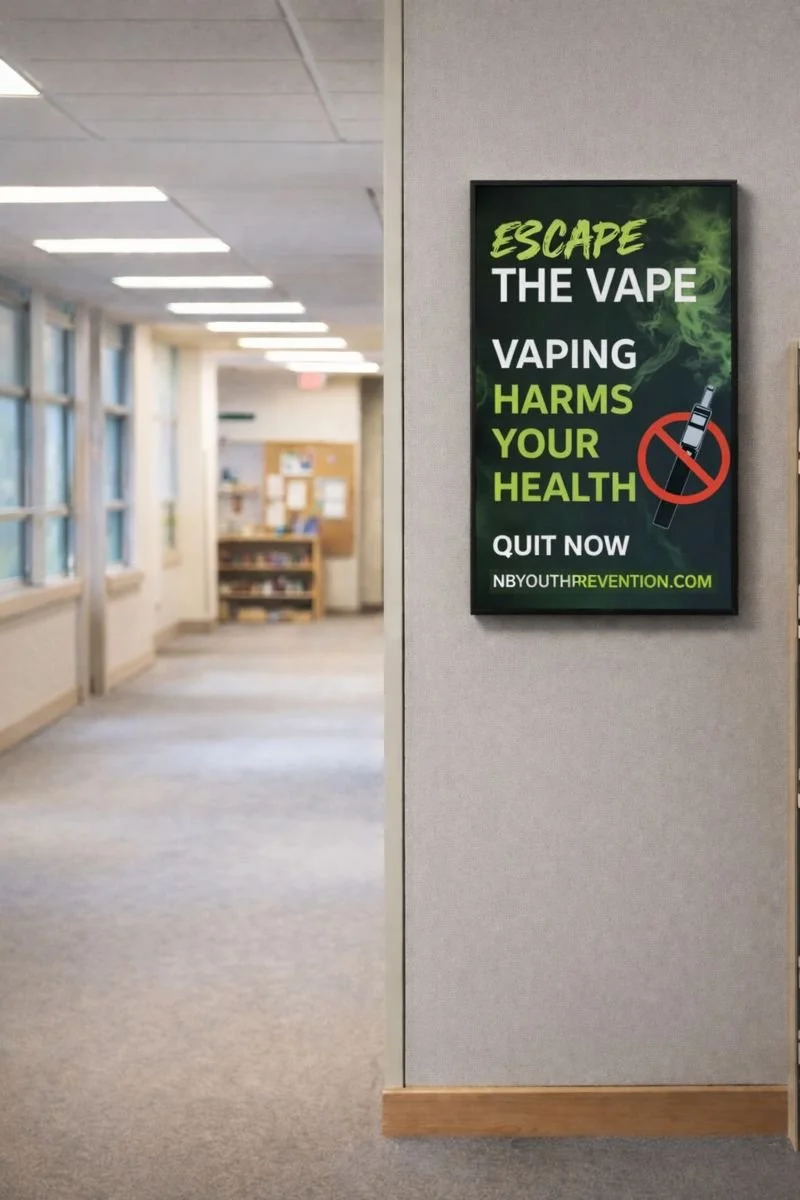
Authenticity over scare tactics. Today's students are sophisticated media consumers who can spot manipulative messaging from a distance. Campaigns that rely on exaggerated fear or condescending tones often backfire, generating eye-rolls rather than behavior change. Effective ads acknowledge young people's intelligence while presenting factual, compelling information about nicotine addiction and its effects on memory, concentration, and athletic performance.
Peer voices and relatable imagery. Messages featuring real students or young adults discussing their experiences with vaping tend to resonate more than those with obvious stock photography or celebrity endorsements. Authenticity matters, and campaigns that feel like they come from within the student community rather than being imposed from above tend to gain more traction.
Focus on autonomy, not just health. Many young people are drawn to vaping precisely because they perceive it as a personal choice. Effective campaigns often reframe the conversation around manipulation by tobacco companies—exposing how corporations engineer products to create addiction and target young consumers. This approach appeals to teenagers' desire for independence by positioning resistance to vaping as an act of defiance against corporate manipulation rather than mere compliance with adult rules.
Strategic placement. Location matters enormously. High-traffic areas like cafeterias, gymnasium entrances, and main hallways ensure maximum visibility. Restrooms, where vaping often occurs, represent another critical placement opportunity. Exterior signage near school entrances, athletic facilities, and bus loading zones extends the campaign's reach beyond the building itself.
Integrating OOH with Broader Educational Efforts
Physical advertising works best when integrated into comprehensive prevention programs. A poster alone won't change behavior, but the same poster reinforcing lessons from health class, peer education programs, and counselor conversations creates a coherent ecosystem of support. PlaceBased compliments OOH displays with educational content within counselors' offices, nurses' offices, local community centers, and school athletic facilities.
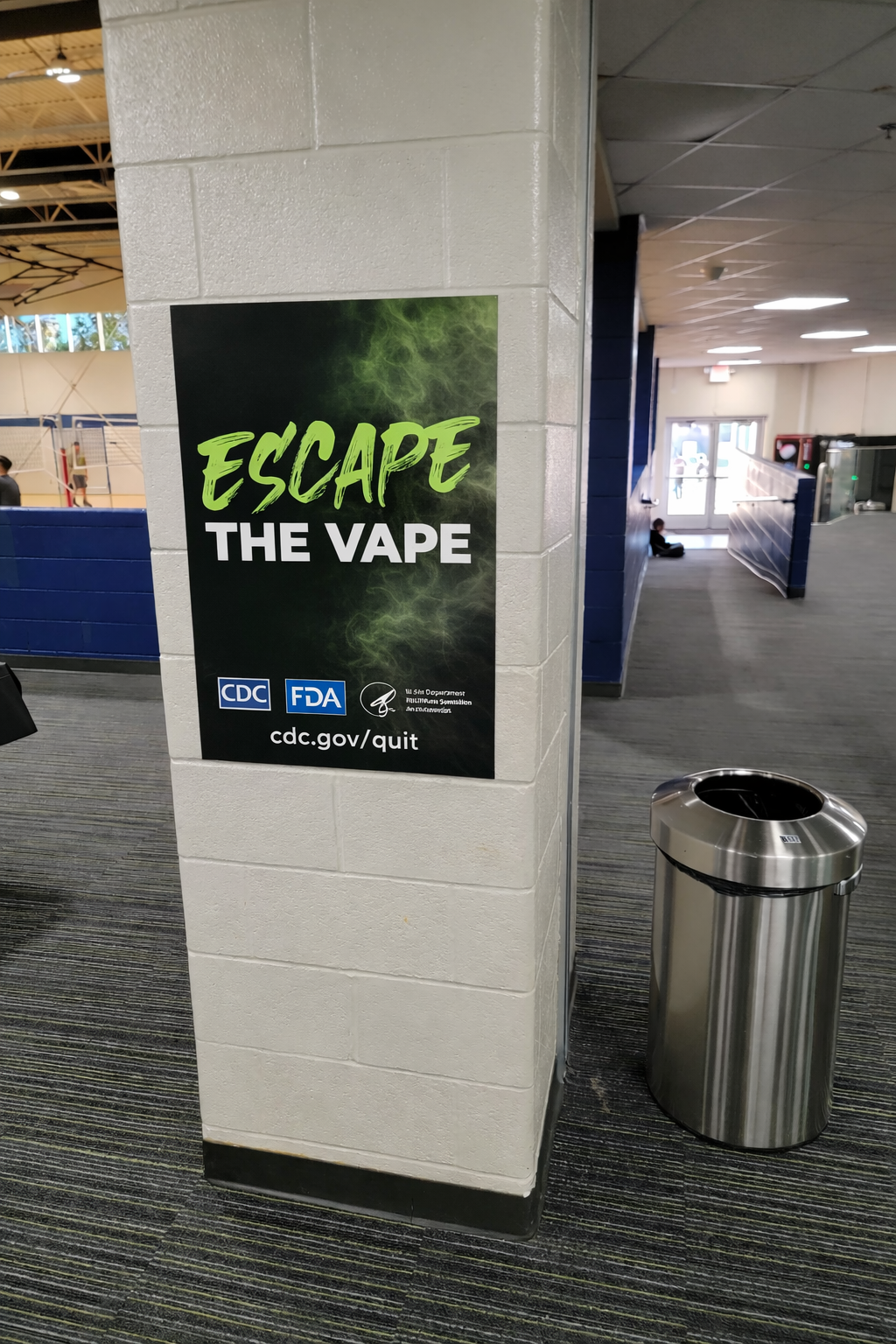
Some schools have found success involving students in campaign design, turning the creative process itself into an educational experience. Student-designed posters carry inherent credibility with peers while giving young artists ownership over their school's public health messaging.
Digital OOH displays offer greater flexibility, enabling schools to rotate messages, highlight current statistics, and respond to emerging trends in youth vaping. These can be updated to address specific products gaining popularity or to coincide with awareness weeks and other programming.
Measuring Impact
Any serious public health intervention requires evaluation. Schools implementing OOH campaigns should consider conducting baseline and follow-up surveys to measure students' knowledge, attitudes, and self-reported vaping behavior. Focus groups can provide qualitative insights into how students perceive and interpret campaign messages.
It's important to maintain realistic expectations. No single intervention will eliminate youth vaping, and behavior change occurs gradually. Success might look like increased awareness of nicotine's effects, shifts in perception of vaping's social acceptability, or students reporting that campaign messages made them think twice before trying an e-cigarette.
Looking Forward
As vaping products continue to evolve and marketing tactics grow more sophisticated, prevention efforts must adapt accordingly. Schools remain one of the most important battlegrounds in this public health fight, and out-of-home advertising offers a tangible, visible way to stake a position.
The physical presence of anti-vaping messages throughout a school environment communicates something beyond the words on any individual poster: that this community cares about its young people's health and is willing to invest in protecting it. In the long effort to prevent nicotine addiction, that consistent, visible commitment matters.