What is Tourism Marketing? A Quick Definition
Tourism marketing is the practice of promoting a destination, attraction, or travel experience to potential visitors — encouraging them to visit, stay longer, and spend locally. It encompasses advertising, content, public relations, and media buying strategies used by destination marketing organizations (DMOs), state and local tourism offices, hotels, and travel brands to drive awareness, consideration, and visitation.

For a deeper look at how tourism marketing works in practice — including venue strategy, seasonal planning, and OOH media — see The Complete Guide to Tourism Marketing.
Tourism Marketing Definition
Tourism marketing refers to any coordinated effort by a tourism organization, government agency, or travel brand to attract visitors to a specific place or experience. The goal is to influence a potential traveler's decision — from initial destination awareness through to booking and on-site engagement.
Tourism marketing differs from general consumer marketing in one key way: the "product" is a place, experience, or memory — not a physical item. That makes emotional resonance, visual storytelling, and contextual placement especially important.
Who Does Tourism Marketing?
Tourism marketing is conducted by a range of organizations, including:
Destination Marketing Organizations (DMOs) — state, county, and city tourism offices (e.g., Visit California, Explore Minnesota) charged with promoting a region to potential visitors.
Convention and Visitors Bureaus (CVBs) — local bodies that market a city or region for meetings, events, and leisure travel.
Hotels and hospitality brands — promoting specific properties or loyalty programs to drive direct bookings.
Attractions and entertainment venues — theme parks, museums, casinos, and event venues marketing to regional and national audiences.
State and federal agencies — promoting national parks, heritage sites, and regional tourism corridors.
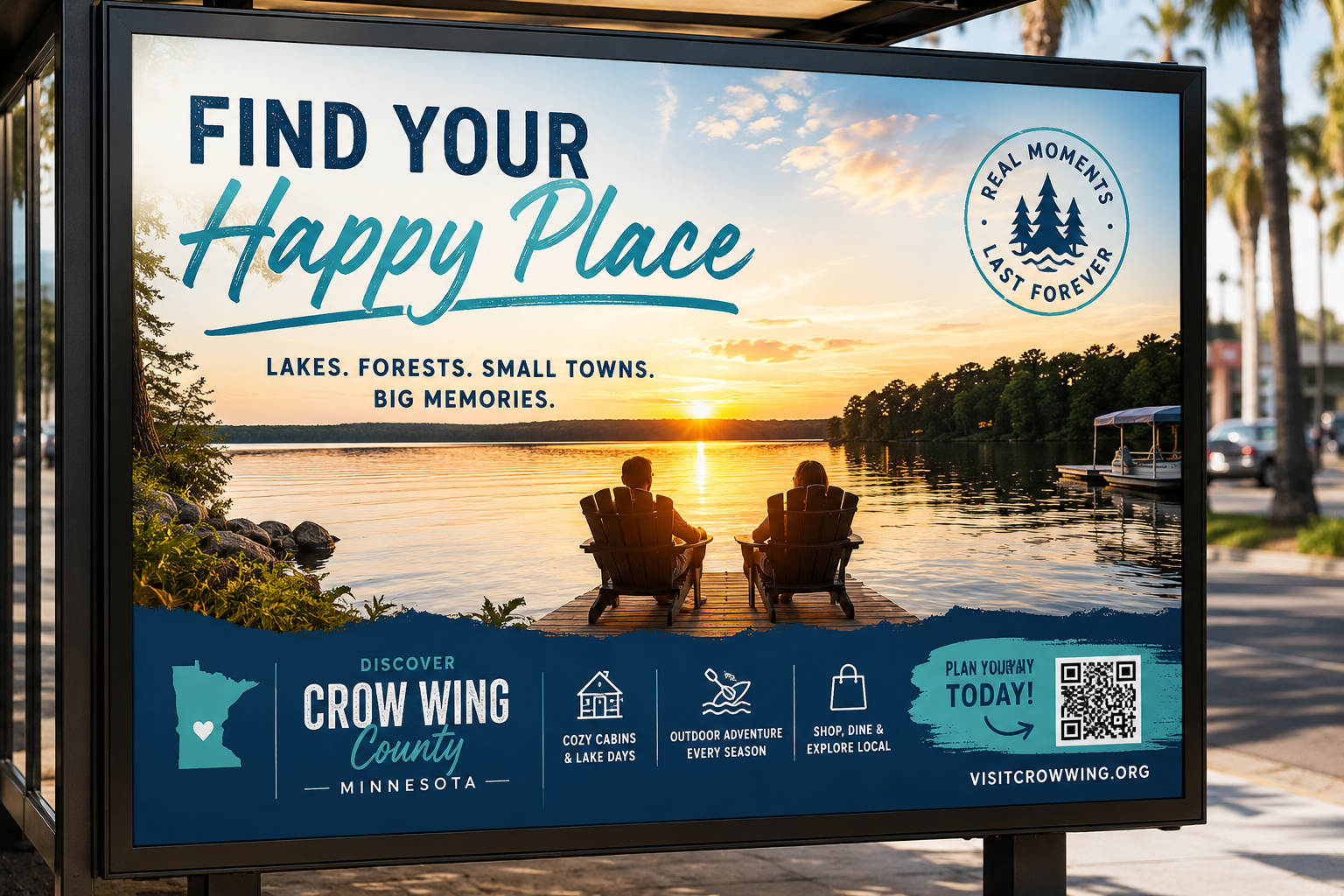
Core Tourism Marketing Channels
Tourism marketers use a mix of channels to reach potential visitors at every stage of the travel decision:
Out-of-home (OOH) advertising — place-based media in gas stations, highway travel plazas, welcome centers, and community venues that reach travelers who are already in trip mode or planning a drive-market trip.
Digital and social media — Instagram, YouTube, and travel publisher partnerships that reach audiences in the discovery and inspiration phases.
Search and content marketing — SEO-driven guides, destination pages, and listicles targeting travelers researching where to go.
Public relations and earned media — press trips, travel writer partnerships, and influencer campaigns that generate editorial coverage.
Email and CRM — remarketing to past visitors and loyalty members with seasonal offers and event announcements.
Why Place-Based OOH Is a Core Tourism Marketing Channel
Place-based out-of-home advertising is uniquely effective for tourism marketing because it reaches travelers at the moment of decision — on the road, at a gas station, or in a travel plaza — when they are physically in trip mode and most open to destination suggestions.
Unlike digital ads that follow users across screens, place-based OOH delivers a destination message in a relevant physical context. A "Visit the Dells" ad at a Wisconsin highway travel plaza speaks directly to a family that is already planning or executing a road trip. That contextual alignment drives a level of receptivity that digital channels struggle to match.
PlaceBased Media operates tourism OOH campaigns across gas stations, c-stores, travel plazas, and community centers in 300+ markets nationwide. See how it works →
Tourism Marketing vs. Tourism Advertising
These terms are often used interchangeably, but there is a useful distinction:
Tourism marketing is the broader strategic discipline — encompassing research, positioning, channel strategy, content, PR, and measurement.
Tourism advertising is a subset of tourism marketing — the paid placement of messages across media channels (OOH, digital, TV, radio) to reach target audiences.
A tourism marketing strategy defines the destination's value proposition, target visitor segments, and seasonal priorities. Tourism advertising executes that strategy through paid media.
Frequently Asked Questions
What is the goal of tourism marketing?
The primary goal of tourism marketing is to drive visitation — attracting new visitors, encouraging repeat visits, and increasing length of stay and local spending. Secondary goals include destination brand awareness, event promotion, and off-season demand generation.
What is a destination marketing organization (DMO)?
A destination marketing organization (DMO) is a nonprofit or government-affiliated body responsible for promoting a geographic area — state, region, city, or attraction — to potential visitors. DMOs typically manage the official tourism brand, operate visitor information centers, and coordinate with local hospitality partners.
How is tourism marketing measured?
Tourism marketing effectiveness is measured through visitor counts, hotel occupancy rates, tourism revenue, length of stay, and campaign-specific metrics like impressions, reach, and foot traffic attribution. OOH campaigns use mobile location data and travel plaza intercept studies to measure in-market impact.
What is drive-market tourism advertising?
Drive-market tourism advertising targets potential visitors within a 4-hour drive radius — the highest-value audience for most regional tourism offices. It typically uses place-based OOH at gas stations, c-stores, and travel plazas to intercept road-trippers at the moment they are most receptive to destination suggestions. See: Drive-Market Tourism Advertising.
Ready to reach visitors before they choose a destination? Talk to PlaceBased Media →
Part of The Complete Guide to Tourism Marketing — PlaceBased Media