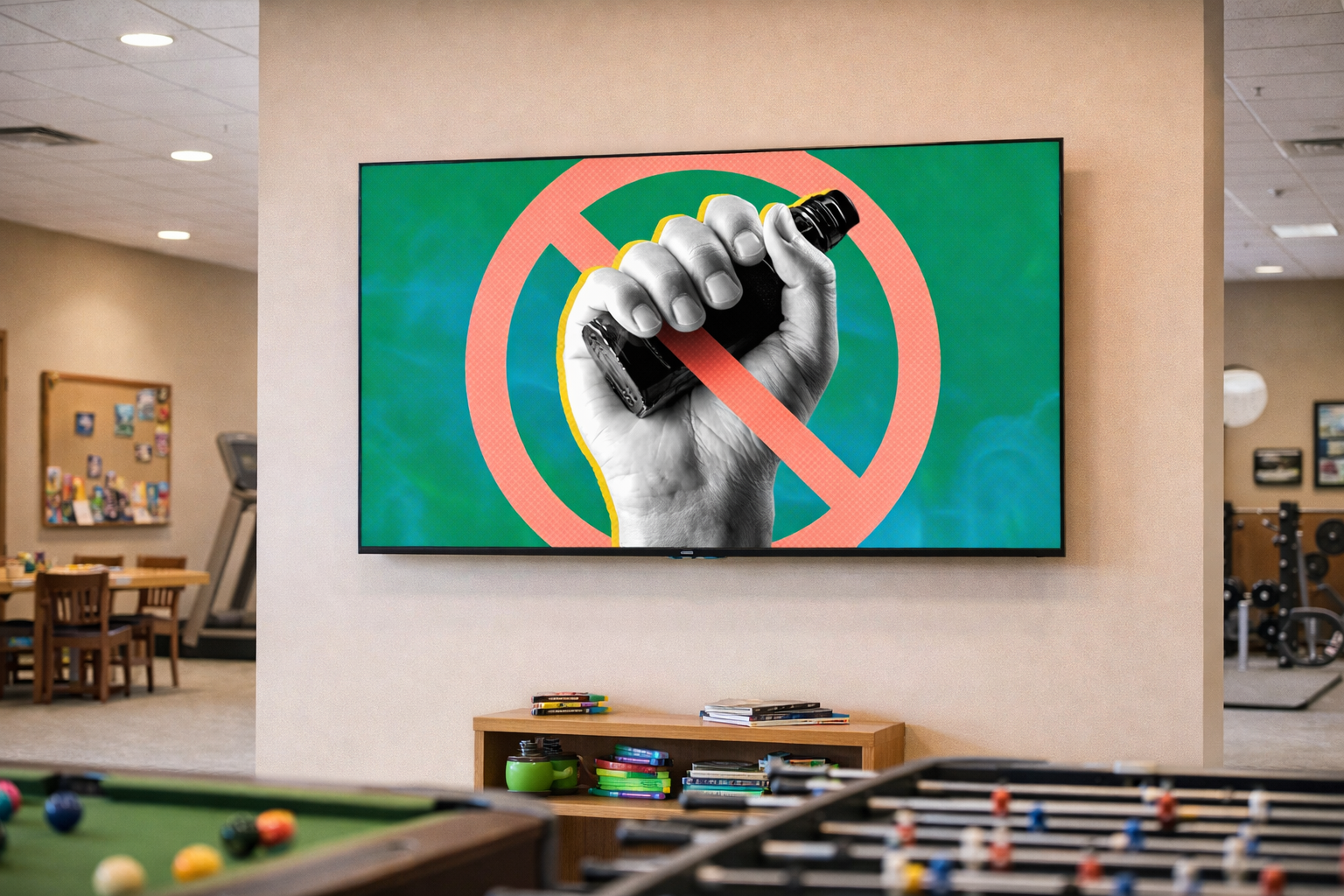
When public health campaigns work, it's worth paying attention to why. A new study out of UC San Diego's Herbert Wertheim School of Public Health, published in BMC Public Health, dug into one of the most dramatic behavior shifts in recent youth health history — the reversal of the teen vaping epidemic — and the findings have real implications for how we think about reaching audiences today.
The Numbers Tell a Striking Story
Between 2017 and 2019, youth vaping in the U.S. surged from 8.1% to a peak of 20%. Then something changed. By 2024, that number had dropped to 5.9%. Quit attempts among teen vapers nearly doubled — from 28.8% in 2017–18 to 53.2% in 2019–20 — and intentions to quit jumped from 56.9% to 79.1%. Meanwhile, susceptibility to trying vaping among teens who had never vaped fell from 30.3% to 25.7%.
That kind of population-level shift almost never happens. So what drove it?
A Convergence of Media Forces
The UC San Diego researchers point to two simultaneous forces: aggressive anti-vaping advertising from the FDA, the Truth Initiative, and state-led campaigns like California's Tobacco Control Program — and pervasive news coverage of the EVALI lung-injury outbreak, which produced nearly 20,000 articles between July 2019 and March 2020.
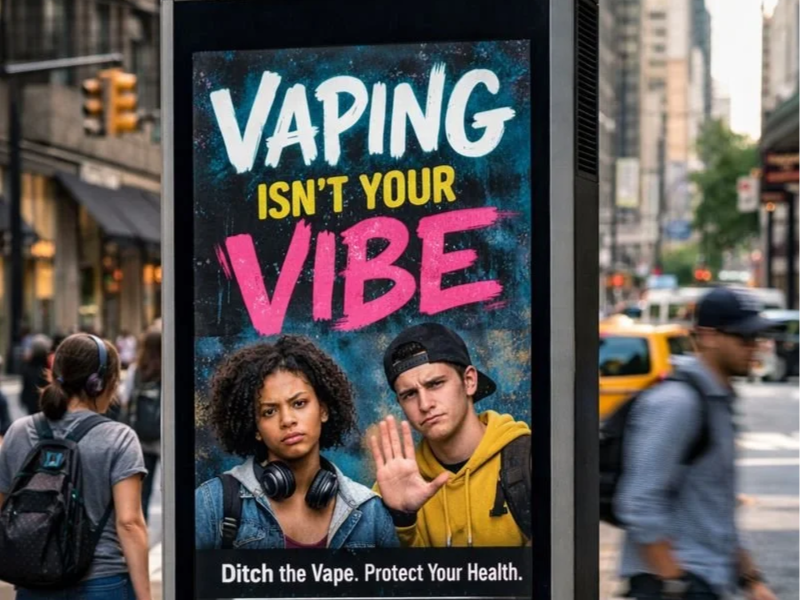
The takeaway from senior author Shu-Hong Zhu, PhD, was clear: a convergence of media forces "appears to have shaken adolescents out of complacency and motivated many of them to quit."
In other words, it wasn't one channel. It wasn't one message. It was the combination of repeated, credible exposure across the spaces where teens were already paying attention.
Why This Matters for Place-Based OOH
Here's where it gets interesting for those of us in the out-of-home world. The study found that anti-vaping ad campaigns — with combined annual spend over $100 million — drove higher quit attempts and quit intentions. But EVALI awareness, which traveled largely through earned coverage and conversation, was the only factor significantly linked to lower susceptibility among teens who had never vaped.
That's a critical distinction. Paid media moved current users. Cultural saturation moved future ones.
For public health campaigns trying to drive behavior change, the lesson is that you need both: paid messaging that delivers a clear call to action, and presence in the everyday environments where the conversation is already happening — bars, restaurants, schools, transit corridors, community spaces. That's the gap place-based OOH was built to fill.
When a message shows up in the trusted, high-dwell-time spaces where your audience naturally spends their attention — washroom panels in bars where 21+ adults make decisions about their nights, posters in coffee shops near college campuses, tear-offs in community centers — it stops feeling like advertising and starts feeling like part of the environment. That's the kind of repeated, contextual exposure that compounds over time. It's how a campaign becomes a conversation.
The Strategic Takeaway
The teen vaping reversal is a reminder that the most powerful behavior change campaigns don't rely on one channel doing all the work. They build a media environment. They surround the audience with consistent, credible messaging across the moments and places that matter to them.
For public health agencies, advocacy organizations, and brands working on social impact campaigns, the implication is straightforward: if you want to move behavior at the population level, you need to be present where behavior actually happens. Digital reach is part of the picture — but so is the bar where someone's deciding whether to bet, the campus where a student is forming health habits, the rideshare line at 1 a.m. when decisions get made.
That's the case for place-based media. It puts your message in the room.
For a deeper look at how to build a campaign that drives this kind of behavior change, check out our complete guide to public health campaign advertising.
PlaceBased Media partners with public health agencies, advocacy groups, and mission-driven brands to deliver targeted, environment-specific OOH campaigns that meet audiences in the moments that matter. To learn more about our network and how we can support your next behavior-change campaign, get in touch.
Source: UC San Diego Today, "Anti-Vaping Advertisements and Lung Injury News Coverage Helped Reverse Trend in Teen Vaping," April 24, 2026.