988 Campaigns & Promotions: The Complete Guide to Suicide & Crisis Lifeline Awareness
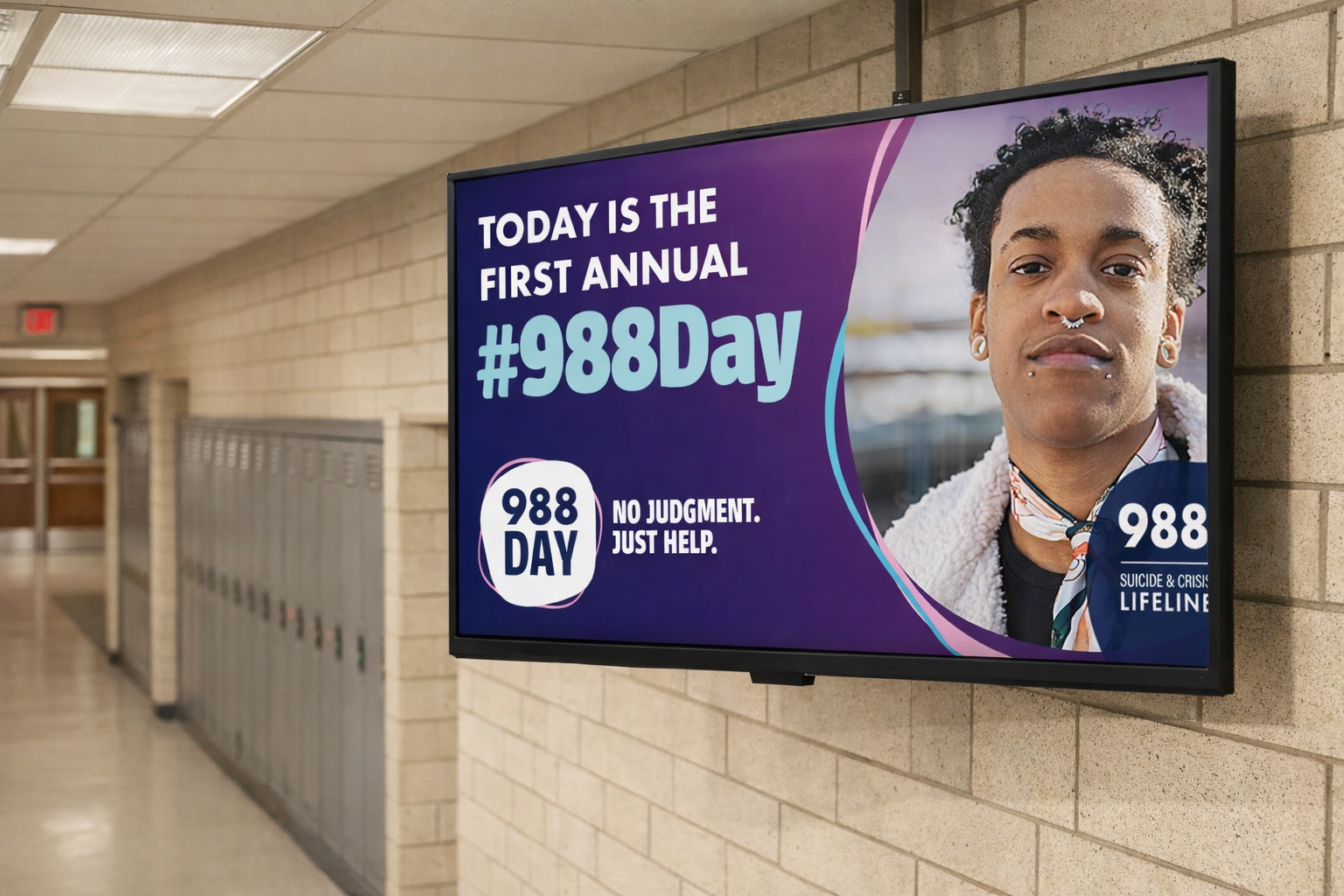
988 campaigns are strategic outreach efforts designed to raise awareness of the 988 Suicide & Crisis Lifeline — ensuring that people in crisis know free, confidential support is available 24/7. Since the national transition from the 10-digit hotline to the three-digit 988 code in July 2022, well-executed 988 campaigns have become essential for reaching vulnerable communities across the country.
The launch of 988 as the national suicide prevention and mental health crisis hotline was a critical step forward in making mental health support accessible to everyone in America. But awareness is what saves lives. If people don't know about 988, they can't use it.
That's where 988 promotions come in — strategic outreach efforts designed to ensure people know about this vital resource when they need it most. And the most effective 988 campaigns don't just run online. They show up in the physical places where at-risk populations already gather: barber shops, LGBTQ+ nightlife venues, veteran service organizations, schools, healthcare clinics, laundromats, and community centers.
This guide covers how organizations are using place-based media to promote the 988 Suicide & Crisis Lifeline — and why venue-based strategies outperform digital-only approaches for reaching vulnerable populations.
What Are 988 Campaigns and Promotions?
988 promotions are coordinated marketing campaigns, educational initiatives, and community outreach efforts aimed at raising awareness about the 988 Suicide & Crisis Lifeline. These efforts ensure that individuals experiencing mental health crises, suicidal thoughts, or emotional distress know they can reach free, confidential support 24/7 by dialing, texting, or chatting 988.
Since the national transition from the 10-digit National Suicide Prevention Lifeline to the easy-to-remember 988 code in July 2022, promotional efforts have become essential for reaching diverse communities across the United States — especially populations that have historically been underserved by digital advertising.
Why Place-Based Media Is Effective for 988 Awareness

When it comes to 988 awareness, location matters more than impressions. Place-based media positions messages in high-traffic, community-focused venues where at-risk populations naturally gather. This approach works for mental health awareness because it reaches people in trusted environments during their everyday routines — not while they're scrolling past ads on a phone.
PlaceBased Media, a Minneapolis-based leader in out-of-home (OOH) and digital out-of-home (DOOH) advertising, specializes in delivering public health campaigns through community-based networks spanning over 300 markets nationwide.
The data support this approach:
88% of consumers notice OOH advertisements, and nearly 80% take action after seeing them (OAAA/Morning Consult)
60% of audiences view messages as more believable in a doctor's office than on television (Edison Research), highlighting the unique credibility of point-of-care advertising
OOH produces higher ad recall than live/streaming TV, podcasts, radio, print, and online ads (Solomon Partners, 2017–2022)
73% of consumers view DOOH ads favorably, and 76% take action after seeing them — surpassing television, social media, and online advertising (OAAA/Harris Poll, 2024)
Research analyzing 174+ public health media campaigns reaching 2.1 billion people found that paid media can influence audience beliefs for as little as $3.41 per person
These aren't abstract metrics. For 988 campaigns, high recall and credibility translate directly to someone remembering the number during a crisis.
Reaching At-Risk Populations: Venue-by-Venue 988 Strategies for 988 Campaigns
The most effective 988 promotions meet people where they already are. Here's how place-based campaigns reach specific at-risk populations through trusted community venues.
Point-of-Care Settings
Doctor's offices, urgent care clinics, community health centers, and pharmacies offer some of the most effective environments for 988 awareness campaigns. Patients in these settings are already focused on their health and well-being, making them more receptive to mental health messaging than they would be in almost any other context. Research shows that 60% of audiences find messages more credible when encountered in a healthcare setting than on television — giving point-of-care placements a built-in trust advantage. Digital displays in waiting rooms, posters near intake desks, and materials in exam room corridors keep 988 information visible throughout the patient journey without disrupting the care experience. For health systems and public health organizations, point-of-care 988 campaigns also create a natural bridge between awareness and action — patients who see crisis resources in a clinical environment are just steps away from a provider who can help. Learn more about point-of-care advertising for public health campaigns.
Veteran Service Organizations
Veteran suicide remains a national crisis, with approximately 17 veterans dying by suicide each day. VFW halls, American Legion posts, DAV chapters, and other veteran service organizations are trusted gathering spaces where veterans feel a sense of belonging and camaraderie. Placing 988 materials — including information about the Veterans Crisis Line (dial 988, then press 1) — in these venues reaches veterans in environments where they already feel safe. Posters in common areas, restroom placements, and materials at check-in desks ensure the message is visible without being intrusive. Learn more about reaching military and veteran audiences.
Barber Shops & Hair Salons

Barber shops are uniquely trusted spaces, particularly within Black and Latino communities, where mental health stigma can be a significant barrier to help-seeking. The relationship between a barber and client creates an environment of trust and candor that few other venues offer. Placing 988 materials in barber shops and salons — on mirrors, at waiting areas, and in restrooms — reaches men and BIPOC populations who are statistically less likely to access traditional mental health services. Culturally relevant messaging in these spaces carries weight that a digital ad cannot replicate.
Laundromats
Laundromats offer high dwell time (45–90 minutes per visit) and reach low-income and uninsured populations who are disproportionately affected by mental health challenges but less likely to encounter 988 information through traditional channels. Poster placements, bulletin boards, and digital screens in laundromats reach people during a routine activity in a relaxed setting — creating extended exposure to the message.
Gas Stations and Convenience Stores
Gas station advertising reaches a massive cross-section of the population, particularly in rural and suburban areas where other venue types may be limited. Restroom placements, pump-toppers, and indoor posters at c-stores provide high-frequency exposure in locations people visit multiple times per week. For statewide 988 campaigns, gas stations and c-stores offer the broadest geographic coverage among venue types.
LGBTQ+ Community Venues
LGBTQIA+ individuals experience disproportionately high rates of mental health challenges and suicidal ideation. Bar and nightlife media in LGBTQ+ venues — gay bars, clubs, and community spaces — reach this population in environments that function as safe havens and social hubs. Digital displays, indoor posters, restroom placements, and coaster media in these trusted spaces reduce stigma and normalize help-seeking behavior. These venues also reach people during late-night hours when crisis moments are more likely and digital outreach is least effective. Explore LGBTQ+ audience targeting.
High Schools and Colleges
Youth and young adults are the fastest-growing demographic for 988 usage, and schools are where they spend the majority of their waking hours. High school OOH advertising and college campus media place 988 information in hallways, cafeterias, counseling center waiting areas, restrooms, and student unions. These placements reach students during the school day when digital devices may be restricted — and in the physical spaces closest to where they'd seek help. Campaigns targeting youth and teen audiences are among the most impactful for suicide prevention.
Houses of Worship and Faith-Based Venues
Churches, mosques, temples, and other faith-based organizations are among the most trusted institutions in many communities. Placing 988 materials in gathering halls, bulletin boards, and community rooms reaches people through an environment where conversations about struggle, hope, and support are already normalized.
Senior Centers and Aging Services Facilities
Older adults face isolation, loss, chronic health challenges, and depression that can heighten suicidal ideation — yet they are among the most overlooked populations in 988 outreach. Promoting 988 in senior centers, adult day programs, and aging-focused venues addresses this gap with informational materials, workshop support, and staff training that create a supportive atmosphere for help-seeking.
Superior Ad Recall and Cost-Effectiveness for 988 Campaigns
Solomon Partners' analysis of publicly available advertising effectiveness studies from 2017 to 2022 demonstrates that out-of-home advertisements produce significantly higher ad recall with consumers compared to live and streaming television, podcasts and radio, print, and online executions. This superior recall is essential for mental health crisis information—when someone is in distress, they need to remember where to turn for help.
From a financial perspective, outdoor advertising offers exceptional value. OOH delivers an average ROI of 497%, with billboards generating approximately $6 in return for every $1 spent. This cost-effectiveness allows public health organizations to maximize their 988 promotional budgets while achieving significant reach and impact.
Additional 988 Promotion Strategies

Digital and Social Media Campaigns
Social media platforms offer powerful complementary tools for 988 promotions. Organizations can leverage the 988 Partner Toolkit, which provides ready-to-use social media graphics, videos, and messaging designed for various audiences. These materials can be customized and shared across platforms like Facebook, Instagram, and TikTok to reinforce place-based campaigns with digital touchpoints.
Print and Traditional Media
Print materials remain valuable for 988 promotions. SAMHSA offers free downloadable and bulk-order materials including posters, wallet cards, brochures, and fact sheets in multiple languages.
Multi-Channel Integration
The most effective 988 promotional strategies layer multiple channels together:
Digital Out-of-Home (DOOH): Dynamic digital screens in high-traffic venues that display rotating messages and real-time updates
Traditional OOH: Posters, billboards, and static displays in community gathering spaces
Social Media: Coordinated online campaigns that complement physical placements
Point-of-Care Media: Healthcare setting promotions where credibility is highest
Mobile Integration: QR codes and text-to-call features on physical displays for immediate access
A comprehensive network approach, such as PlaceBased's coverage across 300+ urban, suburban, and rural markets, ensures no community is left behind in accessing critical mental health resources.
Essential Resources for 988 Promotions
The 988 Partner Toolkit
The most comprehensive resource for anyone conducting 988 promotions is the 988 Partner Toolkit provided by SAMHSA. This toolkit includes social media content, videos, print materials, radio spots, FAQs, messaging guidelines, and branding assets.
988 Messaging Framework
Developed by the National Action Alliance for Suicide Prevention in collaboration with SAMHSA and Vibrant Emotional Health, the 988 Messaging Framework provides strategic guidance for effective, aligned public messaging about 988.
Free Promotional Materials
Organizations can order free 988 promotional materials from the SAMHSA Store, including branded items for distribution at events and in communities — available in multiple languages.
Partnering with Place-Based Media Experts for 988 Campaigns
Successfully implementing 988 promotions requires strategic placement, cultural competency, and measurable execution. PlaceBased Media partners with leading public health organizations including SAMHSA, the CDC, and the Department of Health and Human Services to deliver targeted 988 promotions. Their approach includes:
Strategic Media Planning: Identifying the most effective venues and formats to reach priority populations
Multicultural Marketing: Developing culturally appropriate messaging for African American, Hispanic/Latino, Asian American, LGBTQ+, veteran, and other communities
In-House Production: Reducing campaign costs and lead times through integrated creative services
Campaign Auditing: Ensuring materials are properly displayed and reaching intended audiences
Proof of Performance: Providing detailed reports with photos, locations, mapping, and campaign metrics
With over 15 years of experience in public health marketing, PlaceBased's team creates campaigns that don't just reach people — they resonate, building trust and encouraging help-seeking behavior in moments of crisis.
Best Practices for Effective 988 Promotions
Use clear, accessible language. Emphasize that 988 provides free, confidential support available 24/7 for anyone experiencing a mental health or suicidal crisis, or emotional distress.
Clarify 988 vs. 911. Many people don't understand the difference. 988 is specifically for behavioral health crises, while 911 is for emergency medical, fire, and police services. Both can work together when needed.
Prioritize cultural relevance. Different communities have unique relationships with mental health and crisis services. Materials should be culturally appropriate, available in multiple languages, and delivered through trusted community channels.
Train community leaders. When trusted voices — barbers, bartenders, coaches, clergy, VSO leaders — share information about 988, it reduces stigma and encourages help-seeking behavior far more effectively than any ad placement alone.
Getting Started with Your 988 Promotion Campaign
Visit the 988 Partner Toolkit at SAMHSA.gov to access free resources
Review the 988 Messaging Framework for strategic guidance
Identify your target audiences and the venues that will reach them most effectively
Customize available materials or create new content that speaks to your community's unique needs
Partner with local organizations, schools, healthcare providers, VSOs, and community leaders
Consider partnering with media experts like PlaceBased to access proven venue networks, production capabilities, and multicultural marketing expertise
Launch your campaign and track engagement
Gather feedback and refine your approach
The Future of 988 Promotions
As 988 awareness grows, promotional efforts continue to evolve. SAMHSA and Vibrant Emotional Health regularly expand their marketing initiatives to reach additional audiences and test new messaging approaches. The goal remains constant: ensuring that every person in crisis knows help is just three digits away.
Place-based media offers a particularly powerful avenue for these efforts, reaching people in trusted community environments where mental health messages carry the greatest credibility. By combining SAMHSA's proven resources with strategic venue-based placements across 300+ markets nationwide, organizations can create 988 promotion campaigns that truly make a difference.
Take Action Today: Download free 988 promotional materials from the SAMHSA Store and share information about the lifeline on your social media channels using #988Lifeline.
For Professional Campaign Support: Organizations looking to implement comprehensive 988 promotions can contact PlaceBased Media for consultation on venue-based strategies, multicultural outreach, and data-driven campaign execution across their national network.
Sources and References
This article incorporates research and data from the following authoritative sources:
Out of Home Advertising Association of America (OAAA):
"Out of Home Ads Drive Real-World Action" (2023) - Survey conducted with Morning Consult showing 88% of consumers notice OOH ads and 78% take action
"New Study Finds Digital Out of Home Advertising Surpasses Other Media in Driving Favorability and Action Among Consumers" (2024) - Harris Poll research on DOOH effectiveness showing 73% favorability and 76% action rates
"Out of Home Advertising Produces Highest Levels of Consumer Recall Versus Other Media Channels" (2023) - Solomon Partners analysis of advertising effectiveness studies 2017-2022
"Out of Home Advertising Revenue Surpasses $9 Billion" (2025) - Industry revenue data and growth trends
Digital Place Based Advertising Association (DPAA):
"DPAA 2024 Omnichannel Decision-Makers Study" - Research conducted by Advertiser Perceptions and Kochava showing 96% of marketers plan to increase or maintain DOOH spending
"Marketers Increasingly Include Digital Out of Home in their Omnichannel Campaigns" (2021) - Study showing 81% of advertisers recommend DOOH and 77% increased their DOOH knowledge
"How Out-of-Home Ads Are Driving Consumer Purchases" (2023) - Beeyond Media study showing 80% of respondents research companies after seeing OOH ads
Substance Abuse and Mental Health Services Administration (SAMHSA):
988 Partner Toolkit - Comprehensive resource center for promotional materials
988 National Paid Marketing campaign information
988 Suicide & Crisis Lifeline program data
Additional Sources:
PlaceBased Media - 988 Campaign Ideas and public health campaign strategies
National Action Alliance for Suicide Prevention - 988 Messaging Framework
Edison Research - Point-of-care advertising credibility studies
Arxiv.org - Analysis of 174+ public health media campaigns reaching 2.1+ billion people
All statistics and research findings cited in this article are from peer-reviewed studies, industry research reports, or official government sources published between 2021-2025.
Take Action Today: Download free 988 promotional materials from the SAMHSA Store and share information about the lifeline on your social media channels using #988Lifeline.
For Professional Campaign Support: Organizations looking to implement comprehensive 988 promotions can contact PlaceBased Media for consultation on venue-based strategies, multicultural outreach, and data-driven campaign execution across their national network.
For SAMHSA media inquiries or bulk promotional material orders, contact 988SAMHSA@gpo.gov. To access the full 988 Partner Toolkit, visit SAMHSA.gov/mental-health/988/partner-toolkit. For place-based media campaign inquiries, visit placebased.media or explore their comprehensive 988 campaign guide.